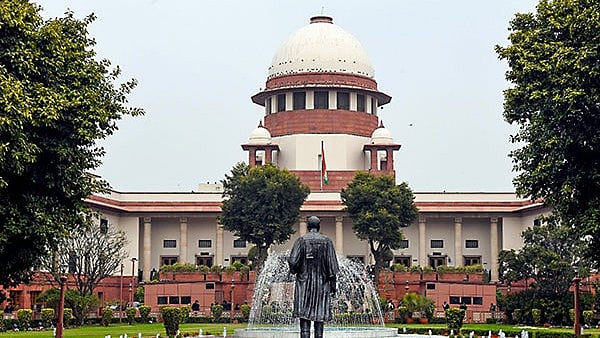
The Supreme Court on Wednesday orally observed that a judgment pronounced in open court does not become final merely because it has been announced. It said judges can make changes and even re-list a matter for hearing until the judgment has been signed by the concerned judge or judges.
A Bench of Chief Justice of India Surya Kant, Justice Joymalya Bagchi and Justice V Mohan made the observation while hearing a plea filed by Vidyadas Babaji, the head priest of Sri Anjaneya Temple in Karnataka. He had sought a direction to the Karnataka High Court to upload a judgment that had already been pronounced in open court.
Court Explains Why Oral Orders Can Change
Appearing for the petitioner, Advocate Vishnu Shankar Jain submitted that the Karnataka High Court had initially reserved judgment in the case in November 2025. The matter was later listed for re-hearing on March 25, after which judgment was again reserved and pronounced in April. According to him, the case status showed that the writ petition had been allowed, Live Law reports.
Jain said the matter was subsequently listed for furnishing details of criminal cases pending against the petitioner, if any. He submitted that the State Advocate General had already supplied the information, but the judgment has still not been uploaded. Referring to a High Court order passed in June seeking details of criminal cases against the petitioner, Chief Justice Kant noted the development, to which Jain replied that the required information had already been provided by the State.
Bench Says Judgment Is Complete Only After Signing
Arguing before the Bench, Jain said, "When Court pronounces judgment in open Court, the Court becomes functus officio."
Justice Bagchi, however, disagreed with that submission. "The oral pronouncement not followed by signing of a judgment is not a judgment which is complete. What may happen is, a judge pronounces a judgment but before he signs, he finds that there are certain serious lacunae in the matter or as it appears, there may be some materials that he wants to incorporate which is there. So he places the matter again," he said.
The Bench ultimately disposed of the plea, observing that "no case to entertain at this stage is made out". Chief Justice Kant also orally remarked to the petitioner's counsel, "Let the judgment come."
Temple Dispute Behind The Case
The case stems from a dispute over the management of Sri Anjaneya Temple in Koppal, Karnataka. In 2018, the district Collector is said to have directed that the temple's management be taken over after removing Vidyadas Babaji as head priest.
The petitioner challenged the order before the Karnataka High Court, which passed an interim order in February 2023 restraining the State authorities from taking any precipitative step against him in relation to the temple or his residence.
According to the petitioner, State authorities attempted to replace him with another priest in March 2025 despite the interim protection. He then filed a contempt petition before the High Court, but it was dismissed on April 9 after the court held that no prima facie case had been made out.
The Division Bench observed that there was material to support the allegations and also noted that the petitioner had not lodged a police complaint. Aggrieved by the dismissal, the petitioner approached the Supreme Court.
In May last year, the Supreme Court directed the Karnataka government to allow the petitioner to continue performing religious duties and to reside in a single room at the temple premises in terms of the High Court's 2023 interim order.
In August, the Supreme Court disposed of his plea with a request to the Karnataka High Court to decide the pending writ petition expeditiously, preferably within six months. The latest proceedings have once again brought the pending High Court judgment into focus, with the Supreme Court making it clear that an oral pronouncement does not attain finality until the judgment is signed.

