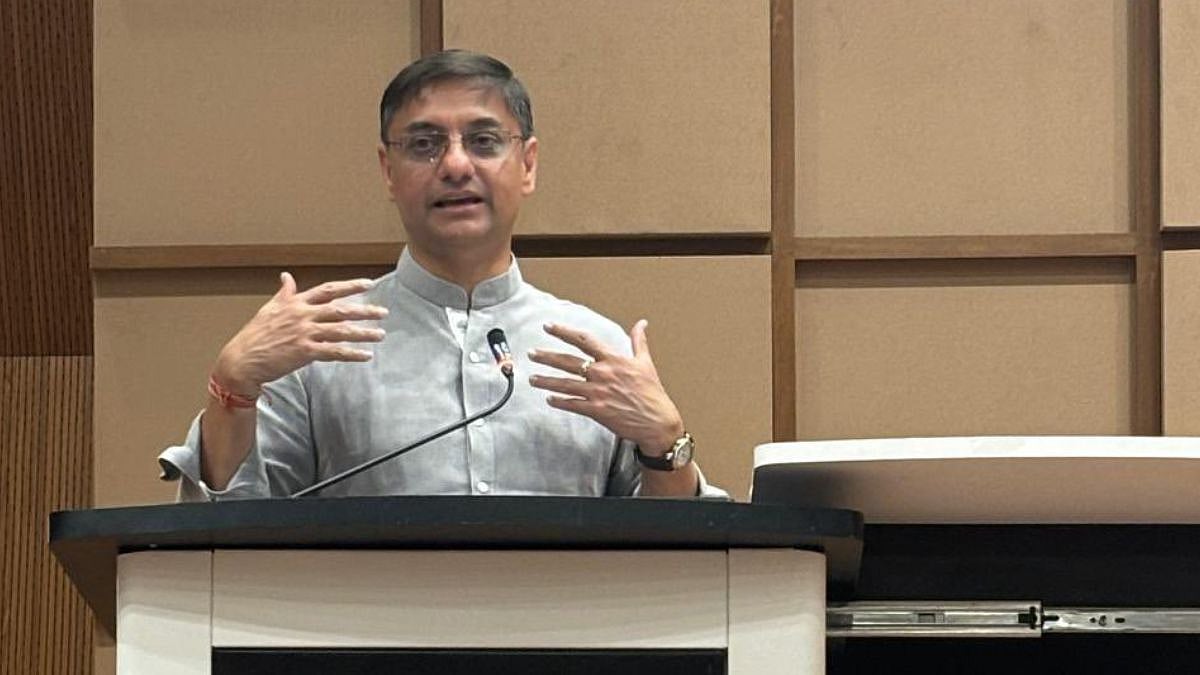
In an interview with NDTV, Sanjeev Sanyal, a member of the Prime Minister’s Economic Advisory Council, described the 7.8% expansion as "very strong", particularly against the backdrop of persistent challenges facing the global economy.
According to Sanyal, the growth has been spread across multiple segments rather than being driven by a single area. He highlighted manufacturing, construction and services, while also noting strong activity in the financial sector. Investment in the economy, he said, grew by 12%.
"The sources of this growth are actually quite interesting to see because it's not from just any single source. You have had manufacturing growth doing well. You also see construction. The services sector is always strong, but you can see the financial sector doing very well," Sanyal said.
He added, "It's very broad-based. It's driven not just by consumption, as many people tend to accuse India's economy. That's consumption-driven growth."
Sanyal also pushed back against claims that India's manufacturing industry is under pressure. He cited the performance of industries including steel, cement, pharmaceuticals and smartphone production as evidence of continued strength. He noted that India has emerged as the world’s second-largest steel producer, behind China and ahead of the US.
Domestic automobile demand was another indicator cited by Sanyal. He contrasted India's performance with China's, where domestic car sales have declined. "India's car sales have risen significantly, while domestic car sales in China have fallen by around 20%," he said.
The Congress, however, has argued that greater attention should be paid to employment rather than focusing solely on the 7.8% GDP growth rate. The party has also raised concerns about the performance of the agricultural sector.
Addressing the employment criticism, Sanyal said government data indicates that unemployment has declined in both rural and urban regions. At the same time, he acknowledged that joblessness among educated young Indians continues to be a major challenge.
"This is an area that we really do need to work on," he said. Sanyal noted that the issue is not unique to India, pointing out that China is also dealing with elevated unemployment among educated youth.
Sanyal further argued that India needs to rethink its approach to education, saying conventional classroom learning by itself does not adequately prepare students for the workplace. Many young people, he explained, may possess theoretical understanding but lack practical exposure, making it difficult for them to secure suitable employment.
He said students should have opportunities to acquire professional experience during their education. According to him, educational institutions need stronger links with industry, with apprenticeships and skill-based training playing a more prominent role in preparing students for employment.

Meanwhile, Prime Minister Modi has appealed to Indians to curb unnecessary spending on gold, overseas vacations and destination weddings. He has encouraged people to explore domestic tourist destinations, organise weddings within India, purchase locally made goods and avoid excessive gold purchases.
"From an individual perspective, it may look like an investment. But from a national perspective, it is consumption," Sanyal said, adding, "A lot of capital gets stuck into it, which could be better mobilised for doing other things."

