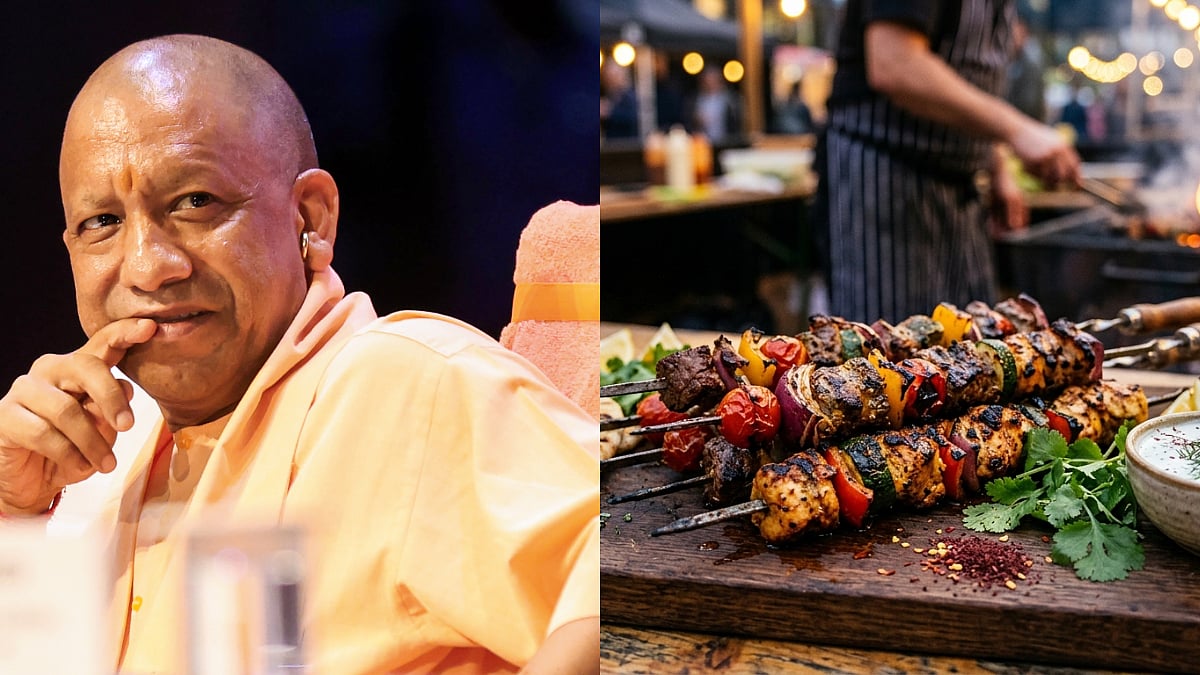
Lucknow: It is difficult to imagine a conversation on Lucknow’s culinary heritage without references to Tunday and Galouti kebabs or Awadhi biryani. Yet, these iconic dishes are missing from the Uttar Pradesh government’s district-wise list of traditional food items notified under its ‘One District One Cuisine’ (ODOC) initiative, which features only vegetarian preparations.
The ODOC initiative, aimed at promoting regional delicacies through branding, packaging and market access, maps signature food items to each of the state’s 75 districts. However, several celebrated non-vegetarian dishes closely associated with Uttar Pradesh’s culinary identity have not found a place on the list.
Among the notable omissions are Lucknow’s famed Tunday and Galouti kebabs, Awadhi biryani and nihari, Rampur’s mutton korma and seekh kebabs, and Bareilly’s well-known mutton preparations. Food enthusiasts have also pointed out that cities such as Varanasi and Prayagraj, known for distinctive non-vegetarian street foods and curries, have been represented only through vegetarian offerings.
The absence of these dishes has triggered debate among food historians and culinary experts, many of whom argue that the list presents an incomplete picture of Uttar Pradesh’s food culture.
Food historian and Cuisine Society of India President Pushpesh Pant criticised the ODOC list for featuring only vegetarian dishes, calling the approach “half baked”. Speaking to reporters, Pant said the move reflected a biased outlook and described it as “ignorant nonsense”. While making it clear that he had no objection to promoting vegetarian cuisine, he questioned why the state appeared to be selectively excluding non-vegetarian culinary traditions.
State Cabinet minister Rakesh Sachan, however, denied that the exclusion of non-vegetarian dishes was deliberate.
“It is not intentional. If recommended in the future, they can be added. The idea is not to promote individual popular items but dishes that benefit a larger population through packaging, sales and promotion,” Sachan told The Indian Express.
He said the list remains flexible and can be revised on the basis of local recommendations and public demand.
“The scheme has been approved by the Cabinet, but the list of cuisines can be changed any time based on local recommendations and public demand, with approval from the Chief Minister. It does not require Cabinet approval,” he said.
According to the ODOC list, Agra has been identified with petha and dalmoth, while Firozabad is associated with potato-based dishes such as tikki and kachori. Mainpuri features sohan papdi and boiled potato preparations, and Mathura is recognised for peda, khurchan and mishri-based sweets.
Aligarh has been tagged with dairy products and kachori, Hathras with hing-linked items and khurchan, while Kasganj is associated with moong dal halwa and singhada flour snacks.
In central Uttar Pradesh, Ayodhya’s kachori, peda and kulhad dahi-jalebi, Sultanpur’s peda and savoury items, Barabanki’s chandrakala, and Amethi’s samosa and jaggery sweets have been included. Ambedkar Nagar is known for batasha and khoya-based preparations.
Eastern Uttar Pradesh also figures prominently in the list. Azamgarh is associated with teheri and carrot halwa, Ballia with sattu-based dishes, and Mau with litti-chokha. Varanasi’s entries include tiranga barfi, thandai, lassi, kachori and Banarasi paan, while Jaunpur is known for imarti and traditional sweets.
Also Watch:
In western Uttar Pradesh, Meerut’s revdi and gajak, Ghaziabad’s papad-based preparations, Gautam Buddh Nagar’s bakery products, Hapur’s papad, and Bulandshahr’s kachori and peda have been included. Baghpat has been associated with balushahi and ghewar.
Other districts on the list include Prayagraj for kachori, samosa and rasmalai, Fatehpur for bedmi puri and sweets, Kaushambi for jaggery-based products, and Pratapgarh for amla-based items. Saharanpur is known for honey products, Muzaffarnagar for jaggery sweets, and Shamli for jaggery-based snacks.
Officials said the ODOC initiative aims to systematically catalogue and promote local cuisines across the state while boosting employment and entrepreneurship.
Chief Minister Yogi Adityanath’s adviser Awanish Awasthi highlighted the initiative in a post on X on Tuesday, saying Uttar Pradesh would seek to give global recognition to its traditional dishes through modern branding and improved packaging.
“This step will empower local artisans while giving a boost to employment and entrepreneurship. Under the leadership of the chief minister, Uttar Pradesh is creating a new identity in taste, culture and economy,” Awasthi said.
The initiative was also highlighted by Chief Minister Adityanath during discussions on the 2026-27 Budget in the state assembly on February 20.
Drawing parallels with the successful ‘One District One Product’ model, the chief minister said the scheme envisages focused efforts on quality improvement, packaging, branding, marketing and training for traditional food items.
He cited examples such as Meerut’s revdi and gajak, Hathras’s hing, Hapur’s papad, Prayagraj’s guava, Ballia’s halwa and Jaunpur’s imarti as products that would receive a new identity under the scheme.
Officials said the broader objective of the ODOC initiative is to encourage skill development, attract investment, strengthen branding of local cuisines and generate employment, positioning Uttar Pradesh as a hub of culinary entrepreneurship.

