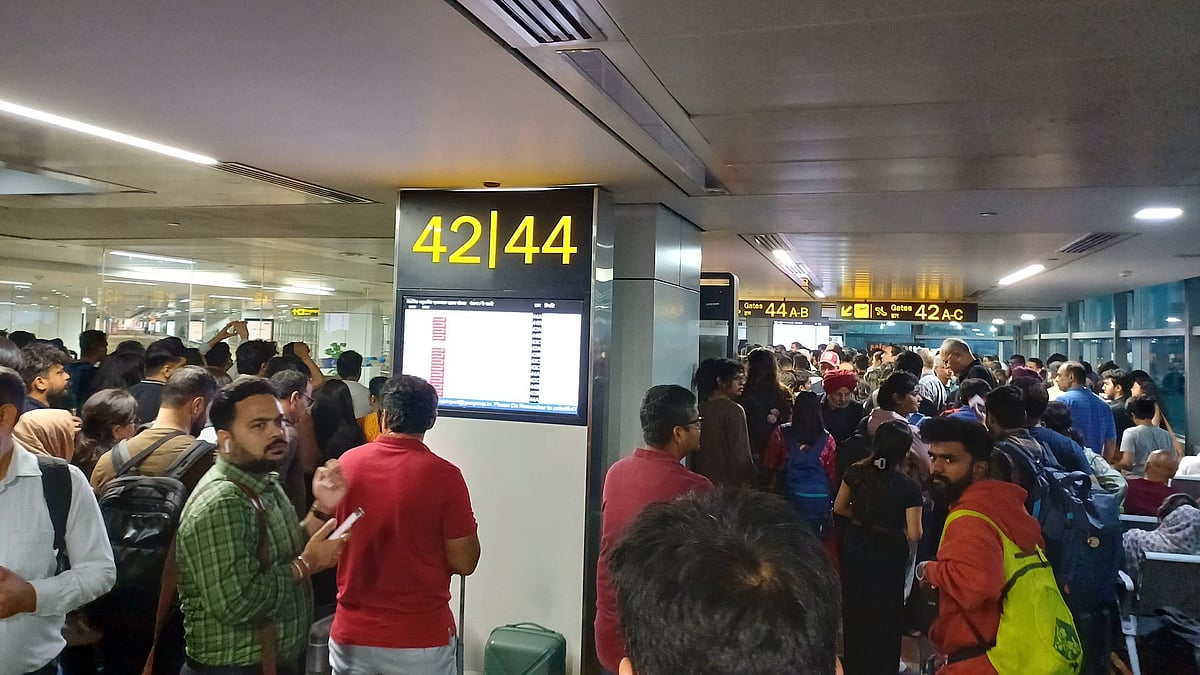
New Delhi: A major breakdown at Delhi’s Indira Gandhi International Airport (IGIA) this week, which disrupted hundreds of flights, has sparked concern over long-standing warnings about India’s ageing air traffic control (ATC) infrastructure.
Controllers’ early warnings overlooked
In July, the Air Traffic Controllers’ Guild (India) had cautioned the government and aviation regulators that the country’s automation network was showing signs of “performance degradation”, including data lags and processing delays at key airports such as Delhi and Mumbai. The Guild urged that air navigation systems be upgraded to global benchmarks followed by agencies such as the US Federal Aviation Administration (FAA) and Eurocontrol. It flagged the absence of predictive tools, artificial intelligence-based conflict detection and real-time data sharing that are now standard internationally.
According to a report by India Today, a Parliamentary Standing Committee on Transport had echoed similar concerns in its July report, noting that India’s ATC infrastructure had not kept pace with the rapid growth of air traffic. It described the system as “showing significant performance degradation” and warned that outdated technology was placing “enormous additional cognitive strain” on controllers. The panel had called for a technical audit, a time-bound modernisation roadmap and the integration of AI-driven safety tools.
System crash paralysed Delhi operations
The disruption originated in the Automatic Message Switching System (AMSS), a digital backbone that routes flight plans, weather updates and coordination messages between pilots and radar stations. When the system crashed early on Friday morning, controllers were forced to revert to manual coordination using phones and handwritten clearances, severely slowing operations.
According to the Airports Authority of India (AAI), the issue began on Thursday evening and persisted for more than 15 hours, delaying over 800 flights and leading to nearly 100 cancellations. Engineers from the Electronics Corporation of India Ltd (ECIL) were called in to restore the system, which was stabilised by Friday night.
Civil Aviation Minister Ram Mohan Naidu Kinjarapu reviewed the situation and directed a detailed root-cause analysis. “Systems are fully restored now, and officials have been asked to enhance redundancy to make our ATC network more resilient,” he said.

