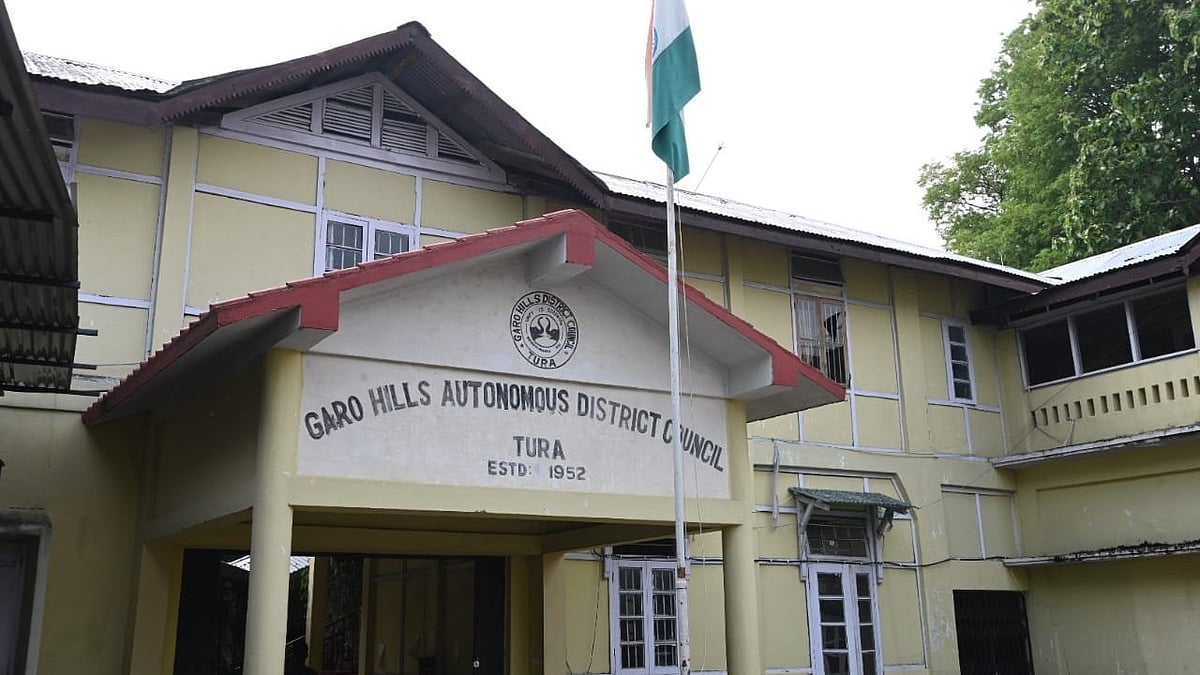
Guwahati: The Meghalaya government led by Conrad Sangma postponed Garo Hills Autonomous District Council (GHADC) elections, scheduled for April 10 as violence hit the valley badly.
Realising an audio video clip CM Conrad Sangma said that by viewing the prevailing situation in the Garo Hills and giving respect to the sentiments of the people govt decided to stop the council elections for time being. 'We will sit talks and discuss and appropriate steps will be taken but for the time being election is being hold., Sangma said.
Two persond were killed in Meghalaya’s West Garo Hills district early Tuesday after security forces opened fire to disperse violent mobs. The unrest erupted in the Chibinang area as tensions escalated between tribal and non-tribal groups over the nomination process for the upcoming Garo Hills Autonomous District Council (GHADC) elections, scheduled for April 10. The violence followed an alleged assault on a former legislator attempting to file papers, leading to a breakdown of law and order.
The situation necessitated the deployment of five Army columns and the imposition of a district-wide curfew. Authorities have also suspended mobile internet services for 48 hours to prevent the spread of communal misinformation and help restore normalcy in the affected areas.
The situation in West Garo Hills took a tragic turn in the early hours of Tuesday when security forces encountered a large, aggressive gathering defying curfew orders in Chibinang.
According to officials, the crowd had assembled following a day of intense skirmishes and arson.
Superintendent of Police Abraham T. Sangma confirmed the deaths, stating, “the two persons who died were residents of Chibinang. There was a clash between tribals and non-tribals regarding the GHADC elections, and the firing occurred while we were dispersing an unlawful assembly.” One victim reportedly died in the firing, while another succumbed to injuries sustained during inter-community clashes.
The human cost of the political standoff has sent shockwaves through the “plain belt” region, where the population is a dense mix of indigenous Garos and Bengali-speaking non-tribal Muslim residents. Deputy Commissioner Vibhor Aggarwal, acting on the severity of the unrest, requested immediate military assistance. Defence spokesperson Lt Col Mahender Rawat confirmed that Army columns are now conducting flag marches in Tura and Chibinang to “reassure the public and restore confidence.” For the families in Chibinang, the elections intended to be a celebration of local democracy have instead brought grief and a heavy military presence to their doorsteps.
The current crisis is rooted in a February 17 notification by the GHADC Executive Committee, which made it mandatory for all candidates to produce a valid Scheduled Tribe (ST) certificate. This move was a response to long-standing demands from Garo pressure groups, such as the Garo Students’ Union, who argue that the council was created under the Sixth Schedule specifically to protect tribal interests.
Also Watch:
However, the mandate effectively disenfranchises non-tribal residents who have historically contested and won seats in at least five of the 30 constituencies. Former Phulbari legislator Esmatur Mominin, who was allegedly assaulted by protesters while trying to file his nomination on Monday, has termed the requirement “unconstitutional.”
The violence was sparked by this specific incident at the Deputy Commissioner’s office in Tura, where Mominin was targeted by mobs demanding that non-tribals stay out of the polls. While the Meghalaya High Court is currently reviewing the legality of the GHADC’s notification, the delay in a judicial verdict allowed tensions to simmer and eventually boil over.
The district administration has now enforced a 24-hour curfew (extended in some areas until March 13) and suspended internet services to curb the “vitriolic rhetoric” and “communal mobilization” appearing on social media platforms, as the region struggles to balance indigenous protections with inclusive democratic rights.

