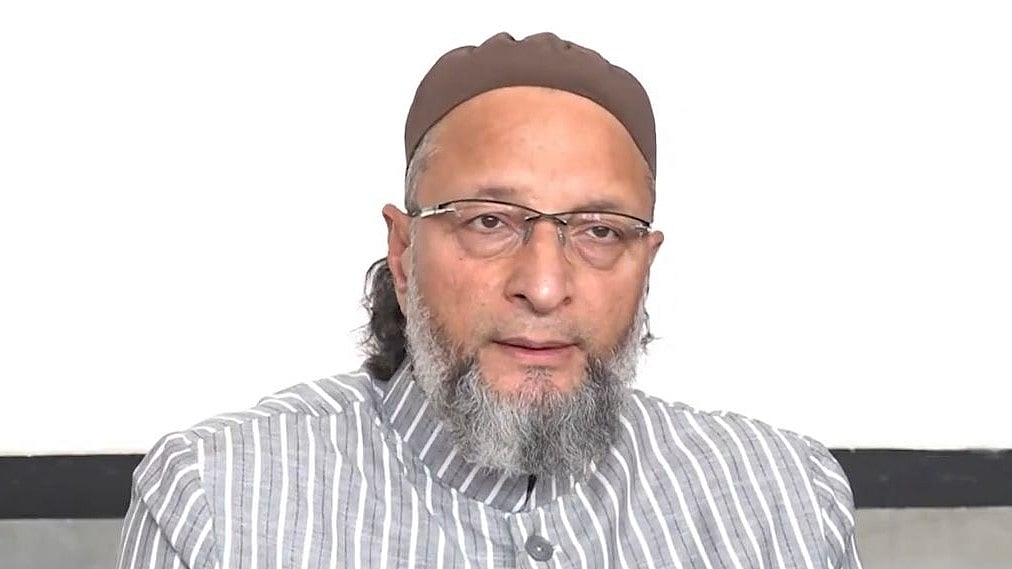
AIMIM chief Asaduddin Owaisi on Tuesday reacted sharply to the outcome of the recently concluded Assembly elections, stating that the mandate in West Bengal in favour of the BJP must be respected while criticising so-called secular parties for their failure to counter the party’s rise.
Addressing a press conference, Owaisi said the results reflected a broader pattern seen across states, alleging that parties claiming to be secular had increasingly adopted “soft Hindutva,” which, he argued, weakened their ideological position. He cited examples from Delhi, Maharashtra, and West Bengal, naming leaders such as Arvind Kejriwal and Uddhav Thackeray, and targeting Mamata Banerjee over her party’s approach.
Owaisi thanked voters in West Bengal who supported AIMIM candidates, despite the party failing to secure seats. He highlighted Kandi and parts of Malda and Murshidabad as areas where the party saw encouraging support, expressing optimism about future growth.
In a strong appeal, Owaisi urged Muslims to build independent political leadership, claiming their votes were being “wasted” on parties that ultimately fail to stop the BJP. He argued that reliance on such parties had not yielded meaningful political outcomes.

Referring to Assam, he said the BJP’s return to power under Chief Minister Himanta Biswa Sarma showed that opposition strategies were ineffective. He also mentioned AIUDF leader Badruddin Ajmal, suggesting stronger representation could have amplified Muslim voices.
Owaisi further criticised governance in West Bengal, alleging corruption and accusing the ruling dispensation of treating Muslims as a vote bank rather than as equal citizens, while reiterating concerns over citizenship-linked processes.
