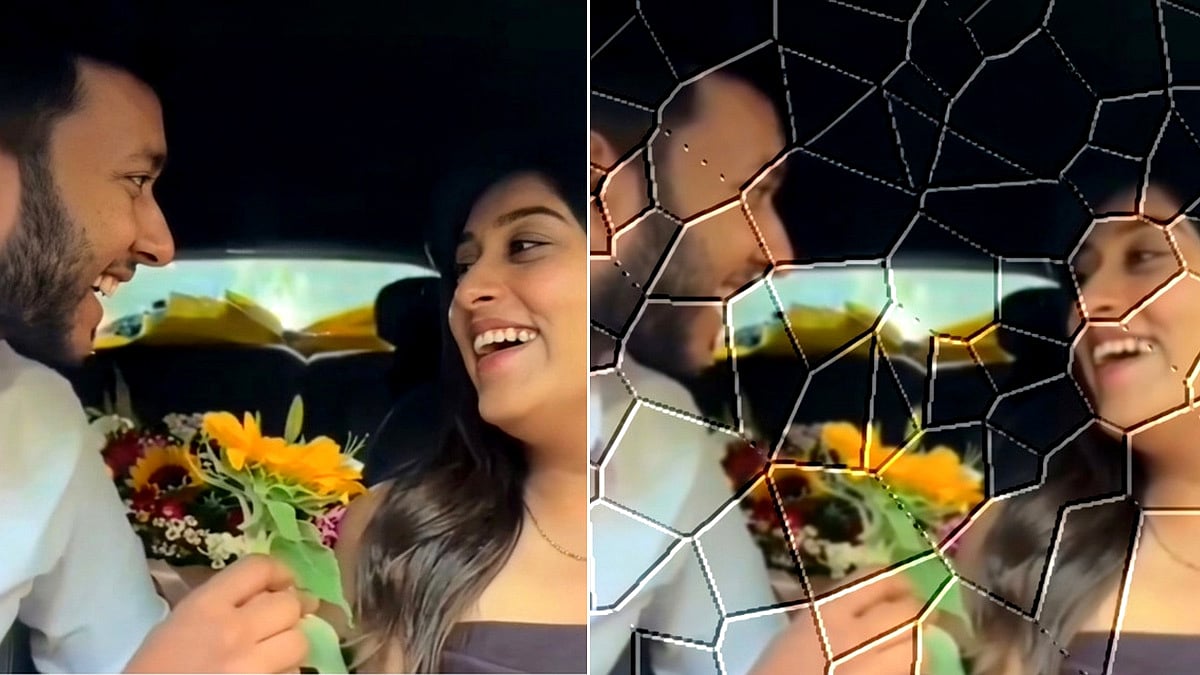
When 26-year-old Ketan Agarwal plummeted 150 feet to his death from the cliffs of Lohagad Fort on June 18, it initially bore the hallmarks of a tragic monsoon trekking accident. However, a deep digital dive by investigators unravelled a cold, calculated conspiracy masterminded by his 20-year-old fiancee, Siya Goyal, and her lover, Chetan Chaudhary, 22.
The timeline exposes a chillingly relentless intent—a stolen passport to sabotage a pre-wedding trip to Bali, followed by two failed attempts at the fort before the final, fatal push. Technical evidence showed an astonishing 2,004 phone calls between the co-conspirators over six months. Yet, the most baffling question remains. The families were wealthy, a grand Udaipur wedding was being planned and Ketan's family explicitly stated they would have called off the engagement if asked. Why choose a violent murder over a simple social confrontation?
To decode this baffling pathology, The Free Press Journal sat down with Dr Anshu Kulkarni, a leading psychiatrist at the SL Raheja Hospital – A Fortis Associate in Mahim, Mumbai to understand what happens when a young mind trades a difficult conversation for calculated, synchronised malice.
Q. The victim's family is devastated by one central question: why didn't they just say no? Psychologically, what prevents an individual from having a difficult conversation, making them view a violent crime as an easier escape route than social confrontation?
Psychiatrist: When you look at an extreme path like this, you have to look at it from two distinct angles. On one side, you look for individual personality traits—specifically a profound lack of empathy and poor impulse control.
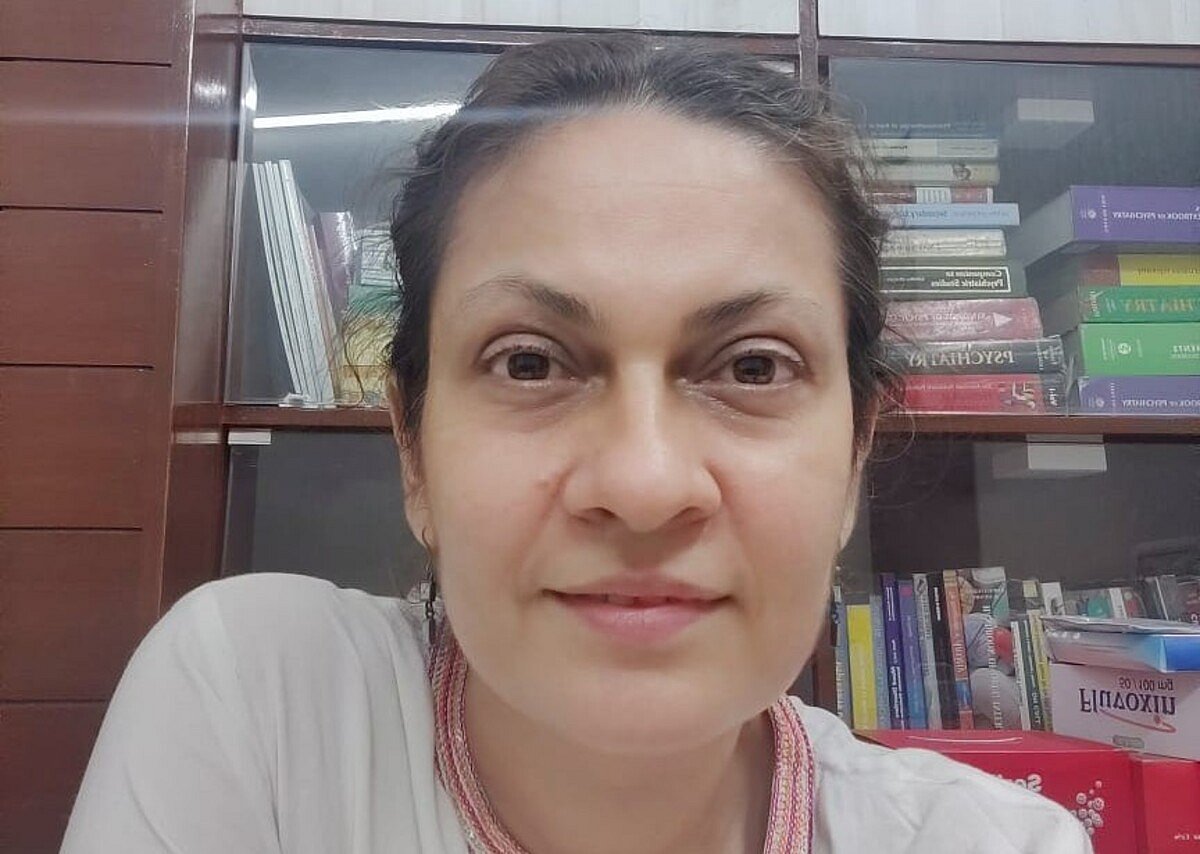
Dr Anshu Kulkarni is a psychiatrist at the SL Raheja Hospital – A Fortis Associate in Mahim | Anshu Kulkarni
But on the other side, we cannot ignore the possibility of deeply dysfunctional family dynamics at home. In many traditional or affluent business families, marriages are often fixed by parents with the primary objective of advancing, growing, or amalgamating their businesses, leaving absolutely no space for the children's independent opinions. If a young adult grows up in a highly oppressive, coercive environment where their views are never respected, they develop an intense fear of parental disapproval.
When there is no structural space for clear communication at home, a severe anxiety of confrontation sets in. The children develop acute fears of saying anything against their parents' views. To a mind warped by that fear, a secret, esoterically planned crime can bizarrely look like a path of less resistance than facing public or familial shame.
Q. Does an impending high-profile marriage create a specific type of tunnel vision or claustrophobia in a young adult’s mind? Can the fear of public shame genuinely override basic human morality?
Psychiatrist: It absolutely can, but typically only when fuelled by those dysfunctional home dynamics. When a young person feels trapped in a coercive environment where they are entirely erased, the traditional boundaries of morality and social judgment begin to dissolve. There simply is no mental "space" left to process moral values. They develop a form of cognitive tunnel vision where self-preservation—or escaping the impending arrangement—becomes the sole focus, entirely blinding them to the gravity of taking a human life. Because they have not been allowed to form definite, independent opinions growing up, they just tend to act blindly and impulsively.
Q. The investigation reveals a highly methodical timeline like sabotaging the Bali trip, followed by two failed attempts at the fort (including fabricating a snake sighting) before the final push on June 18. What does it say about their cognitive state when they don’t back out after multiple failures, but instead double down on the plan?
Psychiatrist: This relentless doubling down speaks volumes about manipulation, intense scheming and an absolute deficit of empathy. They wanted the victim out of the way by one means or another.
However, given that Siya is just 20 years old, we have to explore the interpersonal dynamic between the two lovers. If she has no past criminal or anti-social background, it is highly probable that she was the submissive, suppressed partner in this relationship. She may have been completely smitten, driven by an acute fear of rejection from Chetan. When two perpetrators operate with absolutely no friction, diffusion, or conflict between them, their actions become highly synchronised and orchestrated. She essentially surrendered her agency, holding onto whatever her lover planned, entirely desensitized to the wrongness of the path they were walking.
Q. Why do you think the perpetrators fixated so heavily on Lohagad Fort? Does choosing a high-altitude, natural terrain help a killer distance themselves psychologically by framing it as an "accident"?
Psychiatrist: Without concrete data, we can only speculate, but it is highly probable that the idea was planted by external media. Today, young adults are heavily influenced by what they consume—whether it's reading a crime story, a book, or watching something online. They likely read about a similar incident and concluded that a high-altitude fort was the logistically "easier" way to execute the crime and mask it as a selfie-related monsoon accident. To confirm this, investigators must thoroughly analyse the digital search history and personal gadgets of both perpetrators to see exactly where this blueprint originated.
Q. Technical evidence showed 2,004 phone calls—roughly 238 hours of conversation—between Siya and Chetan over six months. Does this constant, obsessive reinforcement act as an echo chamber that dwarfs their judgment?
Psychiatrist: Yes, but we must look at this through the lens of developmental biology and age. Siya is only 20 years old. These days, what we see clinically is that puberty is actually very prolonged. By prolonged puberty, I mean that the prefrontal lobe—the exact region of the brain that serves as the biological seed for social judgment, risk assessment,and understanding long-term consequences—is actually still developing during this late pre-puberty and young adult stage.
Because this seed of social judgment is still forming, young adults inherently have skewed judgment, high impulsivity and risk-taking behaviours. They have an intense biological need to abide by their peers and follow people. When you inject an intense, forbidden romance into that developmental stage, alongside 238 hours of obsessive, constant validation from a co-perpetrator, it creates a dangerous echo chamber. The need for validation and risk-taking behaviours completely dwarfed and overrode her developing judgment.
Q. The public and the victim's family naturally label this mindset as 'monstrous'. As a psychiatrist, how do you clinically categorise this level of cold planning?
Psychiatrist: Professionally, we avoid labels like 'monstrous' and instead rely on what we call a psychological autopsy. To truly understand the pathology and the mindset behind this crime, a psychiatrist needs to review a vast matrix of clear evidence knowing both the accused and the perpetrator.
We look closely at past legal records, past police records and whether there is any history of anti-social personality traits or prior legal hazards. We must investigate her formative years: her schooling, her college life, whether she had been regular in attendance and whether she was academically strong.
Furthermore, we evaluate their expressions post-murder to see if there is any genuine expression of remorse, or if they remain completely carefree and detached. By combining this legal and academic history with an assessment of their personal information—gleaned through their own diaries, social media footprints and gadgets—we can map out the manipulation, the fear of rejection,and the scheming. Until that comprehensive psychological autopsy is built, we are looking at a terrifying cocktail of an underdeveloped prefrontal lobe, a coercive relationship dynamic and an intense fear of familial confrontation that ended in an absolute tragedy.

