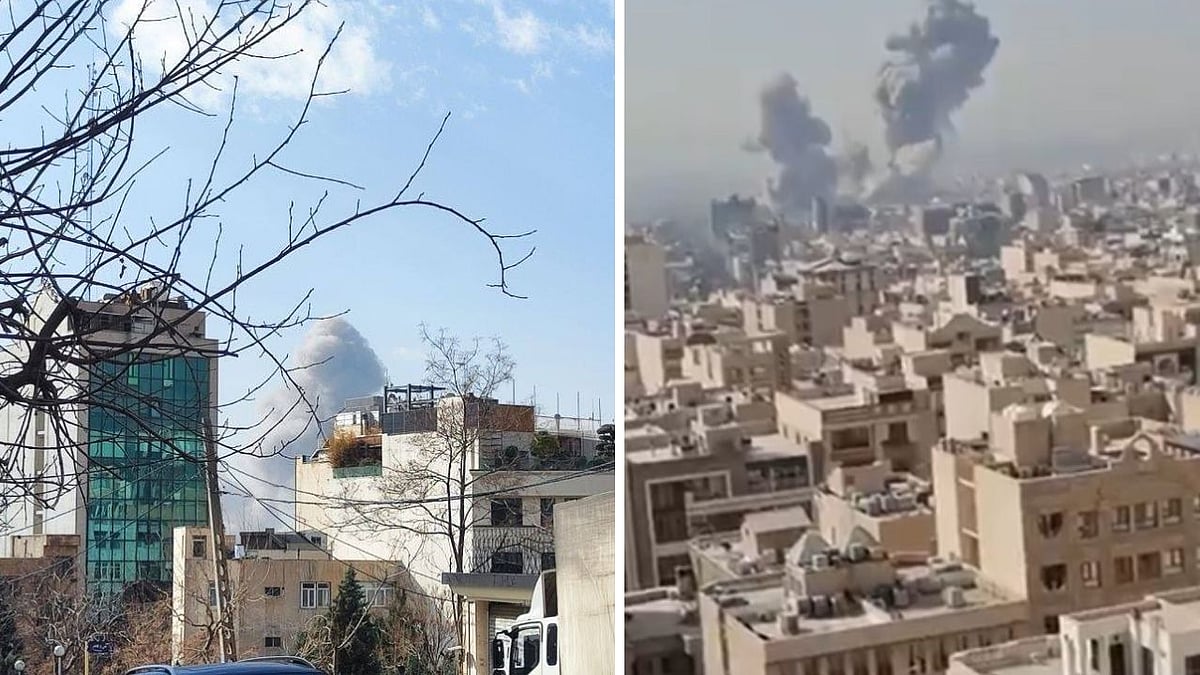
Israel launched a daylight missile strike on Tehran on Saturday, with thick smoke seen rising from parts of the city’s downtown. One of the initial blasts was reported near offices associated with Iran’s Supreme Leader, Ali Khamenei. Iranian state television confirmed explosions in the area but did not immediately provide details on damage or casualties.
Authorities in Tehran shut down airspace and reportedly disrupted mobile phone services as emergency responses unfolded. There was no immediate confirmation on whether Khamenei was present at the time of the strike.
U.S. Role and Israeli Justification
According to a U.S. official cited by The Wall Street Journal, the United States participated in the operation and was also conducting strikes. Another report by Reuters said Israel described the action as a “preventive” move aimed at removing threats.
Israeli Defence Minister Israel Katz stated the operation was carried out to neutralise potential dangers but did not elaborate on specific targets. Israeli military officials said air raid sirens were sounded nationwide as a precautionary measure in anticipation of possible retaliation.
Israel also temporarily closed its airspace, shut schools, advised citizens to work remotely, and banned public gatherings as part of emergency protocols.
Nuclear Talks and Regional Fallout
The strikes come amid heightened strain over Iran’s nuclear programme. Donald Trump has previously pushed for a deal to curb Iran’s uranium enrichment, while Tehran insists it has the right to enrich uranium for civilian purposes and refuses to negotiate over its missile programme or regional alliances.

The United States has recently increased its military presence in the region, deploying fighter jets and warships in what officials describe as a pressure campaign tied to nuclear negotiations.
Iran has warned that any attack involving the U.S. would make American bases and personnel in the region potential targets for retaliation. It remains unclear how or when Tehran might respond.
The developments mark a significant escalation in direct hostilities between Israel and Iran, raising fears of a broader regional conflict.

