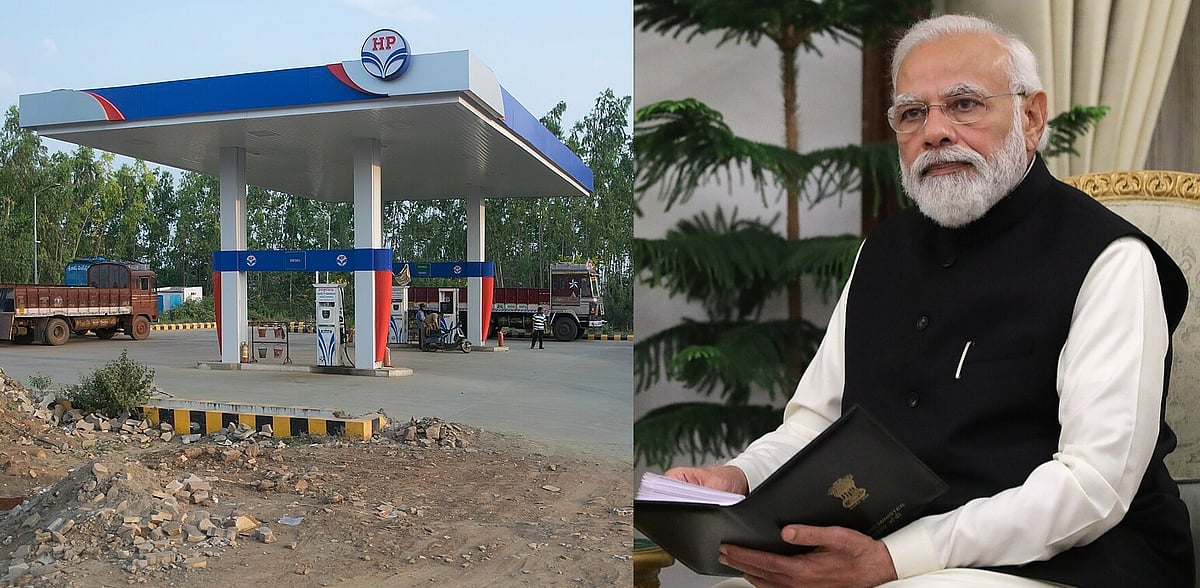
Prime Minister Narendra Modi’s speech in Hyderabad on Sunday was not a simple 'chai pe charcha' but seems to be a well-thought-out strategy to prepare the country for a fuel price hike. It was a sobering "state of the union" address that sent shockwaves through the national psyche.
The mention of a Covid-like regime acted as the catalyst that sent markets reeling on Monday with the Sensex falling over 1,000 points at opening bell. From oil to gold, indices dived south as investors braced for a return to austerity. The prime minister’s 'sankalp' or resolution was clear that to protect the exchequer, the citizen must retreat. He urged a revival of the 2020-21 Covid-playbook, encouraging work-from-home arrangements to slash fuel demand, opting for virtual meetings over travel and prioritising public transport.
This is not merely advice but a strategic preparation for a supply-side shock. With India importing nearly 90% of its crude, the blockade in the Middle East, or West Asia, has turned energy security into a civilian duty.
No war is far from home
Although geographically thousands of kilometres apart, the Strait of Hormuz is actually far closer to the polling booths of Assam, West Bengal or Kerala than many imagine. In the hyper-connected reality of today, a naval standoff in the Persian Gulf dictates the price of a litre of petrol in Siliguri or a cylinder of LPG in Kochi.
With Suvendu Adhikari officially taking charge as West Bengal’s first BJP chief minister on May 9, and Himanta Biswa Sarma tightening his grip in Assam and taking the helm on May 12, the immediate electoral anxieties for the ruling party are, for the moment, settled.
This victory has cleared a strategic runway for the Centre. No longer burdened by the need for populist restraint in these key states, the government can finally turn to addressing a battered economy, a crisis largely fuelled by external shocks that now requires painful internal medicine.
Trump factor and and Iranian standoff
Adding fuel to the fire, US President Donald Trump categorising Iran’s peace proposal as "totally unacceptable" have effectively slammed the door on a quick diplomatic resolution. By insisting on the total removal of Iran’s enriched uranium before any ceasefire, the White House has signalled a prolonged period of volatility. With the White House outright rejecting the Iranian peace proposal, President Trump has unintentionally offered his shoulder to the Centre to fire the bullet of a fuel price hike.
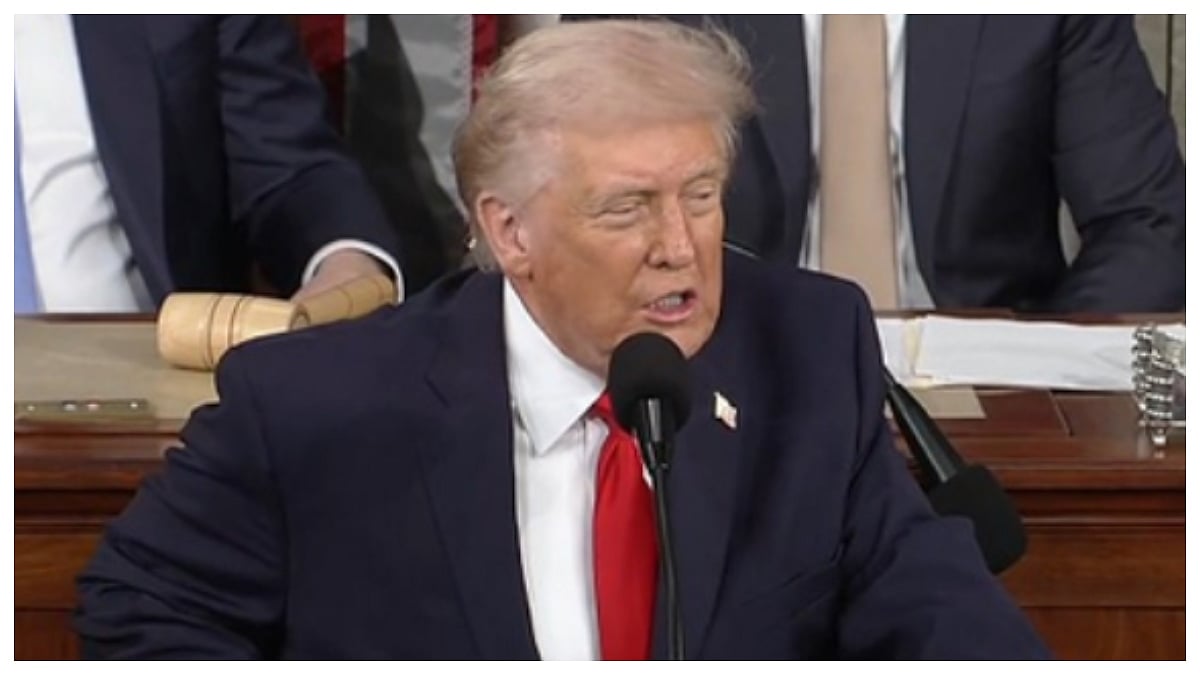
(File) US President Donald Trump |
When global crude prices soar from $70 toward $130 per barrel, the domestic narrative shifts from government mismanagement to a global crisis beyond local control. President Trump's observations on Iran came right in time to justify the impending economic squeeze.
2027 arithmetic: A five-month window
For now, what are we staring at?
Of course, the inevitable and substantial rise in fuel prices, and it is unlikely to be a tiny hike. Oil Marketing Companies are reportedly facing under-recoveries of nearly Rs30,000 crore per month.
Until the electoral process was on in Tamil Nadu, Kerala, Assam, West Bengal and Puducherry, the government vehemently denied any such plan was in the offing. Now that those elections are over, the government can take the risk of taking not-so-citizen-friendly decisions.
The logic is a classic political buffer strategy.
There are no major Assembly elections for the remainder of 2026. The next significant cycle—Goa, Manipur, Punjab and Uttarakhand—doesn't arrive until early 2027. The Assembly terms in these states are ending in March 2027. This gives the Centre a critical five-to-six-month window to absorb the economic pain of high prices now and stabilise the exchequer, allowing itself enough buffer to take populist calls just ahead of those 2027 polls.
Punjab gambit and political risk
There is another arithmetic to the upcoming 2027 cycle. The combined Lok Sabha seats in Goa, Manipur, Punjab and Uttarakhand stand at 22, with Punjab leading the flock at 13. Except for Punjab, where the BJP is already preparing to regain the state—as seen in the recent defection of seven AAP Rajya Sabha MPs, including Raghav Chadha, to the BJP—the other states offer relatively little numerically in the Lok Sabha. While Manipur and Goa have two seats each in the Lower House, Uttarakhand has five seats in Lok Sabha. The BJP is already in power in Manipur, Goa and Uttarakhand.
What kind of political risk the BJP has an appetite for will determine the economic course of action in the coming months. By hollowing out the opposition from within in the bread basket of Punjab, the party is attempting to mitigate the fallout of the painful medicine it is about to administer.
Gold, forex and rupee pressure
The concerns are rooted in economics as much as geopolitics. Prime Minister Modi’s appeal asking Indians to avoid buying gold for weddings for one year may have sounded unusual, but it targets a massive economic vulnerability, which is, the pressure on India’s foreign exchange reserves.

India's love for gold is putting pressure on its forex | Representative Image
Gold and crude oil are both largely imported and paid for in US dollars. When crude oil prices surge to nearly $126 per barrel, India’s import bill skyrockets. If gold imports remain high simultaneously, the demand for dollars increases, putting immense pressure on the rupee. By asking the public to defer gold purchases and unnecessary foreign travel, the government is attempting to protect the national balance sheet during a period of extreme global instability.
Resilience as a toolkit
The current situation is reviving memories of the pandemic years, where households were forced to rethink spending and work habits. Today, the work-from-home model is being revived not for health, but as a way to reduce fuel consumption and traffic pressure.
Fewer vehicles on the road directly reduce petrol and diesel demand when markets are under strain. PM Modi’s Sunday address was a well-timed warning shot. It prepared the public for the demanding decisions required to negotiate through the Hormuz crisis, while the 2027 calendar ensures that the political fallout will likely have faded by the time voters return to the booths.
Resilience often begins with these small, mandated changes in how a nation works and consumes.

