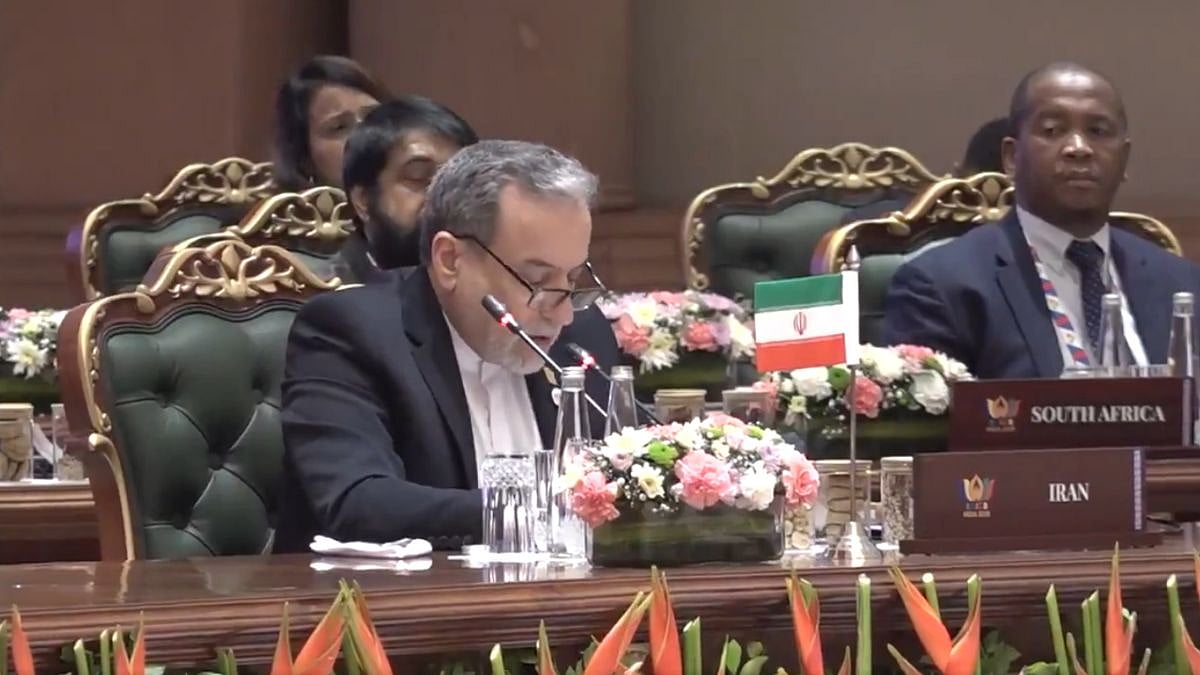
New Delhi: Iranian Foreign Minister Seyed Abbas Araghchi’s plane left no one in doubt as to his message as his aircraft named ‘Minab168’ landed in New Delhi on Wednesday for the BRICS foreign ministerial meeting.
Minab was the school where 168 Iranian girls had died because of a US airstrike. Iran has since been demanding a joint statement by BRICS member states condemning the attack, something that the Iranian foreign minister reiterated in his opening remarks at the foreign-ministerial meeting on Thursday.
“Iran calls upon BRICS member states and all responsible members of the international community to explicitly condemn violations of international law by the United States and Israel, including their illegal aggression against Iran,” said Aragchi.
“They must prevent the politicisation of international institutions and take concrete action to halt warmongering and bring an end to the impunity of those who violate the UN Charter.”
Iran’s call for a joint BRICS statement has been stymied by the UAE, which has not condemned the attacks on Tehran but instead issued a statement in March that said that it was in a “state of defense” against what it called the “brutal and unprovoked Iranian aggression.”
The UAE claimed that 1,400 ballistic missiles and drones targeting infrastructure and civilian sites in the Emirates had been carried out by Iran, a figure that it says has increased since March.
The Iran-UAE standoff has complicated matters for New Delhi, which is the chair of BRICS. India took over the rotating chairmanship of BRICS from Brazil on January 1, 2026, has so far been unable to get member states to agree to a joint declaration on the US-Iran war.
Expectations were low as New Delhi failed to obtain consensus in April at the BRICS Deputy Foreign Ministers and Special Envoys for the Middle East and North Africa (MENA) meet and had to settle for a Chair’s Summary.
Senior diplomats say that since details and wording of joint declarations are usually worked out in advance at the technical levels well before the foreign-ministerial summit, it was unlikely a consensus would be reached.
The nonattendance of Chinese foreign minister Wang Yi, who missed the event due to “scheduling issues” – China was instead represented by its ambassador to India, Xu Feihong – suggested that any joint declaration, even if it came, would be watered down.
The use of neutral language by India and the focus on cautious diplomacy by New Delhi have been welcomed by most of India’s strategic community, but others believe more creative diplomacy can be used.
A senior diplomat who chose not to be named recalled India’s success in getting a unanimous declaration at the G20 New Delhi Summit in 2023 with regard to the Ukraine war, thereby successfully balancing Western, Russian and Chinese concerns.
“Though successful behind-the-scenes diplomacy and careful wording, India managed to satisfy the concerns of Western nations and of Russia and China. We stated that all nations must act within the purposes and principles of the UN charter, use of nuclear weapons is inadmissible and did not name Russia. This was a diplomatic success for New Delhi,” said the diplomat.
Indian diplomacy on the US-Iran war has been more cautious. Till date, Delhi has not condemned Iranian war casualties in its statements and has called for “dialogue and diplomacy” to reduce tensions while also calling for free maritime passage through the Strait of Hormuz.
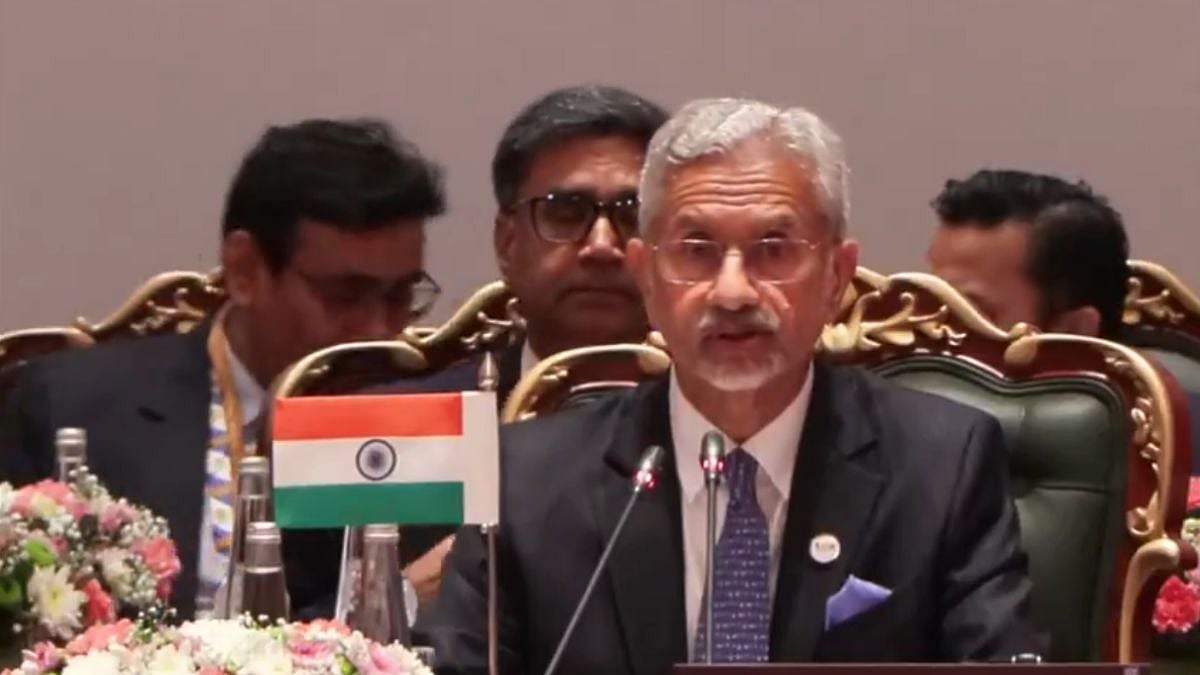
Diplomats say that this suggests New Delhi is not pushing for a joint statement as it did during the G20 for a number of reasons.
“India believes its core interests lie with the Gulf and the UAE in particular, and therefore it may not be pushing for a joint declaration,” said a senior diplomat who has served in the Gulf.
“It also wants to reset its ties with Washington, and a joint declaration mentioning Iran’s concerns will not help in this regard,” he said. There is also a wait-and-see element to New Delhi’s calculus here. “If the Trump-Xi summit helps resolve the US-Iran issue, why would India push for a consensus?”

