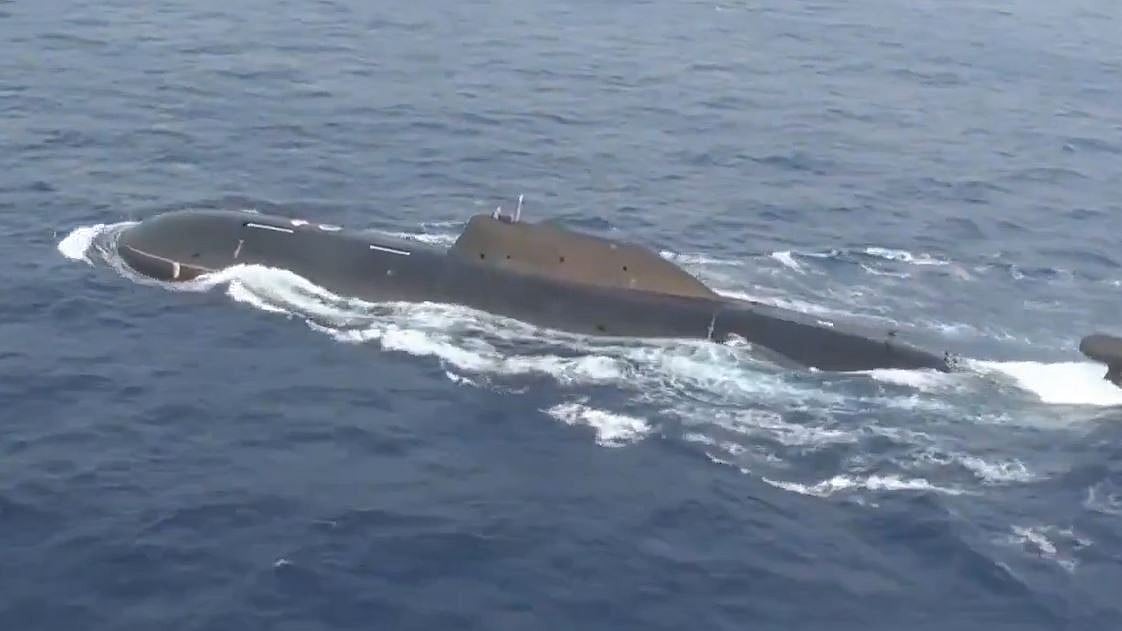
India's underwater armada is set to become even mightier, as INS Aridhaman, the country’s third homegrown nuclear-powered ballistic missile submarine, is set to be commissioned in the upcoming months. According to reports, the commissioning might take place as early as April or May. The submarine is going through undersea trials before officially joining the Indian Navy.
Once inducted into service, India will, for the first time, field three nuclear ballistic missile submarines under the Strategic Forces Command. This milestone moves the country closer to establishing continuous at-sea deterrence, a vital strategic posture ensuring that at least one nuclear-armed submarine remains concealed in the oceans at all times, capable of responding if required.
Meanwhile, Pakistan is strengthening its undersea capabilities as well. Under a $5 billion agreement signed in 2015, Islamabad is pursuing eight advanced Hangor-class diesel-electric attack submarines from China to enhance its naval power.
Constructed under India’s highly classified Advanced Technology Vessel (ATV) programme in Visakhapatnam, the massive INS Aridhaman surpasses its predecessors, INS Arihant and INS Arighaat, in both size and firepower. Displacing roughly 7,000 tonnes, the submarine is designed to carry a larger arsenal of nuclear-capable missiles. These include the K-15 Sagarika, with a strike range of 750 km, and the significantly more potent K-4 missile, capable of reaching targets up to 3,500 km away, extending India’s strategic reach across much of Asia.

INS Aridhaman substantially enhances India’s second-strike capability, a foundational element of its nuclear defence doctrine. Engineered for stealth operations, it is equipped with advanced indigenous sonar systems such as USHUS and Panchendriya, along with specialised sound-absorbing tiles that greatly reduce detectability by adversaries.
Powered by an 83-megawatt nuclear reactor, the submarine can remain submerged for prolonged durations, operating as a silent yet formidable deterrent beneath the sea. It is slated to function from Project Varsha, India’s high-security submarine base near Visakhapatnam.

