India’s Most Dangerous Decade | General Sundarji & Operation Brasstacks
In 1987, India and Pakistan came to the brink of war during Operation Brasstacks — one of the largest military exercises in Indian Army history. At the centre of it all was K. Sundarji, a bold and controversial Army Chief who reshaped India’s military doctrine during the turbulent 1980s.
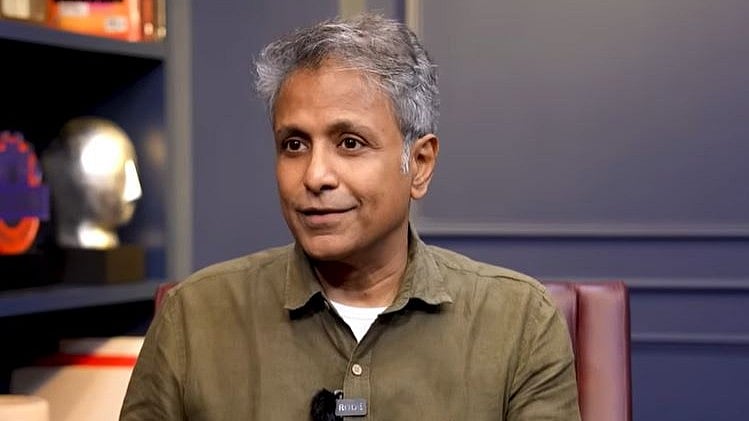
In this episode of Buzz by the Bay, Anushka Jagtiani speaks with best selling author, historian and former Army Major Probal DasGupta about Operation Brasstacks, Operation Blue Star, Operation Pawan, and the assassinations of Indira Gandhi and Rajiv Gandhi.
A deep dive into the crises that reshaped India’s security and regional power politics.
Here are excerpts from the interview
1. congratulations on your book, General Brasstacks. It is fascinating. Army Chief Krishnaswami Sundarji was also known as General Brasstacks because of the operation he conducted. He was bold but controversial. His tenure lasted 820
Days, from February 1986 to May 1988 and it was marked by various important milestones.
Probal: General Sundarji was someone who influenced that entire decade of 1980s, which I call a deadly decade. An explosive one.
2. Sundarji charted the country's nuclear doctrine and he made important contributions to national security. He gave the go ahead for Operation Pawan in Sri Lanka, and played a big role in Operation Blue Star in the Golden Temple. But you say in the book that he was one of the most charismatic but forgotten army chiefs? Why was he forgotten?
Probal: Let me set it into context. You know, we are not a nation that writes their own history. That is something that has happened in the past as well. 1967 and two successive battles that we won against China was never written about for over half a century. We haven't written about our wars of 1962 and 71. We haven't written about many of the past instances, battles, and conflicts, etc. When you look at general sundarji and why he has not been written about it is in that context of we as a nation, not really writing our own history. This is the first definitive biography on General Sundarji
3. You’ve mentioned that Brasstacks was a groundbreaking exercise, bringing together India’s largest mechanised formations? Tell us a bit about the scale of Brasstacks?
Probal: So let me start with the fact that, operation Brasstacks was four times bigger than the biggest NATO operations ever, and the biggest one after the Second World War. There had not been that kind of troop movement as had been done during Operation Brass Tacks. One of the things about brasstacks which really stood out, was the fact that the railways, the Ministry of Transport, all of these different ministries were also engaged, and it was the whole of the nation approach which had never been done.
4. What made them take the decision to undertake such a massive exercise ?
Probal: So when Rajiv Gandhi asked the three chiefs, has India ever had this kind of an exercise with the entire armed forces, which engages the army, the air Force and the Navy? Have they all moved in unison to prepare themselves and showcase their strength? The answer was no. So that is when brasstacks took shape.
5. According to some people Sundarji wanted to wage war with Pakistan. Was that the intention?
probal: Whether brasstacks was actually meant to go into full scale war with Pakistan, the opinion is divided on that.
Brasstacks as an exercise was divided into four pieces, which is how it was planned.
400,000 troops going into Rajasthan doing the exercise rattled Pakistan. The Pakistanis were doing two exercises in the north and in the south. in Punjab, traditionally
Pakistan had done very well in the wars of 1965 and 71, but Rajasthan was a weak link.
General Sundarji had identified that, so as the troops had moved there, it had rattled Pakistan completely. One of the theories is that, well, it was just an exercise to test our strength of mobility, firepower, preparedness etc but it was not an exercise to cause war. The second opinion is that, well Sundarji had identified the deserts of Rajasthan as a weak link and Pakistan was preparing its nuclear program in its facility in Kahuta inside Pakistan, 500 miles away from the border.
So possibly one of the plans was to drive deep inside Pakistan through the deserts of Rajasthan and take out the nuclear facility.
Watch the full interview on buzz by the bay here:
6. Simultaneously India was conducting another operation up north?
Probal: Yes. One theory is that Brasstacks was just a smokescreen, This was in Rajasthan, close to the border but up north there was operation Trident. Of which very little is known about. Even now it is under wraps. Some believe that was a plan to go inside Pakistan and para drop Paratroopers inside Pakistan and also use tanks to capture and bring back two places in Pakistan occupied Kashmir - Gilgit and Skardu. So the idea was to bring Pakistan down south so that the Indian army can carry out this operation in the north.
7. General Sundarji was a visionary. And he really modernized the Army. But of course there were so many controversial operations he was involved with. One of them was Operation Blue Star in 1984 where the Indian army stormed the Golden Temple to flush out Khalistani militants who had made it their fortress. Sundarji was head of western command at the time. He knew there would be serious backlash for storming the most sacred shrine of Sikhism, so why did he go ahead with the operation ?
Probal: I think there are so many things in this entire Bluestar operation.
The very fact that Jarnail Singh Bhindranwale and his militants were allowed to occupy the Golden Temple premises is a reflection of the poor administration of the state and of the center. The political dispensation, as well as the law and order mechanism. There was a police DIG who was killed on the steps of the Golden Temple and no one could take his body out for 4 to 5 hours because they were so scared. Bhindranwale had been allowed to become a dragon who could not be controlled anymore. He could roam around with swords and guns in the cities of then Bombay and Delhi, and he would walk around everywhere. So when General Sundarji had this conversation about how to tackle him, I think the this was an inevitability of sorts that was brought at the door of the Army.

