
Mumbai: An Italian daily, Corriere Della Sera, reporting that the final investigation report into last year’s AI-171 crash in Ahmedabad will attribute the disaster to an intentional act by the pilot, has caused a storm in the aviation world. While the Indian aviation fraternity outright rejected the report, arguing that the coverage presents intent and individual attribution in definitive terms while omitting key technical caveats, the country's Aircraft Accident Investigation Bureau (AAIB) clarified that the investigation is still ongoing, calling the report incorrect and speculative.
Fuel Switches Allegation
The report, published on Tuesday, suggested that AAIB is preparing to conclude that the aircraft’s fuel switches were manually turned off. It named the flight’s commander, Capt. Sumeet Sabharwal, as the “prime suspect” and suggested the act was “almost certainly intentional” rather than a mistake.
CVR Re-Analysis Claim
Citing sources within Western aviation agencies, Corriere Della Sera claimed that Indian investigators re-analysed “cleaned-up” cockpit voice recordings (CVR) at the National Transportation Safety Board (NTSB) laboratories in Washington in December. It asserted that the audio analysis identified the specific pilot who moved the fuel control switches from the run to the cutoff position.
Captain Under Scrutiny
The report claimed that Western assessments pointed to the captain monitoring the flight, noting that the left engine shut down first, followed by the right, and that the captain sits on the left side of the cockpit. It further stated that flight data recorder inputs showed that while first officer Clive Kunder’s control stick was positioned to regain altitude, the captain’s stick “remained stationary” in the final seconds.
Simulator Tests Findings
It also cited Boeing 787 simulator tests conducted in the US, where experts were reportedly unable to find any mechanical failure scenario that could cause both engines to shut down simultaneously in the manner recorded. It added that “the only reasonable explanation was always human intervention, whether intentional or a mistake.”
Crash Details Recalled
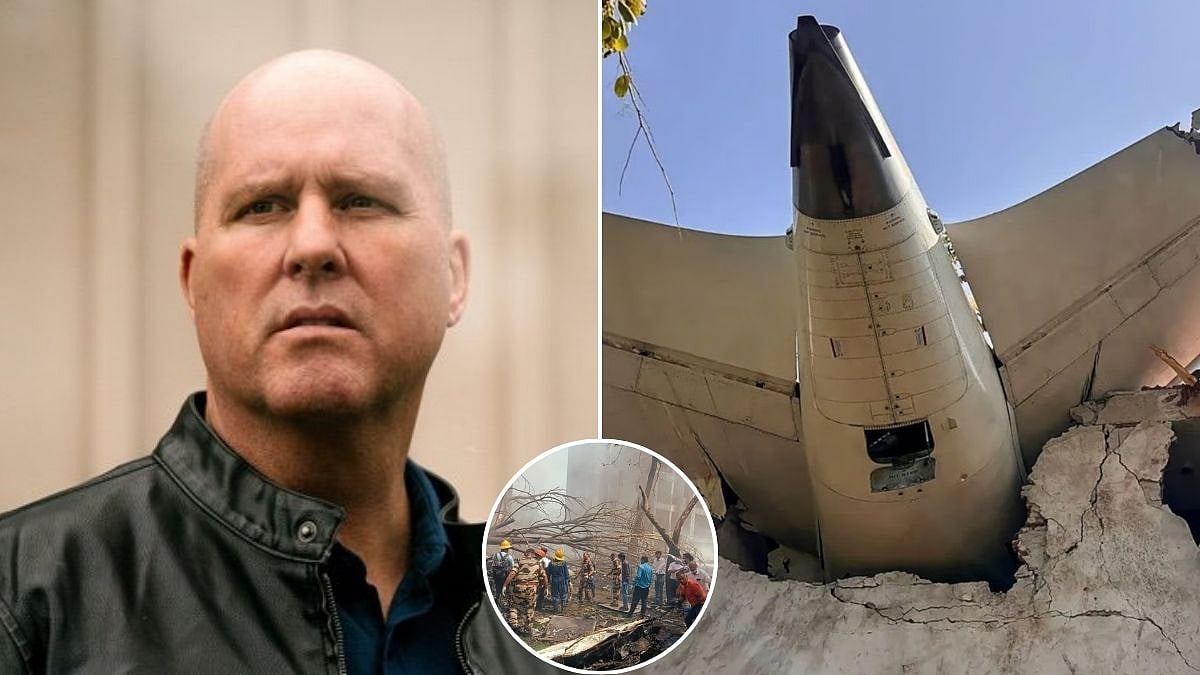
The Boeing 787-8 Dreamliner, en route to London Gatwick, crashed on June 12 last year shortly after takeoff from Ahmedabad. The disaster killed 260 people, including 19 on the ground, when the aircraft plunged into a medical student hostel just 32 seconds after losing thrust. A preliminary AAIB report confirmed that both fuel switches transitioned to cutoff within one second of each other. The CVR captured one pilot asking, “Why did you turn off the engines?” to which the other replied, “It wasn’t me.”
Final Report Timeline
According to Corriere Della Sera, the final report is expected between June 8 and 12 and may include a “more toned-down version” without naming either pilot. It added that the conclusion on intentional engine shutdown would be “subject to political evaluation.”
AAIB Issues Clarification
Following the huge uproar caused by the report, the AAIB released a clarification refuting the Italian daily's report. It said that the reports suggesting that the investigation into the Air India Flight AI-171 accident has been finalised, are incorrect and speculative.
Probe Still Ongoing
“The investigation is still in progress. No final conclusions have been reached. The Final Investigation Report, containing conclusions and safety recommendations, will be published upon completion of the investigation in line with established international norms,” read the statement. The probe body urged media organisations to exercise restraint and avoid premature speculations, adding that unverified reporting causes unnecessary public anxiety and undermines the integrity of an ongoing professional investigation.
Second Western Report
This is the second Western media report suggesting that the AI-171 crash investigation will be attributed to deliberate pilot action. On January 29, Bloomberg reported that investigators had ruled out mechanical failure or sabotage and that the probe was “increasingly homing in on deliberate pilot action” as a probable cause.
Aviation Bodies Push Back
The Indian aviation community also swiftly refuted these claims, calling the reporting speculative and “definitive without primary evidence.” Pilots’ associations and an aviation safety organisation have pushed back against the alleged leaks.
Safety Foundation Responds
Delhi-based Safety Matters Foundation (SMF) said the Italian report presented intent as a settled fact while ignoring critical technical caveats. It argued that the coverage attributed intent and individual responsibility in definitive terms without providing publicly verifiable primary material, and that key caveats regarding CVR audio quality and the backup power timeline were omitted.
Demand For Clarification
Highlighting ambiguity between the report’s headline and body, SMF said that cleaned-up audio alone cannot be treated as proof for assigning blame or ruling out error. It has written to the Italian newspaper seeking correction and clarification.
Also WAtch:
SMF Founder Statement
“We are requesting a correction and prominent clarification so readers can distinguish what is verifiable from what is presented as inference or attribution. We are not asserting an alternative causal theory. We are asking that definitive claims about intent and who did what be supported by disclosed primary material and necessary technical caveats,” said SMF founder Capt. Amit Singh.
ALPA Raises Concerns
Airline Pilots’ Association (ALPA) India president Capt. Sam Thomas earlier told The Free Press Journal that the AAIB needed to involve qualified subject-matter experts in the investigation. “The AAIB lacks the specialised qualifications necessary to investigate an accident of this nature, leading it to conveniently deflect blame onto the pilot’s psychological state. Even a layman can see that the investigation is heading in the wrong direction,” he said.
Supreme Court Mentioned
Capt. C.S. Randhawa, president of the Federation of India Pilots, which has approached the Supreme Court seeking a judicially monitored probe, said the Indian media should refrain from amplifying foreign reports. “The Hon’ble Supreme Court has ruled that speculative reporting should not be carried out. I request the media not to encourage foreign reports that are without evidence,” he said.

