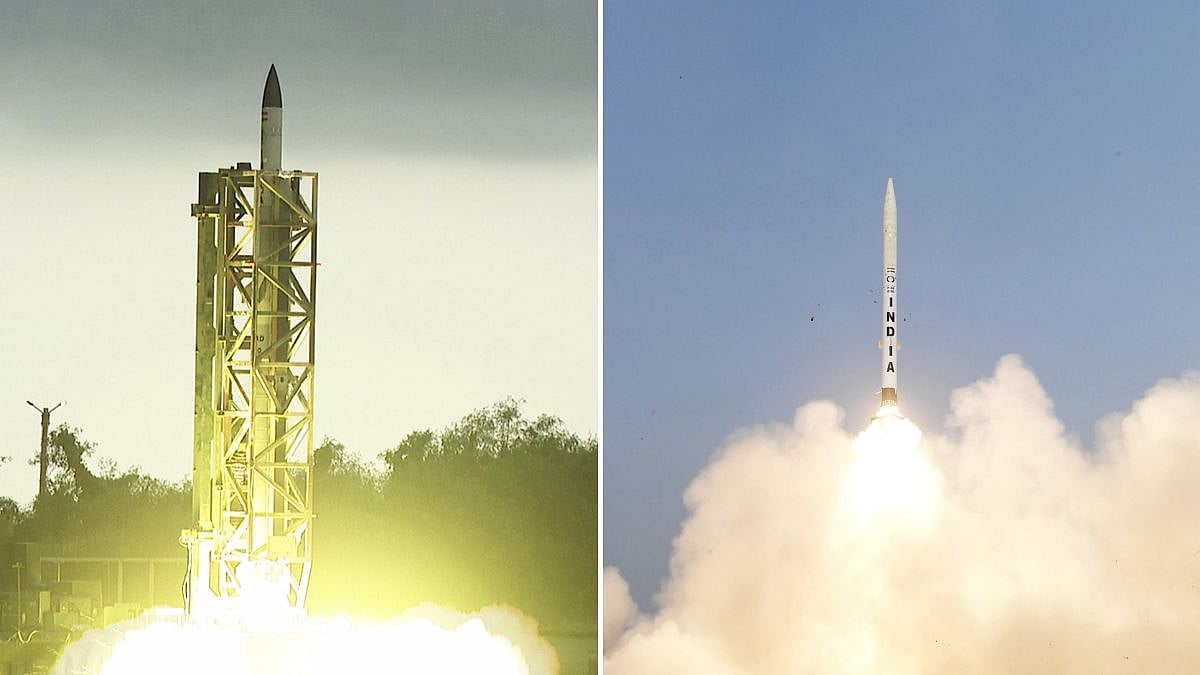
India has successfully carried out a series of flight tests this week to demonstrate the strength of its multi-layered Ballistic Missile Defence (BMD) system, marking a significant milestone in the country’s efforts to strengthen its defence preparedness.
The tests showcased the system’s ability to intercept incoming long- and medium-range ballistic missiles, placing India among a select group of nations with such advanced missile defence capabilities. According to the Defence Ministry, the BMD system can also engage hostile aircraft, including Airborne Warning and Control Systems (AWACS), underlining its strategic importance in modern warfare.
Shield Against Emerging Threats
Three consecutive flight tests were conducted on June 10 and 11 to evaluate the system's ability to neutralise incoming ballistic missiles both within and beyond the Earth’s atmosphere. The successful demonstrations highlighted the growing sophistication of India's indigenous defence technologies at a time when missile threats are becoming increasingly complex.
The Defence Research and Development Organisation (DRDO), which spearheaded the programme, demonstrated multiple critical technologies during the trials. The ministry said the multi-layered BMD capability was successfully validated through the tests.
“The interceptors successfully engaged their respective targets. The systems are designed and developed with the latest technologies to address emerging missile threats,” the ministry said in a statement.
Major Boost for Strategic Defence
In what is being seen as a major achievement for India's defence ecosystem, the ministry said the tests have placed the country in an elite group of nations possessing BMD capability that can engage even intercontinental ballistic missiles.
The ministry also announced the successful maiden flight test of the Naval Anti-Ship Missile-Medium Range (NASM-MR), adding another milestone to the week's defence accomplishments.
Under the BMD programme, India has been developing the capability to intercept hostile missiles at both endo-atmospheric and exo-atmospheric levels. Endo-atmospheric missiles operate within the Earth's atmosphere at altitudes below 100 km, while exo-atmospheric missiles are capable of operating in the uppermost region beyond the atmosphere.
The latest tests were witnessed by senior officials of the DRDO and the defence forces. Defence Minister Rajnath Singh congratulated the DRDO for successfully demonstrating the crucial technologies, describing the achievement as another step forward in strengthening India's defence capabilities. (with inputs from agencies)

