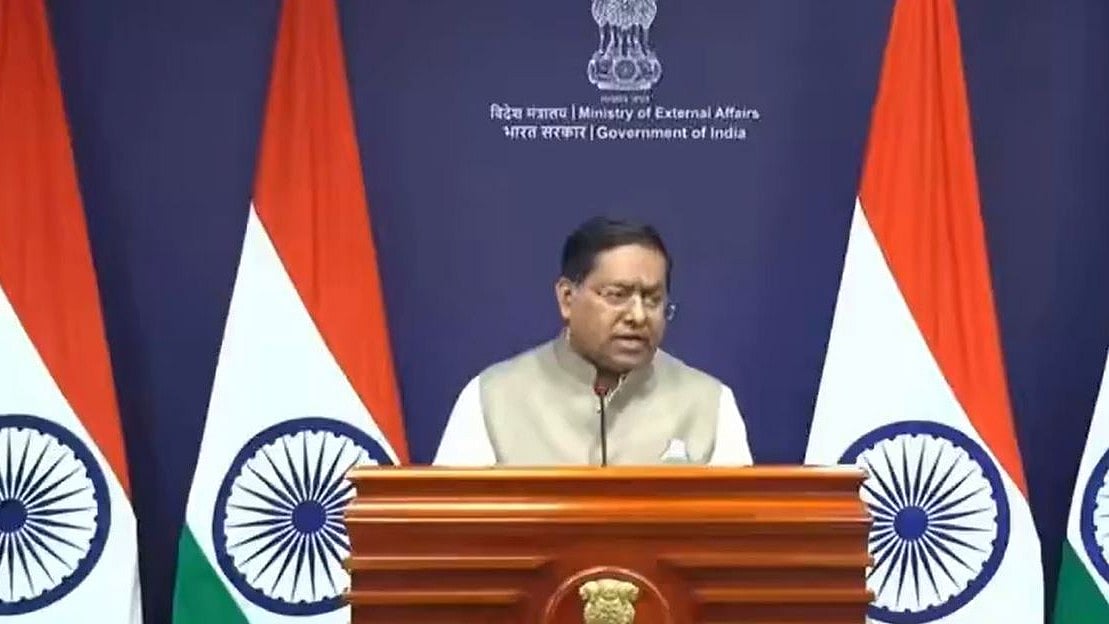
India on Wednesday reiterated that the use of the Lipulekh Pass route for the Kailash Mansarovar Yatra is not a new development, amid renewed discussion surrounding the issue. Responding to media queries, MEA spokesperson Randhir Jaiswal said the pilgrimage route has been operational since 1954.

“We have already made a statement. This is not new. The Kailash Mansarovar Yatra has been happening since 1954 through this route. That is where it stands,” Jaiswal said while addressing concerns linked to the Lipulekh issue. He also referred reporters to the official statement issued earlier by the MEA for additional details.
The Kailash Mansarovar Yatra, one of Hinduism’s most revered pilgrimages, takes devotees to Mount Kailash and Lake Mansarovar in Tibet. The pilgrimage has traditionally been conducted through multiple routes, including the Lipulekh Pass in Uttarakhand. The route is considered strategically and logistically significant due to its accessibility for Indian pilgrims travelling to the sacred site.
The Lipulekh Pass dispute is a long-standing territorial issue between India and Nepal, recently reignited in 2026 after India and China decided to resume the Kailash Mansarovar Yatra through the route. Nepal claims the area based on the 1816 Treaty of Sugauli, while India has called the claims “untenable,” asserting sovereignty over the strategic tri-junction.

