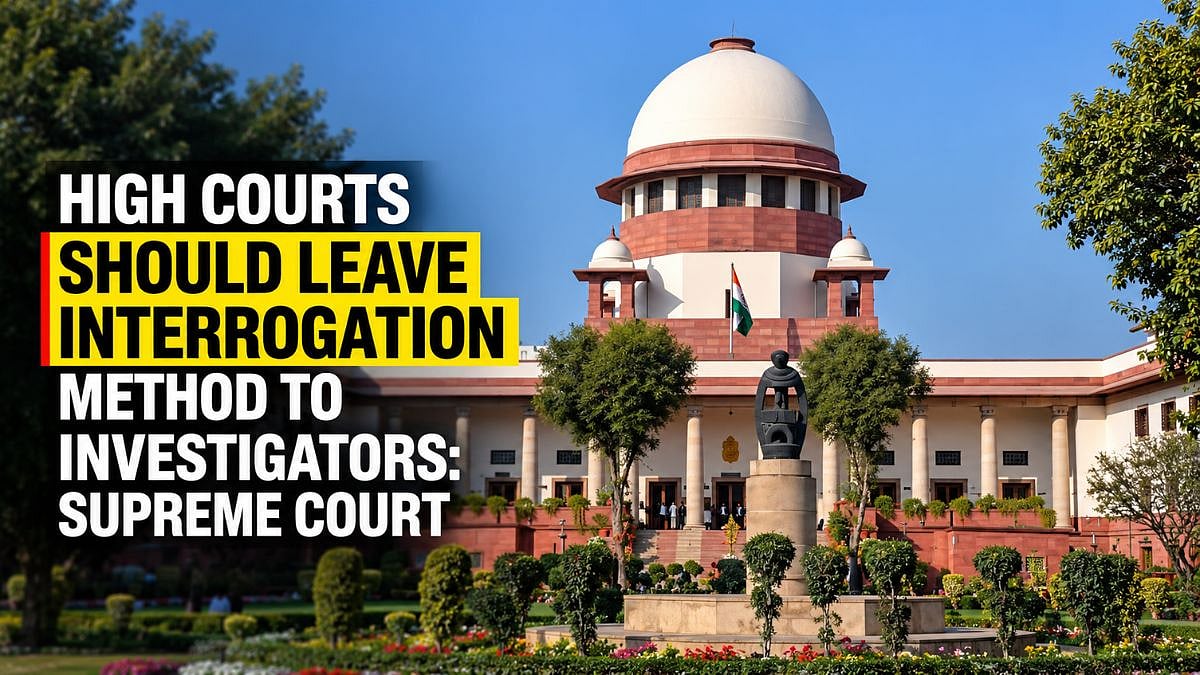
New Delhi, October 7, 2026: The Supreme Court has said High Courts should not suggest how a suspect should be interrogated, holding that the form of interrogation is best left to the investigating agency.
A bench of Justices Ujjal Bhuyan and Atul S Chandurkar made the observation while setting aside a Gujarat High Court order that had denied anticipatory bail to a retired school principal and his wife in a case involving alleged tampering with his date of birth in service records, Live Law reports.
‘Leave Interrogation To Investigators’
The Supreme Court objected to the High Court’s observation that custodial interrogation of the applicant as well as other suspects was necessary to uncover the truth.
“We are of the firm view that it is not for the High Court to suggest any form of interrogation of an accused. This should be best left to the discretion of the investigating agency,” the bench said.
It also took exception to the wider implications of the High Court’s remarks. “By such sweeping observation that custodial interrogation of not only the applicant but all other suspects is imperative, the rights of other ‘suspects’ have been jeopardized. The High Court should avoid making such unnecessary observations,” it said.
The ruling is significant because it draws a clear line between judicial scrutiny of a request for anticipatory bail and decisions on how an investigation should be conducted. The Supreme Court’s observations also underline the need to safeguard the rights of people who may be treated as suspects during an investigation.
What The Case Is About
The first appellant, identified as A1, was the principal of Shri Secondary School, while his wife, identified as A2, was president of the school’s governing body.
It was alleged that the couple tampered with A1’s service record to change his date of birth from June 19, 1964, to June 19, 1965, thereby changing his date of retirement. It was also alleged that A1 made an unlawful gain at the expense of the public exchequer as a result.
An FIR was subsequently registered under Sections 316(5), 336(2), 336(3), 340(2) and 61(2)(a) of the Bharatiya Nyaya Sanhita, 2023 (BNS).
Gujarat HC Had Rejected Bail Plea
The Gujarat High Court rejected the appellants’ anticipatory bail plea in June 2026. In August 2026, the Supreme Court directed that they should not be arrested, subject to their cooperation with the investigation.
While considering the matter, the Supreme Court examined the High Court order, which had said custodial interrogation was necessary not only for the applicant but also for other suspects to “unearth the truth”.
The Supreme Court disagreed with that approach, making it clear that courts should avoid prescribing a particular method of interrogation and leave such decisions to investigating officers.
Case Based On Documents
The bench also considered the nature of the allegations and noted that they “are all based on documents”.
It held that custodial interrogation was not necessary in the circumstances. The court also noted that A1 was a senior citizen who had retired as a school principal.
The nature of the evidence was therefore an important consideration in the court’s decision. Where allegations depend on documentary material, the ruling indicates that the need for custodial interrogation cannot simply be presumed.
Also Watch:
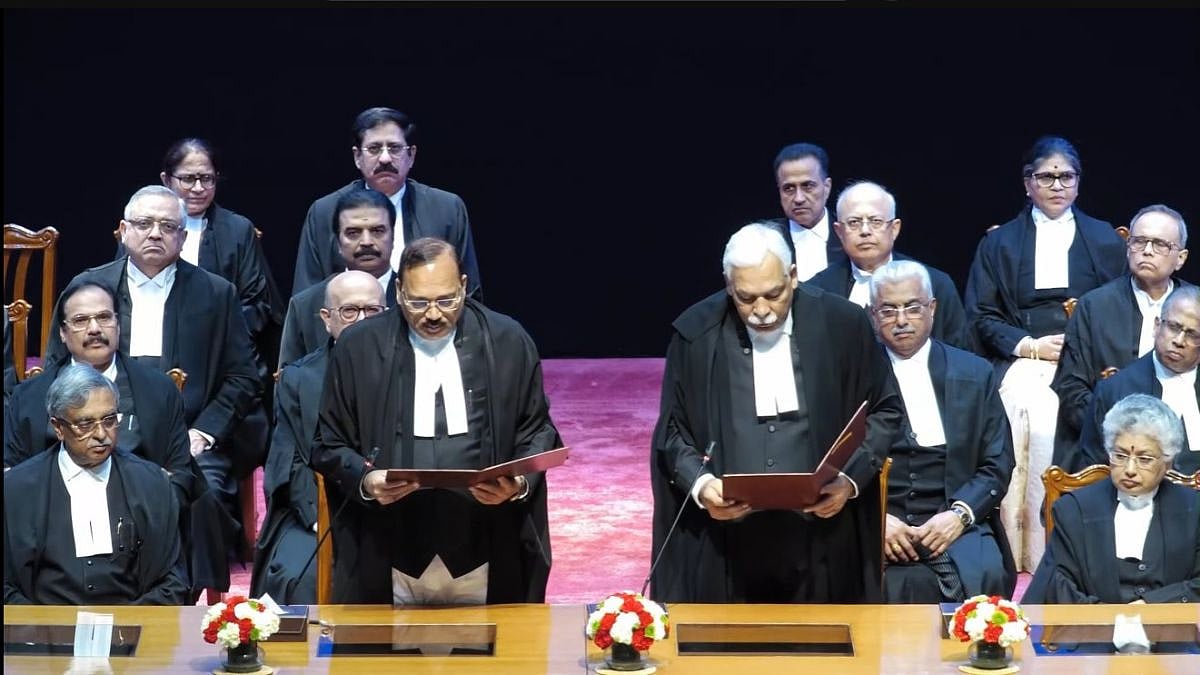
Supreme Court Sets Aside HC Order
The Supreme Court ultimately set aside the Gujarat High Court order and made its earlier interim protection absolute.
The appellants will continue to be protected from arrest while being required to cooperate with the investigation.
The judgment reinforces that while courts can assess whether custodial interrogation is necessary when deciding anticipatory bail, they should not dictate the manner in which investigators question suspects or make sweeping observations that could affect the rights of others.
To get details on exclusive and budget-friendly property deals in Mumbai & surrounding regions, do visit: https://budgetproperties.in/

