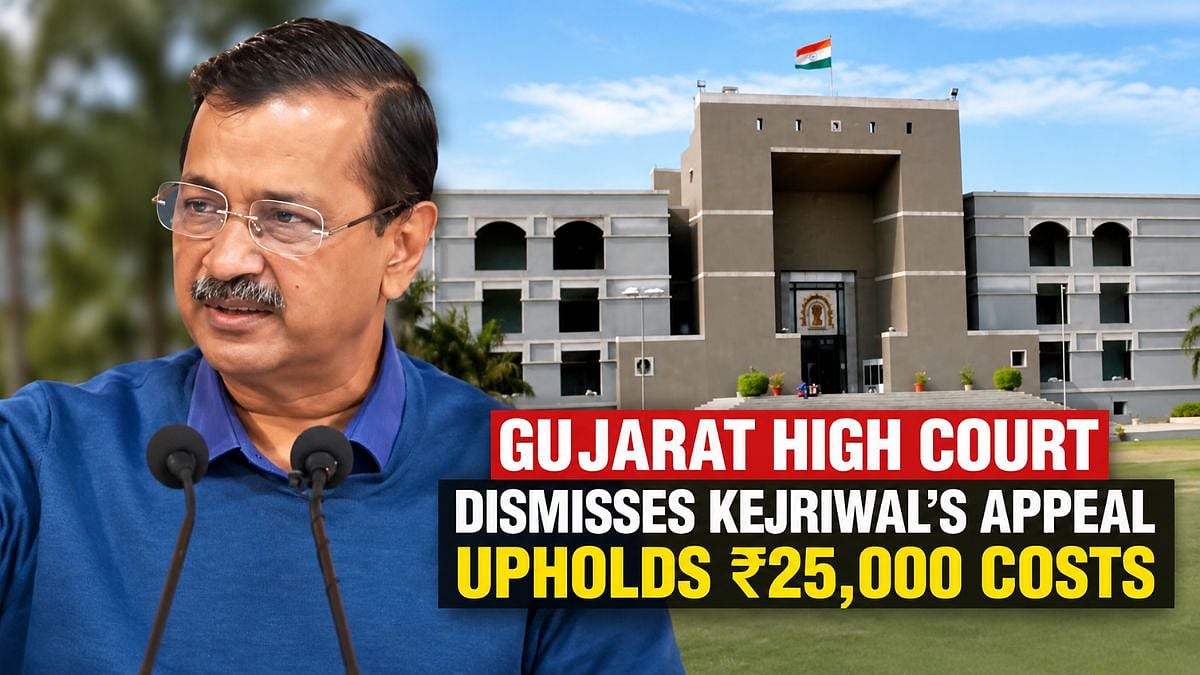
Ahmedabad, September 30, 2026: The Gujarat High Court has dismissed Aam Aadmi Party (AAP) leader Arvind Kejriwal’s appeal challenging the Rs 25,000 costs imposed on him in the case concerning the disclosure of Prime Minister Narendra Modi’s educational records.
The court also upheld an earlier ruling that the Central Information Commission (CIC) had exceeded its jurisdiction by directing Gujarat University and Delhi University to provide details of Modi’s degrees.
A Division Bench of Chief Justice Sunita Agarwal and Justice DN Ray passed the ruling on September 29. Kejriwal had approached the Division Bench after a single judge of the High Court set aside the CIC’s order and imposed Rs 25,000 costs on him.
The latest ruling brings another chapter of the long-running legal dispute over Modi’s educational qualifications to a close at the High Court level, Bar & Bench reports.
Court Says RTI Process Cannot Be Used For Political Motives
The Division Bench also rejected Kejriwal’s challenge to the single judge’s observations about his conduct during the proceedings. The court said statutory authorities and courts should not be used as platforms to pursue political motives.
“The statutory authorities and the Courts should not be treated as a public platform to ventilate the political vengeance. A political leader holding the public office cannot use the statutory proceedings for their political motives,” the court observed. It also said Kejriwal’s response to the CIC and his subsequent written submissions spoke for themselves.
The court further rejected the argument that Modi’s position as Prime Minister made his educational records a matter of public interest. It held that Modi’s educational qualifications had no bearing on his election to the constitutional post of Prime Minister and that no larger public interest required their disclosure.
How The Degree Dispute Began
The case dates back to 2016, when Kejriwal, then Chief Minister of Delhi, was responding to proceedings before the CIC over a Right to Information (RTI) request concerning his electoral photo identity card.
In a written response dated April 28, 2016, Kejriwal sought information about Modi’s educational qualifications. The CIC treated his response as an RTI application and directed the Prime Minister’s Office (PMO) to provide Modi’s degree numbers and years to Delhi University and Gujarat University. The universities were also directed to search their records and provide the information.
Gujarat University challenged the CIC order before the Gujarat High Court. In March 2023, a single judge quashed the order and imposed Rs 25,000 costs on Kejriwal. The university’s challenge centred on whether the CIC had the authority to issue such directions when no RTI application seeking the records had been filed with the university in the manner prescribed by law.
CIC Had No Jurisdiction, High Court Rules
The Division Bench affirmed the single judge’s decision, holding that the CIC had no jurisdiction to deal with Kejriwal’s request in the manner it had.
Under Section 6(1) of the RTI Act, a person seeking information must make a written or electronic request to the Public Information Officer of the public authority concerned, pay the prescribed fee and specify the information sought.
The court found that no such application seeking Modi’s educational records from Gujarat University was before the CIC. It held that the Commission went beyond the statutory framework when it treated Kejriwal as an RTI applicant and took suo motu cognisance of his request.
The ruling therefore turned not merely on the political controversy surrounding the degrees but on a basic procedural question: whether the CIC could bypass the process laid down under the RTI Act. The Division Bench agreed with the single judge that it could not.
Educational Records Protected Under RTI Act
The court separately examined whether Modi’s educational records could otherwise be disclosed under the RTI Act.
It held that educational records are private information and are generally held by universities in a fiduciary, or trust-based, relationship. It referred to Section 8(1)(e) of the RTI Act, which protects information held in a fiduciary relationship, and Section 8(1)(j), which protects personal information.
The Bench concluded that the records could not be disclosed in this case because there was no larger public interest that justified doing so.
“Balancing two intersecting rights, namely, the right of privacy of an individual and the right to seek information of a citizen under the RTI Act, 2005,” the court said the information sought was exempt personal information under Sections 8(1)(e) and 8(1)(j).
The judgment underscores the court’s view that holding high public office does not, by itself, remove the privacy protection attached to educational records. At the same time, the ruling rests on the specific circumstances of the RTI proceedings and the court’s interpretation of the exemptions contained in the law.
Kejriwal’s Appeal Dismissed
The Division Bench ultimately upheld the single judge’s judgment on both grounds. It ruled that the CIC lacked jurisdiction to issue the directions and that the educational records sought were exempt from disclosure under the RTI Act.
The Bench consequently dismissed Kejriwal’s intra-court appeal and upheld the Rs 25,000 costs imposed on him.
Also Watch:
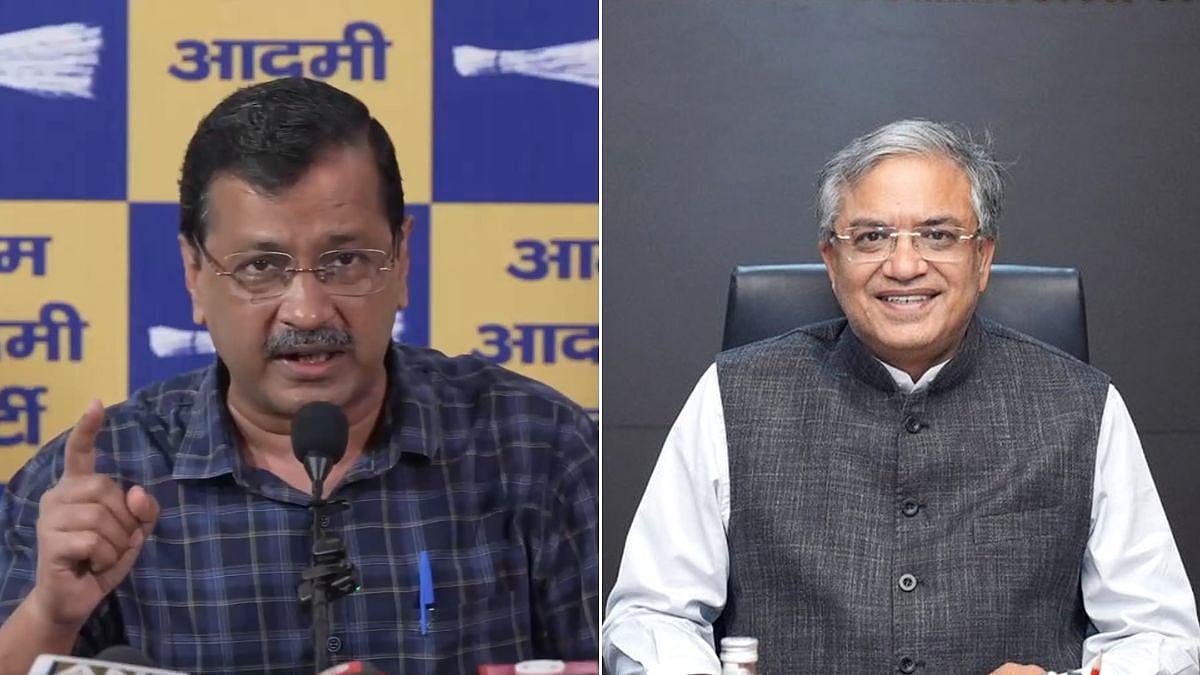
Senior Advocate Abhishek Manu Singhvi, along with advocates Vivek Jain, Aayushi A Shah, Amit Bhandari, Mohd Irshad and Aum M Kotwal, appeared for Kejriwal.
Solicitor General Tushar Mehta, Additional Advocate General Manisha Luvkumar and advocates Rajat Nair, Aman Mehta and Dharmishta Raval represented Gujarat University.
To get details on exclusive and budget-friendly property deals in Mumbai & surrounding regions, do visit: https://budgetproperties.in/

