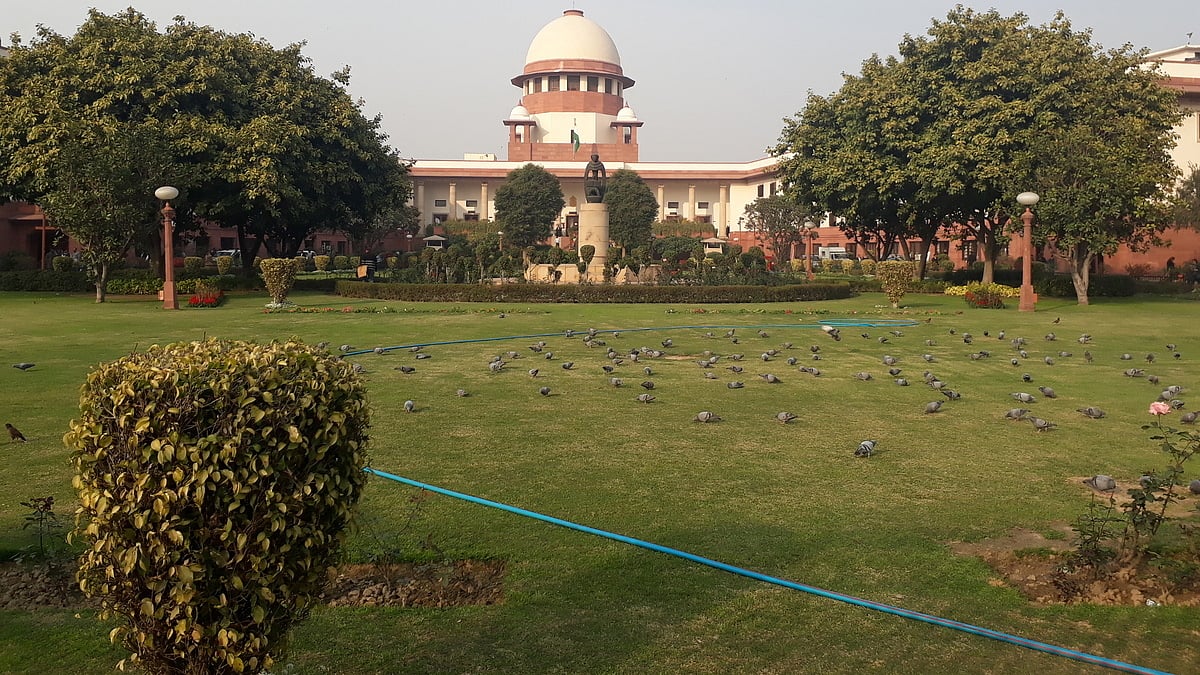
On Monay, a Supreme Court bench comprising Justice Sanjay Kumar and Justice Sanjeev Sachdeva issued an order granting Guangwen Kuang, an executive of Vivo Mobile Communications, one month to approach the Chinese Consulate in India.
The purpose is to obtain an official diplomatic undertaking or guarantee that he will return to India to face prosecution if allowed to visit his ill father in China.
The legal battle involving Guangwen stands as an important case study at the intersection of anti-money laundering enforcement, cross-border corporate fraud and individual humanitarian rights.
The ongoing proceedings highlight the judicial friction that emerges when a foreign national facing high-stakes financial fraud charges seeks permission to travel abroad for personal reasons in the absence of bilateral extradition frameworks.
Supreme Court’s interim directive
Guangwen approached the apex court after the Delhi High Court blocked his travel, citing his foreign citizenship, the scale of alleged financial crimes and the absence of an extradition treaty between India and China.
Challenging the high court's order, Guangwen filed a Special Leave Petition (SLP) before the Supreme Court on August 17, 2026. His lawyer cited judicial precedents such as Wu Chuaannan vs State of Chhattisgarh, where foreign nationals facing trial in India were allowed to travel abroad after providing bank guarantees, employer undertakings and explicit diplomatic assurances from their consulate.
What prompted investigation into Vivo India?
The foundation of the case dates back to December 2021, when the Ministry of Corporate Affairs (MCA) lodged an official complaint with the Delhi Police. The complaint resulted in FIRs alleging that a firm named Grand Prospect International Communication Pvt Ltd (GPICPL) was incorporated using falsified address records and forged identification documents.
According to law enforcement agencies, GPICPL falsely projected itself as a corporate subsidiary of Vivo China to conduct unauthorised domestic business activities.
Based on these predicate police FIRs, the Enforcement Directorate (ED) registered a formal money laundering case under the Prevention of Money Laundering Act (PMLA) in February 2022. Financial investigators alleged that GPICPL and associated regional distribution companies were part of a broader corporate apparatus designed to siphon off proceeds of crime out of India to evade local tax liabilities and statutory reporting.
The figure was estimated in regulatory filings to exceed Rs20,000 crore.
Who is Guangwen Kuang and what is his alleged role?
Guangwen is a Chinese national who served as an administration manager for Vivo Mobile Communications in India.
On October 10, 2023, the ED arrested Guangwen alongside the Managing Director of Lava International and a Chartered Accountant. Financial investigators identified Guangwen as a key co-conspirator who knowingly assisted in incorporating, managing and operating shell entities across the country.
The agency claims these companies were used to obscure ultimate beneficial ownerships and facilitate the unauthorised transfer of funds out of Indian jurisdiction. Although the Delhi High Court upheld his initial detention in late 2023, Guangwen was later granted bail under specific conditions as pre-trial proceedings advanced.
Why Delhi High Court stopped his overseas travel?
In mid-2026, Guangwen moved a Delhi trial court seeking temporary permission to visit Guangzhou, China on humanitarian grounds, stating that his 82-year-old father was in critical condition following a severe brain haemorrhage.
He submitted medical certificates from Chinese hospitals, cited his history of compliance with court summons and offered an undertaking from his employer pledging his return to face trial.
While a trial court initially granted permission, the decision was challenged by the ED.
On July 9, 2026, the Delhi High Court set aside the lower court’s order and stayed Guangwen's travel. The high court ruled that personal humanitarian distress could not supersede the requirement to secure the presence of an accused individual in a major financial fraud trial.
The court pointed out that Guangwen is a foreign national without permanent assets in India.
Crucially, the bench emphasised that India and China do not share an Extradition Treaty or a Mutual Legal Assistance Treaty (MLAT) in criminal matters. In the absence of such bilateral mechanisms, the high court determined there was no legally binding framework to enforce his return to India if he chose not to come back.

