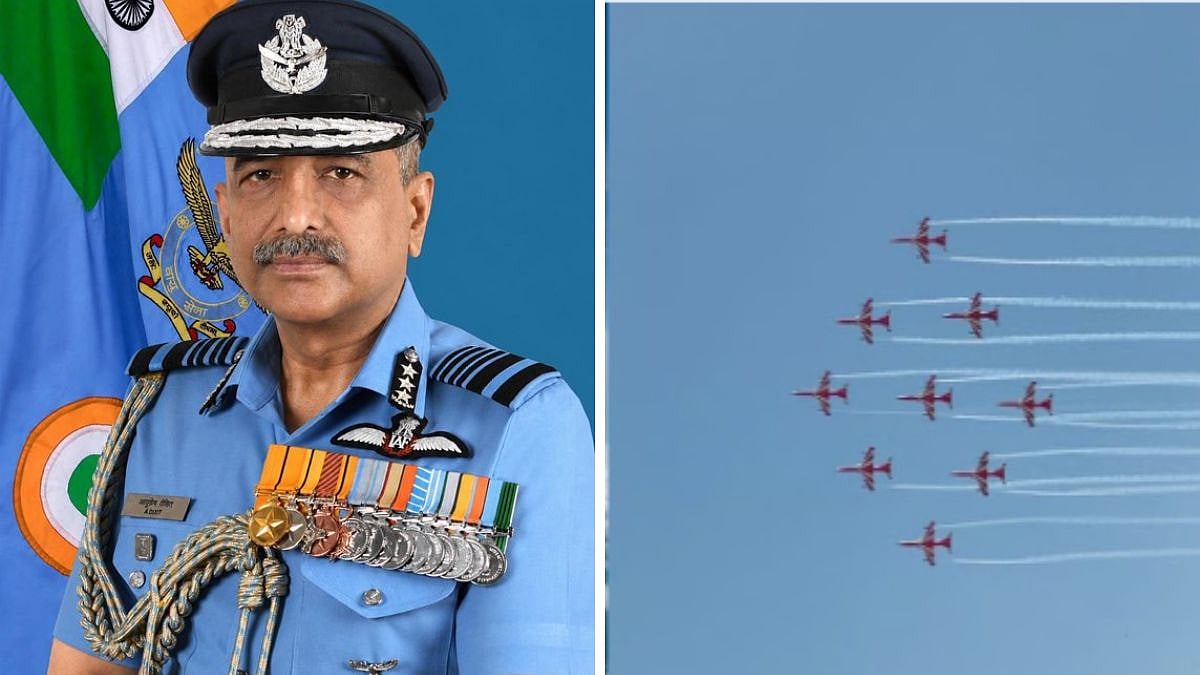
Air Marshal Ashutosh Dixit has been named the 29th Chief of the Air Staff and is scheduled to assume office as Air Chief Marshal on the afternoon of October 31, 2026. He will take over from Air Chief Marshal Amar Preet Singh, who is set to retire on the same day. Dixit currently serves as the Vice Chief of the Air Staff.
His appointment caps a career spanning nearly four decades with the Indian Air Force, during which he has been associated with major military operations, including Operation Safed Sagar, Operation Rakshak and Operation Sindoor. Here's a look at the three operations he was part of:
Operation Safed Sagar (1999)
Operation Safed Sagar was the Indian Air Force's aerial campaign during the 1999 Kargil War. It was carried out in coordination with the Indian Army's Operation Vijay, whose objective was to reclaim positions on the Indian side of the Line of Control that had been occupied by Pakistani troops and infiltrators.
The IAF commenced its operations on May 26, 1999, carrying out air strikes and providing close air support in key sectors such as Dras, Kargil, Batalik and Mushkoh. The campaign presented considerable operational challenges, with pilots having to conduct missions at very high altitudes amid difficult mountainous terrain.
Indian aircraft were also required to operate strictly on their side of the LoC, placing additional constraints on the missions. A range of aircrafts, including the MiG-21, MiG-23, MiG-27, Jaguar, Mirage-2000, MiG-29 and Mi-17, were deployed during the campaign.
The Mirage-2000 emerged as particularly significant for precision attacks, including missions involving laser-guided bombs.
Operation Rakshak (1990 onwards)
Operation Rakshak was markedly different from Safed Sagar. Rather than being a conventional military campaign lasting a defined period, it refers to the Indian Army's continuing counter-insurgency and counter-militancy operations, particularly in Jammu and Kashmir, which began in the early 1990s amid the rise of militancy.
Over the years, the operation has encompassed several types of security missions, including area domination, search operations, counter-terrorism actions and efforts to safeguard civilians and strategically important installations. Army units have also conducted operations targeting militant groups as the security situation evolved.
The character of Operation Rakshak has changed over the decades in response to developments in Jammu and Kashmir. The Rashtriya Rifles, which was raised to strengthen the Army's counter-insurgency capabilities, subsequently became a key element of such operations in the region.
Operation Sindoor (2025)
Operation Sindoor marked the most recent of the major operations associated with Dixit's career. The Indian Armed Forces launched the operation on May 7, 2025, following the April 22 terror attack in Pahalgam, in which 26 people were killed.

According to the Ministry of Defence, Indian forces carried out strikes on nine locations identified as terrorist infrastructure in Pakistan and Pakistan-occupied Jammu and Kashmir. The government said the targets were linked to terrorist attacks against India and described the initial strikes as measured and focused.
Unlike Safed Sagar, which involved the IAF providing aerial support to an Army-led ground campaign, Operation Sindoor involved the coordinated participation of all three armed services.
The Indian Air Force carried out precision strikes and air-defence operations, while the Indian Army undertook land-based responses and worked to counter aerial threats, including drones. The Indian Navy, meanwhile, maintained a strong maritime presence and surveillance posture in the Arabian Sea.

