The profound grief of losing a soldier in the line of duty is increasingly being compounded by bitter domestic battles over financial survival. Across India, a painful fracture is widening between grieving parents who raised these heroes and the young widows left behind. At the heart of these disputes is the Next of Kin (NOK) system, a military protocol designed to provide rapid financial relief, which is now sparking a debate over who holds the moral and legal right to a martyr's legacy.
What triggered the current debate on martyr compensation?
The underlying friction within families has burst into the public eye following tragic losses in the armed forces. A recent Indian Air Force aircraft crash in Jorhat, Assam, which resulted in the martyrdom of five personnel including Flight Lieutenant Shubham Kumar, brought this issue back to the forefront.
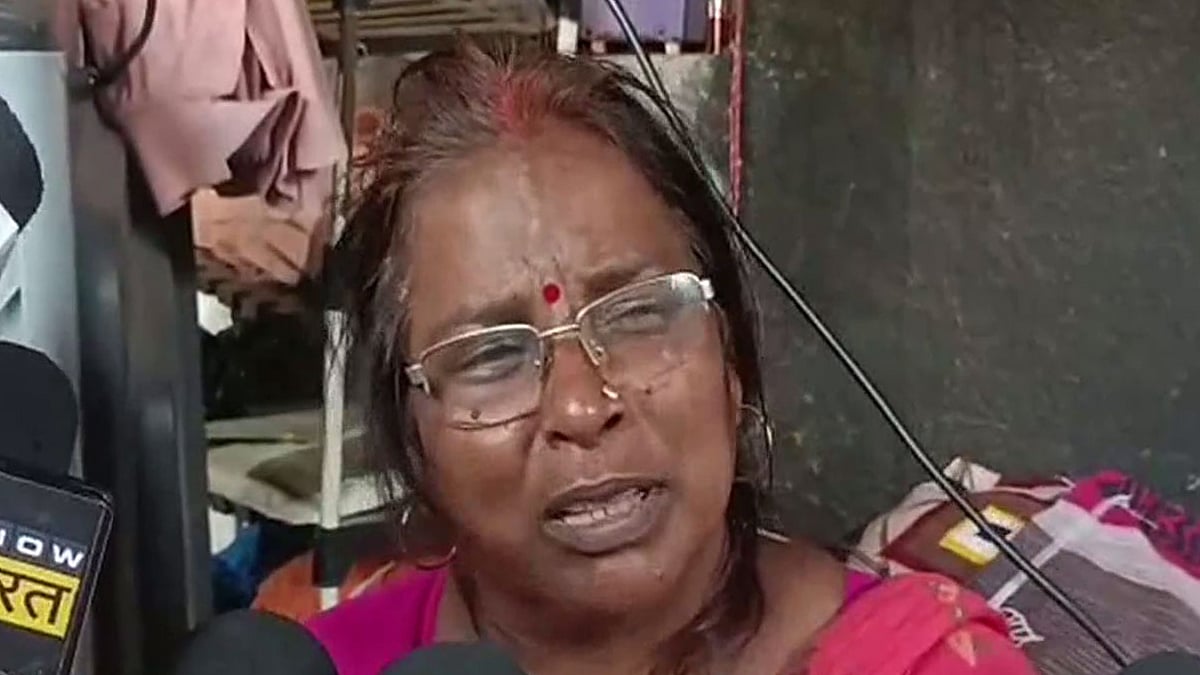
Following the tragedy, the Bihar government handed a compensation cheque of Rs21 lakh to Shreya Rai, who was legally recognised as his spouse through a prior court marriage that Shubham’s family was unaware of. The swift departure of the young bride with the compensation before the traditional shraddh rituals concluded left the soldier's father, Amrendra Sharma, questioning whether the legal definition of a dependent aligns with emotional and familial duties.
This incident strongly mirrors the national conversation from July 2024 surrounding Captain Anshuman Singh, a Kirti Chakra recipient. His parents, Ravi Pratap Singh and Manju Singh, went public with their grievances, stating that their daughter-in-law, Smriti Singh, left their household shortly after receiving the bulk of the financial entitlements and pension.
The parents argued that while a spouse of five months receives absolute financial security, the parents who raised the soldier for decades are left without adequate social security, calling on the government to fundamentally review how a soldier's NoK is selected.
Who is legally entitled to the benefits?
The distribution of these funds is not arbitrary but strictly governed by the Pension Regulations for the Army, Part I (2008). According to Regulation 216, the legal framework establishes a definitive hierarchy of entitlement designed to prevent the division of funds among multiple competing claimants. At the absolute top of this statutory ladder is the legally wedded wife or widow, followed by eligible children, then the father and finally the mother.
The courts have consistently reinforced this hierarchy, viewing family pensions as statutory rights rather than divisible inheritance estates. In landmark rulings like Bashiram vs Union of India and Chongtuokhawi vs Union of India, judiciary bodies have clarified that a legally married wife has the paramount claim on family pensions and insurance schemes like the Army Group Insurance Scheme. The law explicitly forbids splitting these pensions.
As a result, even if a mother or father was entirely dependent on the soldier, their financial claim is legally nonexistent as long as a living, qualified widow stands before them in priority.
Why these disputes arise between parents and daughters-in-law?
The friction stems from a deep systemic shift in how modern families operate compared to when military laws were originally drafted. Historically, a widow was expected to remain within her late husband's joint family, meaning the pension naturally supported the household as a whole.
However, today's social reality is entirely different.
As Captain Singh’s father noted to media outlets, young widows frequently relocate, pursue independent careers, or return to their maternal homes, completely severing ties with the martyr’s parents.
This creates a severe imbalance in perceived justice. The parents feel emotionally and financially abandoned pointing out that a mother carries a child and raises them, yet receives little to no state-mandated social security if a spouse exists.
Conversely, from the perspective of the young widow, who may have spent years in a relationship prior to a brief marriage, as was the case with Smriti Singh’s eight-year courtship, she is left to rebuild her entire life alone after a devastating trauma, making the statutory financial cushion vital for her independent future.
How the current legal matrix can change
Under the existing legal framework, the widow’s absolute right can only be bypassed or altered under very specific exceptions. The most prominent disqualification occurs if a widow chooses to remarry, which can shift the pensionary entitlement over to the parents, as seen in cases like Padmavathy Amma vs Union of India. Furthermore, unilateral nominations by a soldier that try to exclude a spouse are generally struck down by courts, as affirmed in Urmila Singh vs State of UP (2025), which reiterated that the statutory rights of a legally wedded wife trump standard paperwork nominations.
To address the growing outcry from grieving parents, the government may need to transition from a rigid "winner-takes-all" protocol to a structured, proportional distribution model. Until the Ministry of Defence modifies the pension regulations to explicitly mandate a fixed percentage of ex-gratia and pension allowances to dependent elderly parents, the courts will continue to enforce the strict 2008 guidelines, upholding the widow's priority regardless of how brief the marriage was or how quickly she separates from the joint family.

