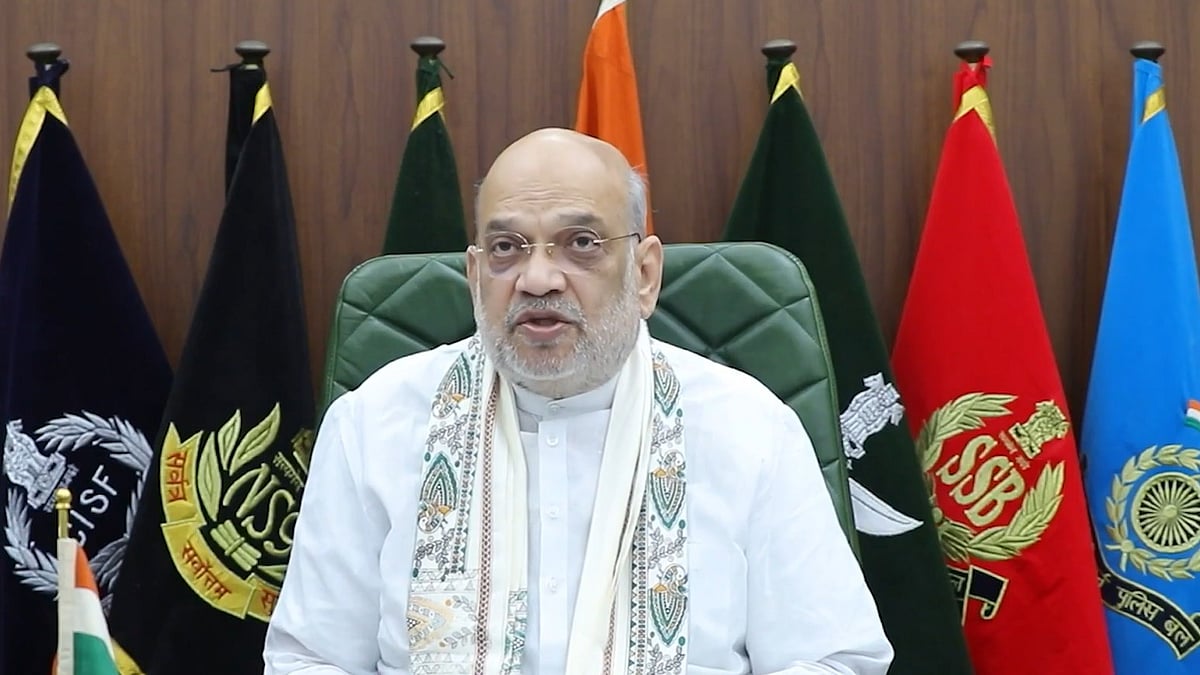
Union Home Minister Amit Shah said eliminating Naxalism was only one part of the government's responsibility, as rebuilding lives, improving basic facilities and rehabilitating people affected by Maoist violence were equally important.
New Delhi, October 15: Union Home Minister Amit Shah on Thursday said the end of Naxalism could not erase the suffering endured by people in Chhattisgarh over the past five decades. He stressed that the government must now focus on rebuilding lives, restoring dignity and improving basic facilities in areas affected by Maoist violence.
Addressing a virtual ceremony organised to assist people affected by Maoism in Chhattisgarh, Shah criticised the previous Congress rule for failing to provide basic amenities for decades. He said the BJP government was working to strengthen infrastructure and bring development to Bastar, where tribal communities had suffered the most due to prolonged violence.
Ending Violence Is Only Half The Battle
“The end of Naxalism does not mean that we can erase the suffering of these five decades,” Shah said, stressing that the government's responsibility extended beyond eliminating Maoism. He said efforts must also focus on helping affected families rebuild their lives and regain their dignity.
Shah assured the Chhattisgarh Government of full support from the Centre in its rehabilitation and development efforts. His remarks highlighted the need to ensure that the end of violence also brings meaningful improvements to the lives of people who have lived without adequate facilities for years.
Over 3,600 People Benefit From Disability Assistance Programme
Shah said a disability assistance programme held in Jagdalpur from October 5 to 7 had benefited more than 3,600 people with disabilities, including around 1,570 in Bastar alone. The initiative aims to support people affected by Maoist violence and help them lead more independent lives, PTI reports.
Under the programme, beneficiaries are being provided with artificial limbs, wheelchairs, tricycles, hearing aids and walking sticks. Such assistance is an important part of rehabilitation, particularly for people whose disabilities have made everyday activities difficult.
Over 8,500 Maoists Surrender, Rehabilitation Efforts Gather Pace
Highlighting the government's rehabilitation measures, Shah said approximately 8,526 Maoists had surrendered. He added that around 7,500 people who previously did not have bank accounts had been provided with banking facilities, while 1,625 people had received reward money.
He said incentive payments had been provided to 7,882 people, while 455 had received jobs and 129 had been allotted land. These measures form part of the government's efforts to help former extremists and affected communities return to normal life and access economic opportunities.
Security Camps To Become Development Centres
Shah announced that security camps in Maoist-affected areas would be converted into service centres and community facilities. Government officials would use these centres to address local needs, including healthcare, education, employment and other development requirements.
“The very places where our security personnel once sat to protect you will now become the places where officials from the Government of India and the Chhattisgarh government will lay the foundation for a developed Bastar,” Shah said. The proposed transformation marks a shift from security operations towards public services and long-term development.
Focus On Tribal Welfare, Culture And Basic Facilities
The Home Minister said the new centres would focus on children's health and education, employment opportunities for young people and the economic needs of tribal communities. He also highlighted initiatives such as the Bastar Olympics, Bastar Pandum and the Niyad Nellanar scheme, which aim to improve living conditions and restore normal life in the region.
Shah said the Bastar Olympics had brought communities together through sports in places once marked by gunfire and bomb blasts. While Bastar Pandum seeks to revive tribal art and culture, the Niyad Nellanar scheme focuses on improving basic facilities in remote areas.
Also Watch:
Government Aims To Build A Peaceful And Prosperous Bastar
Shah reiterated that the government was determined to eliminate the remaining traces of Naxalism and transform Bastar into a peaceful and prosperous region. He said restoring normal life required sustained efforts to address the social and economic damage caused by decades of violence.
“Simply eliminating Naxalism will not be enough. We must eliminate every trace of it and rebuild Bastar as a happy and vibrant place,” he said. The larger challenge now lies in ensuring that development reaches communities that have faced years of insecurity and limited access to essential services.

