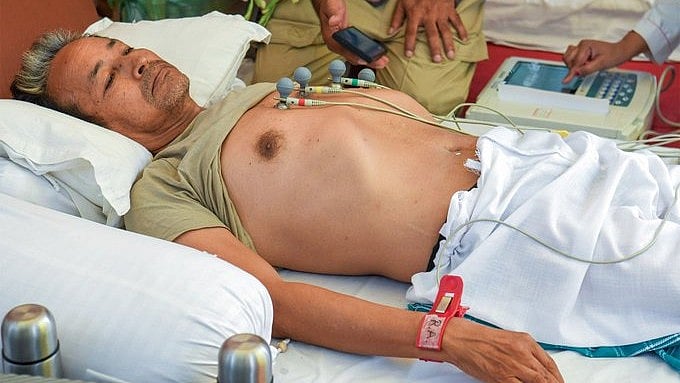
The Delhi High Court on Thursday directed the Centre and the Delhi government to ensure that activist Sonam Wangchuk's health is monitored daily by government doctors while he continues his indefinite hunger strike at Jantar Mantar. The court also said that all necessary medical intervention should be provided if his health deteriorates, observing that every citizen's life is precious and must be protected.
A Bench of Chief Justice Devendra Kumar Upadhyaya and Justice Tejas Karia passed the order after Solicitor General Tushar Mehta, appearing for both governments, assured the court that Wangchuk's health would be checked regularly by government doctors and that any medical intervention required based on their assessment would be carried out, Bar & Bench reports.
Court Puts Life Above Protest
"We observe that the life of any citizen is precious and all medical efforts ought to be made by government authorities to save the same," the Bench said. Appreciating the Centre's stand, the court directed that Wangchuk's medical condition, both clinically and otherwise, be monitored on a daily basis and that doctors take appropriate medical steps if his condition worsens.
The High Court closed the proceedings after issuing the directions on a public interest litigation (PIL) filed by advocate Rakesh Kumar Saini, who sought urgent intervention to save Wangchuk's life.
The PIL claimed that Wangchuk's health had deteriorated significantly during the hunger strike. According to the petition, he has lost 8.5 kg and, if the fast continues, he could lose his life within two days. The plea alleged that the government was treating him "like a hardcore criminal, terrorist or traitor" and argued that authorities should shift him to a government hospital and forcibly provide him with nutrients through a liquid diet to save his life.
The petition further stated that if Wangchuk were to die during the protest, it would bring shame to the country. It also argued that while people may believe the nation's conscience is dead, the courts should act to protect a citizen's life. Besides seeking medical intervention, the PIL asked the authorities to engage with Wangchuk and discuss the issues raised by the protest.
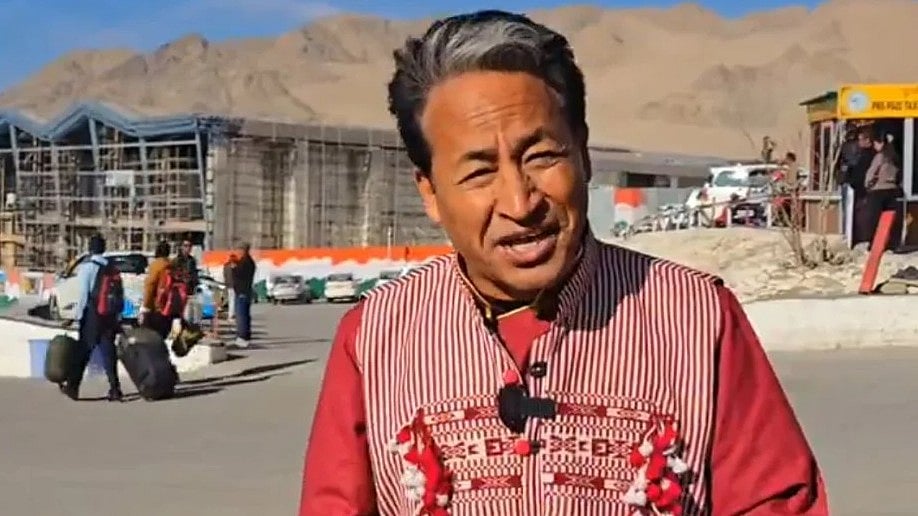
Government Says Daily Check-Ups Are Already Underway
During the hearing, the Bench asked whether there was a system in place to regularly monitor Wangchuk's health and whether medical reports were available. Mehta informed the court that Wangchuk's health was being checked every day whenever he permitted government doctors to examine him. He added that private doctors also occasionally examined the activist and that reports could be prepared if required.
The court, however, stressed that it wanted government doctors to conduct regular medical examinations and intervene whenever necessary. "We would like this person to be regularly medically checked up by government doctors and intervene depending on the report. If medical intervention of any kind is required, please intervene. Life is precious," the Bench observed.
Wangchuk joined the protest organised by the Cockroach Janta Party (CJP) at Jantar Mantar on June 28 and has been on an indefinite fast since then. The group has been protesting since June 20, demanding the resignation of Union Education Minister Dharmendra Pradhan over alleged irregularities and question paper leaks in the National Eligibility-cum-Entrance Test (NEET) examination.
The Cockroach Janta Party began as an online satirical movement that gained popularity, particularly among younger social media users. Started by Dipke, a resident of Boston in the US, the collective uses political satire to highlight issues such as unemployment, institutional accountability and media freedom.
The High Court's intervention ensures that while Wangchuk continues his protest, government authorities remain responsible for safeguarding his health, striking a balance between an individual's democratic right to protest and the state's duty to protect life.

