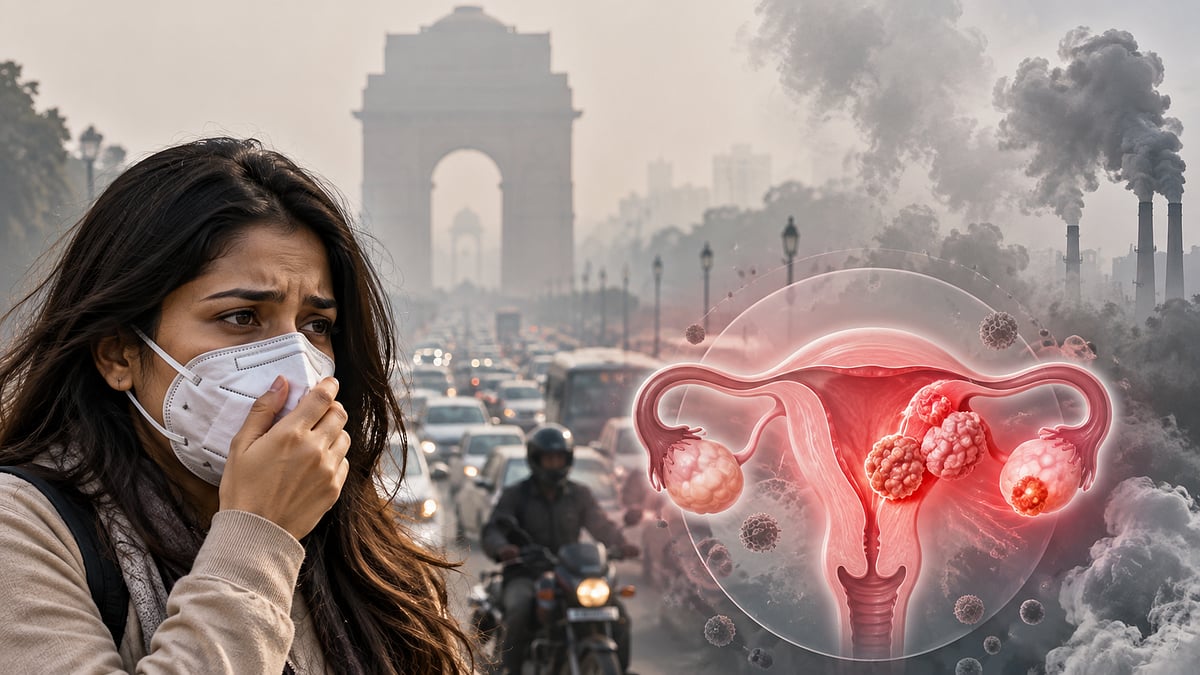
New Delhi, Oct 9: Long-term exposure to air pollution may have a role in the development of gynaecological cancers, Delhi-NCR experts said, citing emerging research on the possible links between PM2.5 exposure, reproductive health and cancers of the female reproductive system.
Experts explained that gynaecological cancers do not have a single cause, adding that environmental factors may contribute to the biological processes involved in cancer development.
"PM2.5 is of interest because prolonged exposure is associated with inflammation, oxidative stress and systemic biological effects," Dr Rama Joshi, gynae onco surgeon and chairman, Gynae Oncology and Robotic Surgery, Fortis Gurugram, said.
Research examines pollution and cancer risks
She said recent studies have reported associations between air pollution and certain aspects of women's reproductive health, raising questions about whether environmental exposure may also have a role in the broader cancer-risk environment.
She said an association between pollution exposure and cancer does not mean that pollution directly causes cancer, adding that such evidence in gynaecological cancers is still evolving and findings have not been uniform across studies. More India-specific data is needed before drawing conclusions about causation, she said.
"Women should focus on the risk factors that we already know can be modified or monitored. Maintaining a healthy weight, staying physically active, managing diabetes and other metabolic conditions, understanding family history and seeking timely evaluation for abnormal bleeding remain important. Environmental pollution is an additional concern that deserves further scientific investigation," Joshi said.
Study links PM2.5 to reproductive changes
The experts also referred to a recent India-wide study that examined the relationship between environmental exposure and reproductive health among Indian women.
The study reported that women exposed to PM2.5 levels above 40 micrograms per cubic metre had 24 per cent higher odds of delayed menarche and a 23 per cent higher hazard of early menopause. The researchers analysed National Family Health Survey data along with satellite-derived PM2.5 estimates and other environmental indicators.
The analysis included nearly 1.8 lakh women aged 15-24 for menarche and nearly 3 lakh women aged 30-49 for menopause, with stronger associations reported in northern India, including areas such as Delhi, Haryana, Punjab and parts of Uttar Pradesh.
Scientists investigate hormonal and cellular effects
Such findings are adding to scientific interest in how prolonged exposure to air pollution may influence hormonal and reproductive pathways in women. Researchers are also examining whether biological effects associated with PM2.5, including chronic inflammation, oxidative stress and cellular damage, could potentially contribute to conditions affecting hormone-sensitive tissues and the female reproductive system.
Endometrial cancer, which develops in the lining of the uterus, is strongly associated with established risk factors such as obesity, prolonged oestrogen exposure, diabetes, increasing age and certain genetic conditions. Ovarian cancer has a different set of risk factors, including age, family history and inherited genetic mutations.
The possibility that chronic environmental exposure could add to these established risk factors is an area of growing scientific interest. Long-term exposure to fine particulate matter may have systemic effects beyond the lungs, potentially influencing inflammatory, hormonal and cellular processes that are relevant to cancer biology.

Delhi-NCR pollution raises health concerns
The issue assumes greater relevance in Delhi-NCR, where women may be exposed to elevated PM2.5 concentrations repeatedly over many years. Fine particulate matter has been linked to inflammation, oxidative stress and other systemic effects, prompting scientists to examine whether these biological pathways could influence tissues beyond the lungs, including hormone-sensitive organs.
Dr Joshi stressed that women should not interpret air pollution as a standalone cause of gynaecological cancer. Abnormal uterine bleeding, bleeding after menopause, unusually heavy or prolonged periods, persistent pelvic or abdominal discomfort, unexplained bloating and changes in urinary or bowel habits warrant medical evaluation, particularly when symptoms persist.
With gynaecological cancers remaining an important health burden among women, experts said larger, long-term Indian studies involving Indian women are needed to further determine pollution as an important risk factor for gynaecological cancer.
Also Watch:
Experts call for further scientific investigation
Dr Aditya Sarin, vice chairman, Medical Oncology, Sir Ganga Ram Hospital, New Delhi, said the emerging evidence provides a reasonable basis to consider air pollution as a potential contributing factor in the cancer-risk environment.
"Chronic exposure to PM2.5 can promote inflammation, oxidative stress and cellular changes, which are mechanisms relevant to cancer development. The emerging association with reproductive health makes it important to investigate whether prolonged pollution exposure may also contribute to gynaecological cancers.
"While causation is yet to be established, the signal is important and deserves further study, particularly in highly polluted regions such as Delhi-NCR," Sarin said.
(Except for the headline, this article has not been edited by FPJ's editorial team and is auto-generated from an agency feed.)

