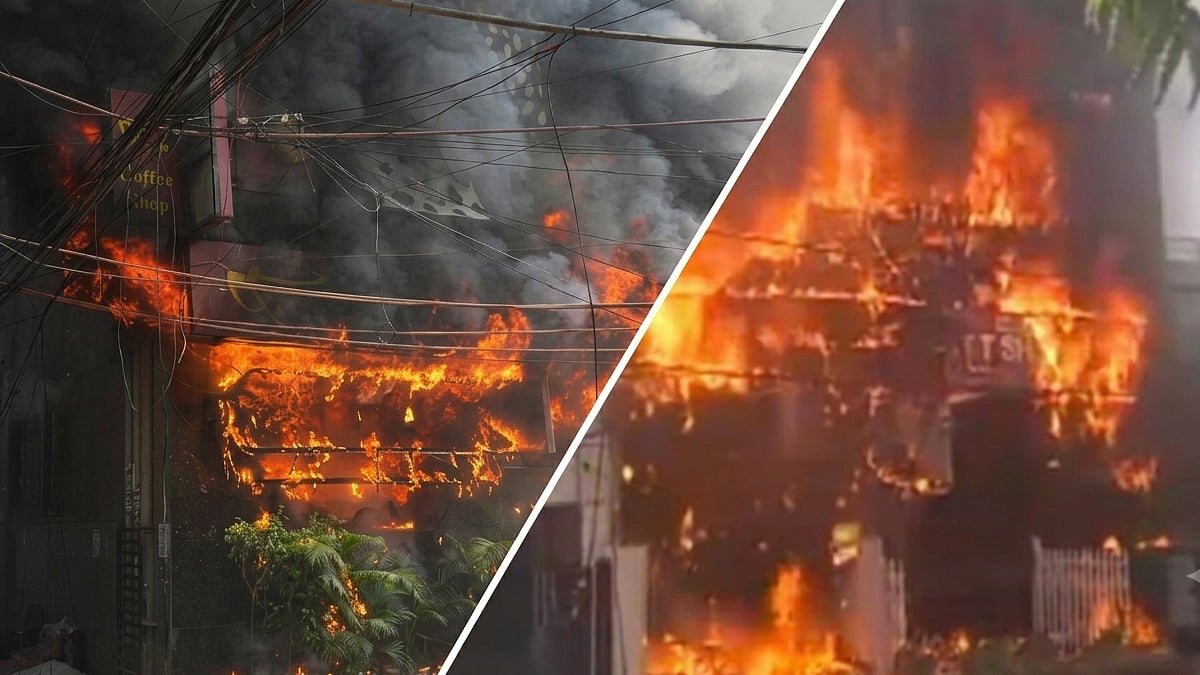
A horrific fire at an animation and gaming coaching centre in Aliganj, Lucknow, claimed the lives of 15 people, mostly young students chasing dreams in the Uttar Pradesh capital.
The disaster serves as a grim reminder of how administrative complacency and structural violations can transform modern buildings into inescapable tombs. While initial investigations point to an air conditioner compressor explosion or a short circuit as the immediate trigger, the true cause of the high death toll lies deeper. A decade-long paper trail of institutional corruption and a fatal reliance on high-tech security systems that fail completely during emergencies.
This tragedy is far from an isolated incident. It bears an eerie, almost mirrored similarity to another catastrophic blaze that occurred in early this month at the Flourish Stay Bed & Breakfast in Malviya Nagar, Delhi. In both instances, unauthorised commercial expansions, completely sealed escape routes and electronically locked security doors created insurmountable barriers for victims trying to escape, turning preventable accidents into massive tragedies.
Anatomy of the Aliganj fire
The disaster unfolded during the afternoon at a multi-story building in Sector-D of Lucknow's Aliganj Scheme, owned by Virendra Pratap Shukla, who is also the owner of Rameshwaram Engineering College. Because of summer vacations, the online animation and gaming coaching centre operating on the upper floors was packed with students. According to a report in Jagran, Chief Fire Officer Ankush Mittal said a short circuit or a sudden blast in a split AC compressor quickly ignited the nearby furniture sending flames ripping through the structure.
The fire was heavily fuelled by a commercial pet shop and clinic operating on the lower levels. The basement and ground floors were packed with plastic products, pedigrees, packaging materials and three distinct types of veterinary treatment chemicals.
As these items caught fire, they generated an incredibly thick, highly toxic smoke that rapidly billowed upward. This dense cloud of poison filled the upper floors within minutes, knocking students unconscious before they even realised the severity of the flames. Emergency rescue teams from the fire department, SDRF and NDRF arrived within eight minutes of being alerted but were forced to waste crucial time attempting to sledgehammer through a reinforced nine-inch rear brick wall just to gain entry to the unconscious victims inside.
Death trap of modern biometrics and single exits
What turned this specific fire into an absolute slaughter was a complete disregard for basic escape architecture compounded by modern technology. The Aliganj building possessed only one narrow staircase and a single entry-exit point to the outside.
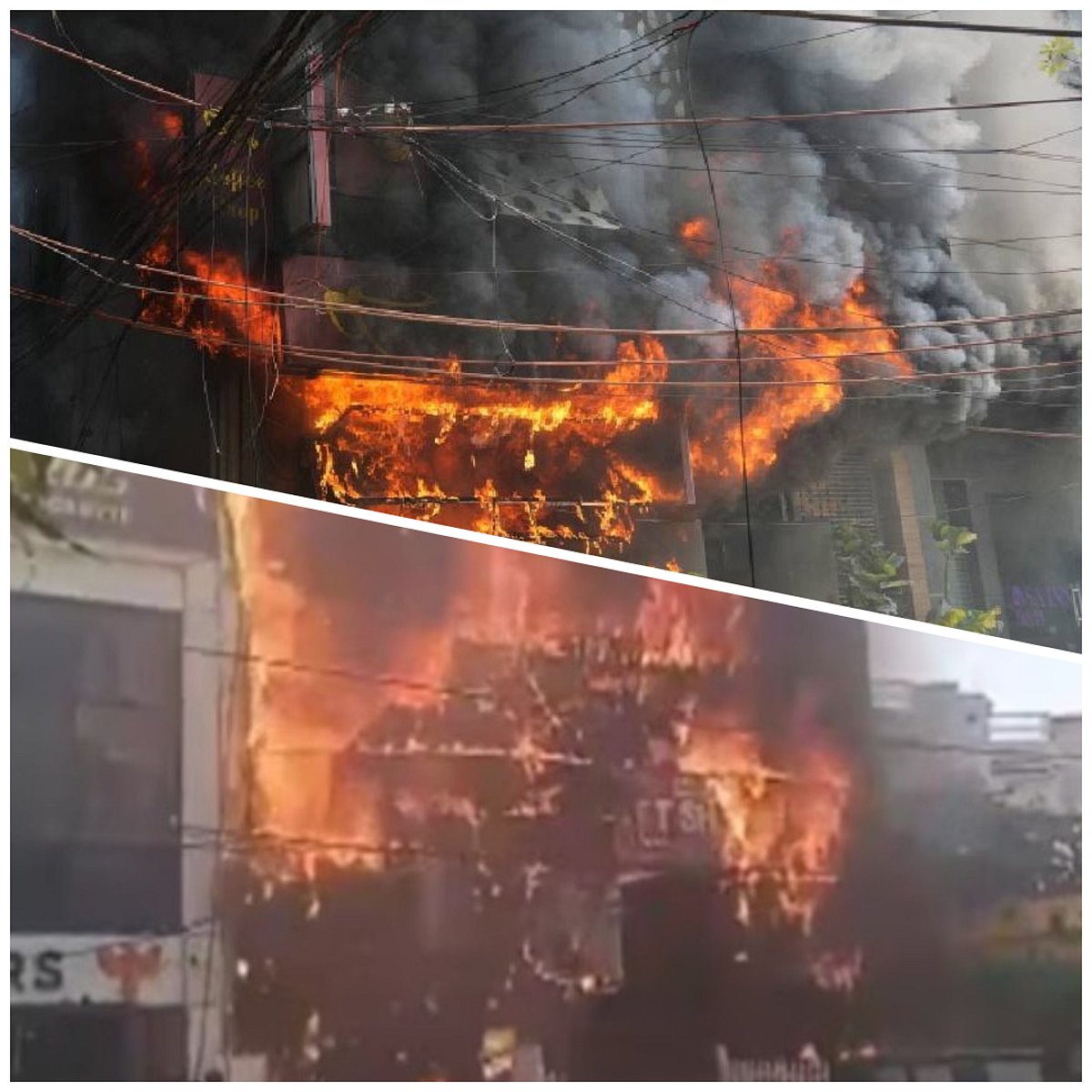
Delhi or Lucknow! Smoke and the deadly trap of inferno | Screenshot
To make matters worse, the main gate of the coaching centre utilised a high-tech biometric system that required thumb impressions to open or close. The moment the fire disrupted the building's electrical framework, the biometric system jammed shut, permanently locking the students inside a smoke-filled room. Those who rushed upward found the door leading to the roof tightly padlocked.
Desperate to survive, some students locked themselves in bathrooms and storerooms where they ultimately suffocated, while others were forced to jump from second-story windows or slide down exterior DTH and internet cables.
This identical trap played out in horrifying fashion during the June 2026 Malviya Nagar guesthouse fire in Delhi, which killed 21 people. At the Flourish Stay B&B, an identical power outage caused by a basement fire instantly jammed the hotel’s electronic key-card doors and sensor-operated main gate, trapping over 50 guests inside their rooms.
Just like the Lucknow centre, the Delhi property had only one entry-exit point, completely sealed windows, a tightly enclosed facade that prevented ventilation, and an extra iron grille gate locked on the outside. In both cities, technological features designed for premium security became automated execution chambers the moment the electricity failed.
A history of ignored warnings in Lucknow
The most frustrating element of the Lucknow tragedy is that the local administration had ample warning. Over the last few years, the city has witnessed a steady drumbeat of identical close-calls.
In April 2022, a fire in Indiranagar’s Lekhraj Khazana Complex spread to an adjacent coaching centre, requiring a strenuous rescue effort to save trapped students. A few months later, in November 2022, a short circuit at the Prince Complex in Hazratganj tore through a fourth-floor shop and engulfed another neighbouring institute. In June 2023, twelve coaching students were trapped inside a malfunctioning elevator during a structural failure at the New Janpath Complex.
According to a report in the Hindustan, a year prior to this disaster, the Lucknow Fire Department had gone as far as issuing official notices to 17 prominent coaching centres, explicitly naming massive establishments like the Allen Coaching Center, Bhavan Kota Study Forum and Times Coaching Center for operating without mandatory Fire No-Objection Certificates.
Yet, as noted by the newspaper, the administration follows a cyclical, performative standard operating procedure. An accident occurs, a temporary safety drive is launched, notices are handed out, the media attention fades and the bureaucracy simply forgets. The report further said that as of today, an estimated 2,000 coaching centres continue to operate across major Lucknow hubs like Kapoorthala, Gomtinagar and Alambagh with dark, damp basement classrooms, no ventilation and zero functional firefighting equipment.
Paper trail of institutional corruption
The ongoing Special Investigation Team probe ordered by Uttar Pradesh Chief Minister Yogi Adityanath has cracked open a massive administrative scandal, revealing that the Aliganj building shouldn't have even been standing.
Property records show the plot was originally allotted in 1980 for strictly residential use and a residential map was approved under a self-assessment scheme as late as 2014. When the Shukla brothers illegally converted the plot into a multi-story commercial complex, the Lucknow Development Authority registered a formal case against them resulting in an official demolition order passed on May 10, 2016.
However, a highly compromised internal U-turn took place.
On July 5, 2016, less than two months after the demolition was ordered, LDA officials abruptly cancelled and overturned the directive. This flagrant violation allowed the illegal commercial structure to stand completely unchecked for the next twelve years. The SIT is currently scanning the records of roughly 30 engineers, zonal officers and authorities stationed in the zone between 2014 and 2026 to pinpoint exactly who authorised the reversal of that 2016 order.
While the police have registered cases against six individuals and arrested four—including the building owner—and the state has announced a Rs5 lakh ex-gratia compensation for the families of the deceased, it remains a bitter reality that the fresh demolition notice pasted on the blackened ruins of the Aliganj building comes exactly a decade too late.

