The Bharatiya Janata Party (BJP) on Wednesday hit back at the Congress over its fresh allegations of “vote theft” and “dictatorship” in the Election Commission of India (ECI), saying differences during internal deliberations were a sign of a healthy democracy.
The political row erupted after The Indian Express reported that Election Commissioners Sukhbir Singh Sandhu and Vivek Joshi had formally objected at least 14 times over 10 months to decisions and orders they said were issued without their knowledge. The objections involved matters including the addition and deletion of voters and aspects of the Special Intensive Revision (SIR) of electoral rolls.
BJP Defends Internal Deliberations
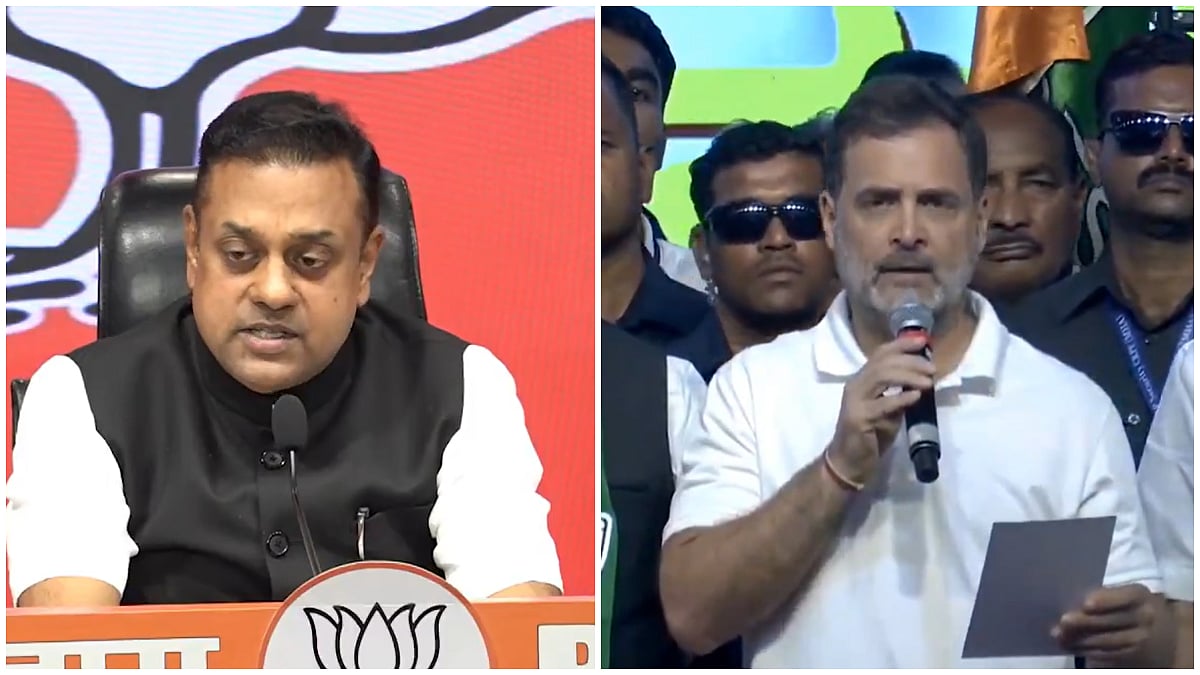
BJP spokesperson Sambit Patra rejected the Opposition’s interpretation of the reported differences. He argued that discussions among the three Election Commissioners showed that institutional deliberations were taking place rather than supporting allegations of wrongdoing.
“This is an official deliberation among the three election commissioners. What do we gather from this? The BJP did not go and plant a story in the media saying that there had been official deliberations among them. Such deliberations are actually a sign of a healthy democracy,” Patra said, NDTV reports.
The BJP leader also pointed to the ECI’s position that the commissioners were on the same page over the SIR. The poll body said differing views and observations were a normal part of institutional deliberations and maintained that its decisions over the past year had ultimately been unanimous.
Bengal Numbers Enter Political Fight
Patra also used West Bengal’s election results to challenge the Opposition’s “vote theft” allegation. Citing figures from the report, he said that among the 20 Assembly seats in Bengal that recorded the highest voter deletions during the SIR, the Trinamool won 13, the BJP six and the Congress one.
“If there was vote theft, how did anyone else win?” Patra asked.
His argument was aimed at questioning the Congress’s allegation that the electoral process had been manipulated to benefit the BJP. However, the electoral results cited by Patra and the reported objections raised within the ECI address different aspects of the controversy: one concerns election outcomes, while the other concerns how decisions within the constitutional body were made.

Congress Targets Chief Election Commissioner
The Congress, meanwhile, stepped up its attack on Chief Election Commissioner Gyanesh Kumar, alleging that he was acting like a “dictator” and accusing the poll body of facilitating “vote theft” to favour the ruling party.
The Opposition’s criticism centred on the report that Sandhu and Joshi repeatedly raised objections to decisions within the three-member Commission. The Congress argued that the reported objections raised questions about whether Kumar alone was effectively taking final calls.
Congress leader Rahul Gandhi went further, accusing the BJP, Rashtriya Swayamsevak Sangh (RSS) and the Election Commission of involvement in “vote chori”.
“Vote chori is a crime against the Indian people and a direct attack on our constitution. The BJP, RSS, and EC, who organised it, have committed an act of treason. Justice will be served,” Gandhi said.
Also Watch:
ECI Says Decisions Were Unanimous
The Election Commission rejected the suggestion that the reported internal differences meant its final decisions lacked consensus. It said differing views were part of the decision-making process and maintained that decisions taken by the full Commission over the past year, including those concerning electoral roll revisions and the SIR, were unanimous.
The controversy has nevertheless opened a fresh political battle over the functioning of the poll body. The reported objections by two of its three commissioners give the Opposition fresh material to question its internal decision-making, while the BJP and the ECI maintain that debate before reaching a unanimous decision is a normal institutional process.
The central issue, therefore, is not simply whether differences existed within the Commission. The political dispute is over what those differences signify: the Opposition sees them as grounds to question how the ECI functioned, while the BJP portrays them as evidence that differing views were heard before decisions were reached.

