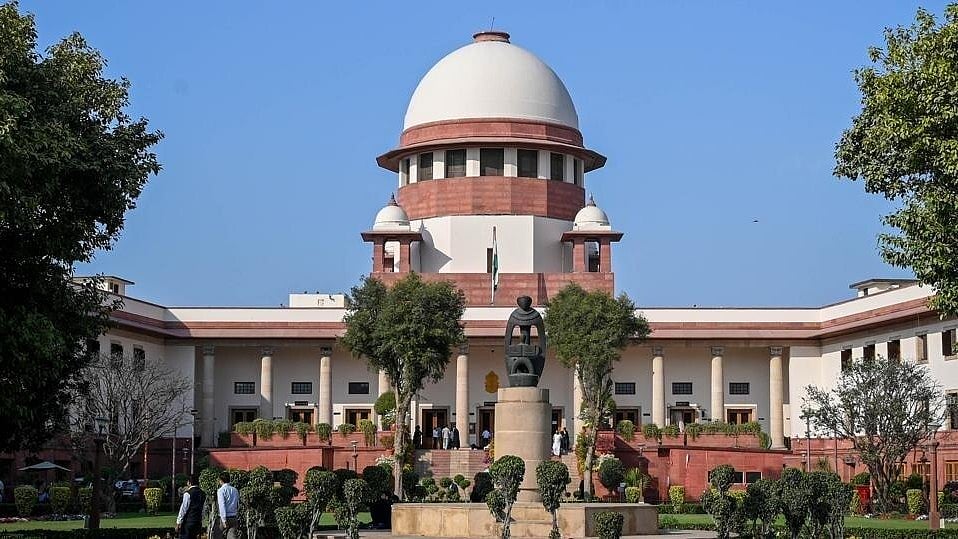
Mumbai, November 19, 2026: The Supreme Court has expressed serious concern over poor sanitation and the failure of States and local bodies to properly implement the Solid Waste Management (SWM) Rules, 2026.
The court observed that despite India’s economic progress, inadequate sanitation and waste management continue to undermine the country’s achievements in other sectors.
“The Court notes that Bharat is now a rich country but has poor sanitation performance. The growth achieved in other fields is completely negated by the negative impact from this manageable dereliction by all the stakeholders,” the court observed while reviewing a progress report submitted by the Supreme Court Monitoring Committee (SCMC), Live Law reports.
Poor Sanitation Overshadows Economic Progress
The court stressed that poor sanitation and waste management affect how society and the country are perceived. It pointed out that economies with similar resources, both within and outside India, have successfully improved sanitation and hygiene.
According to the court, India already has the resources needed to achieve similar results, but effective implementation by authorities and cooperation from citizens remain essential.
“There is a need to emphasise that poor sanitation and solid waste management affect the outlook of our society and country,” the court said. Its observations highlight a troubling gap between economic development and basic civic services, raising questions about how effectively existing resources are being used.
District Collectors Told To Use Drones
A bench of Justices SVN Bhatti and NV Anjaria, on November 17, directed District Collectors across the country to conduct drone surveys and video-call inspections to monitor the implementation of waste management rules.
The court asked Collectors to assess conditions at waste management facilities through local body staff rather than relying only on official reports. The directions underline the need for direct monitoring and verifiable evidence of progress.
States Must Submit Photographic Evidence
The court directed Chief Secretaries of all States to ensure that District Collectors upload geotagged and timestamped photographs showing the condition of waste management facilities in urban and rural local bodies as of November 21, 2026. They must also document the progress and condition of these facilities as of January 1, 2027.
The SCMC has been asked to collect this information and submit a district-wise status report based on verifiable parameters during the next hearing. The requirement for photographic evidence is aimed at making it easier to assess whether improvements are taking place on the ground.
400 Districts Yet To Set Up Special Cells
The court identified several shortcomings in the implementation of the SWM Rules, noting that approximately 400 districts had still not established Special Cells to assist District Collectors in monitoring compliance.
Only nine of the 28 States had achieved the target for urban bylaws. Meanwhile, 16 States had not reported incorporating rural bylaws, while 18 States had not submitted information on four-way segregation of solid waste in rural areas. These figures reveal the scale of the implementation gaps across the country.
Notices And Private Participation Under Scrutiny
The court also flagged inadequate information about notices issued to residential, commercial and business establishments for violating waste management rules. It sought category-wise details of establishments, including private establishments and identified bulk waste generators, along with deficiencies detected and action taken.
The progress report also lacked sufficient information on public-private participation and waste-to-energy initiatives. The court’s directions make it clear that monitoring must cover not only government facilities but also establishments responsible for generating and managing waste.
Railways Given Eight Weeks To Comply
The Supreme Court expressed concern over the Railways’ poor compliance with waste management requirements. According to the report, only 630 of the country’s 8,809 railway stations had been mapped to local bodies, while just 510 railway premises were following four-way waste segregation.
The court directed the Railways to ensure complete compliance within eight weeks. The figures point to a substantial gap in waste management practices across railway premises.
Financial Constraints No Excuse For Municipalities
The court emphasised that municipalities cannot avoid their responsibility to maintain public health and hygiene by citing a shortage of funds. It referred to its 1980 judgment in Municipal Council, Ratlam v. Shri Vardhichand, reinforcing the obligation of civic authorities to ensure proper sanitation.
The court also reiterated that industries must use corporate social responsibility (CSR) contributions to improve waste management infrastructure in the local bodies where they operate. It specifically mentioned compressed biogas plants and waste-to-energy technologies as possible areas of investment.
Education Departments Asked To Act
The Supreme Court directed State Education Departments to comply with its earlier orders without further delay. It also instructed District Collectors to report the deficiencies identified in different categories of establishments and the steps taken to address violations.
Also Watch:

The SCMC will incorporate the information collected from States and districts into its next report. The matter is scheduled for its next hearing on January 12, 2027, when the court will review the progress made in implementing its directions.
To get details on exclusive and budget-friendly property deals in Mumbai & surrounding regions, do visit: https://budgetproperties.in/

