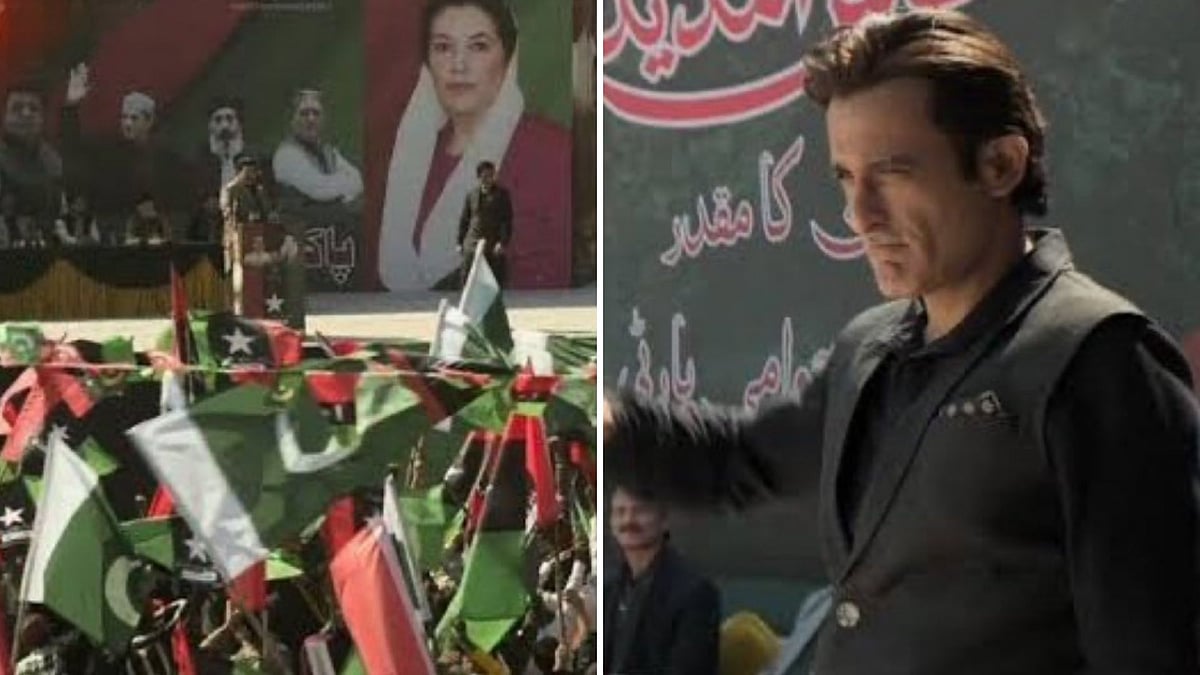
Islamadad: A political controversy erupted over Ranveer Singh's latest spy-thriller Dhurandhar, after a senior Pakistan Peoples Party (PPP) representative accused the film of unlawfully using images of Pakistan's former Prime Minister Benazir Bhutto and misrepresenting the party’s stance on terrorism.
PPP alleges misuse of Benazir Bhutto’s image
Sumeta Afzal Syed, spokesperson of PPP and a member of the Sindh Task Force, raised the issue in a post on X. Criticising the film, she said, “The newly released Indian film Dhurandar has unlawfully used images of Shaheed Mohtarma Benazir Bhutto and disgracefully attempted to portray the PPP as sympathetic to terrorists.”
She added that Pakistani authorities should take note of what she described as an attempt to malign a former Prime Minister and globally respected democratic leader. “The PPP has been a frontline victim of terrorism and has always stood and will always stand as the strongest force against extremism,” Syed added in her post.
Have a look at it here:
Controversies surrounding the film
Directed by Aditya Dhar, Dhurandhar is an Indian spy-thriller starring Singh alongside Akshaye Khanna, Sanjay Dutt, Arjun Rampal and R Madhavan. The film follows an undercover intelligence agent sent into Pakistan to dismantle a terrorist network and is set against events such as the IC-814 hijacking and the 2001 Indian Parliament attack. The film opened to mixed critical reviews but later found strong a audience interest at the box office.
The film has already been at the centre of two major controversies. The family of late Army officer Major Mohit Sharma approached the Delhi High Court alleging that promotional material mirrored his life and martyrdom without consent. The court declined to stay the release and asked the Central Board of Film Certification to review the concerns. The CBFC later certified the film as a work of fiction, clearing it for release.
Separately, Dhurandhar has also triggered debate over its political messaging and portrayal of Pakistan. While some critics have labelled it anti-Pakistan and jingoistic, supporters argue it reflects realities of cross-border terrorism and intelligence operations. Syed’s remarks have now added a fresh cross-border dimension to the ongoing debate around the film.

