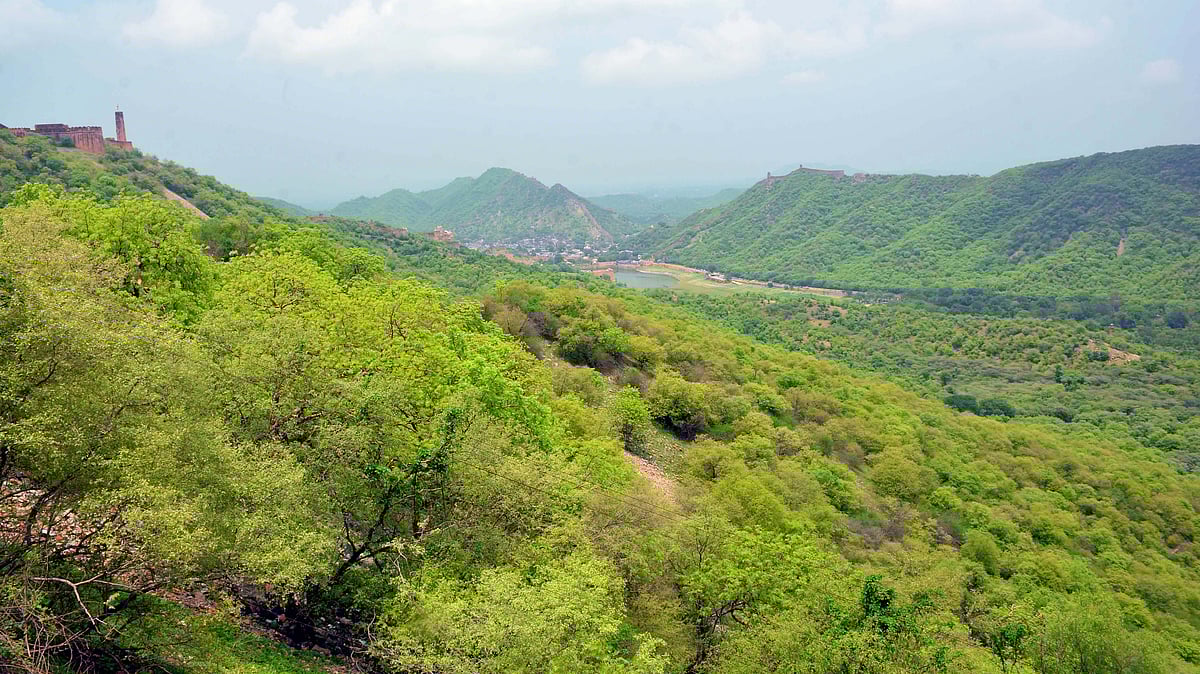
Rural communities and social activists have raised concerns over field visits conducted by the Supreme Court-appointed Aravalli committee, alleging that it failed to visit villages affected by mining and did not hold meaningful consultations with the people most directly impacted.
The high-powered committee has been tasked with independently reviewing the Centre's report on the definition and delineation of the Aravalli hill range. It is required to submit its report by Aug 31. With the panel's findings likely to have far-reaching implications for India's oldest mountain range, activists argue that communities living across the Aravallis must have a meaningful say in the process.
Four Cities, But Villages Left Out
The committee conducted field visits between Aug 6 and Aug 10 in Gurugram, Alwar, Ajmer and Udaipur, according to a statement issued on Tuesday by the Aravalli Virasat Jan Abhiyaan, a group comprising environmentalists, social activists and others.
"Without meaningful consultations with the rural communities in all the 64 districts (of the Aravalli range) ... in the five states of Delhi, Haryana, Rajasthan, Uttar Pradesh and Gujarat, no decision should be taken which will decide the fate of India's oldest mountain range," the group's co-founder Neelam Ahluwalia said.
The Forest Survey of India's September 2025 report mentions 63 districts. The Braj Bhoomi hills in Mathura are also considered part of the Aravallis by local communities, taking the number cited by the group to 64.
Kailash Chand Yadhav, secretary of the Jodhpura Sangharsh Samiti, alleged that the committee did not visit Jodhpura in Rajasthan's Kotputli-Behror district, where residents have complained of suffering because of operations at UltraTech Cement Limited's limestone mines and stone crushers, PTI reports.
"The committee members did not come to the village despite this village visit being on their agenda for the day. The committee had lunch at a hotel for an hour, barely a few kilometres from our village," Yadhav said.
The allegation raises a larger question over the purpose of field visits if communities living close to mining operations do not get an opportunity to directly place their concerns before the committee.
Mining Lobby's Presence Raises Concerns
Activists have also alleged that the mining lobby and local administration dominated public hearings held during the field visits.
"The mining lobby was present in full force in Alwar, Ajmer and Udaipur, where civil society from urban areas and villagers talking about the negative impacts of mining were threatened later," Ahluwalia said.
The Aravalli Virasat Jan Abhiyaan also flagged the manner in which a public hearing in Udaipur was conducted, alleging that its timing was changed just a night before the meeting. The last-minute change, it said, prevented several people from reaching the venue on time.
Bhil Adivasi leader Sadhna Meena said the original time given to meet the committee was between 3 pm and 4 pm on Aug 10. However, she said, the timing was changed to 10 am the previous night.
"Since people were expected to travel from across the Udaipur division, including neighbouring districts ... many of them could not reach (the venue) on such short notice," Meena said.
For a consultation exercise intended to gather views from affected communities, such last-minute changes risk excluding precisely those people who may have to travel the farthest to participate.
Consultation Process Already Under Fire
Questions over the committee's public-consultation process had surfaced even before the field visits. Different organisations have criticised its July 21 notification seeking representations, suggestions and inputs from a broad spectrum of stakeholders, saying it failed to adequately reach rural communities and affected people.
The notification said submissions, supported "to the extent possible" by documentary evidence or verifiable material, had to be sent through email or an official Google Form within 21 days of the notice.
In a letter to the committee dated Aug 2, a Rashtriya Swayamsevak Sangh-affiliated social welfare organisation said the notification did not appear to have been widely published in mainstream or regional newspapers, particularly those in Hindi and Gujarati.
The Akhil Bharatiya Vanavasi Kalyan Ashram said these are the principal languages of communication in Rajasthan, Gujarat, Haryana and the National Capital Territory of Delhi, through which the Aravallis extend.
Environmental group People for Aravallis also wrote to the committee on Aug 4, arguing that the 21-day period for submitting suggestions was insufficient. It said restricting submissions to email or Google Form was exclusionary for rural communities.

Taken together, the concerns point to a basic challenge for the consultation process: access. A process dealing with the future of a mountain range spread across several states cannot be truly representative if the people living in affected areas struggle to participate.
Demand To Extend Aug 31 Deadline
The Aravalli Virasat Jan Abhiyaan has now demanded an extension of the Aug 31 deadline for the committee to submit its report. It has also urged the panel to visit all districts falling within the Aravalli range.
The demand assumes significance given the concerns raised over village visits, access to public hearings and the mechanism for submitting representations. Whether the committee addresses these concerns before completing its review will be crucial to how inclusive and representative the exercise is ultimately seen to be.

