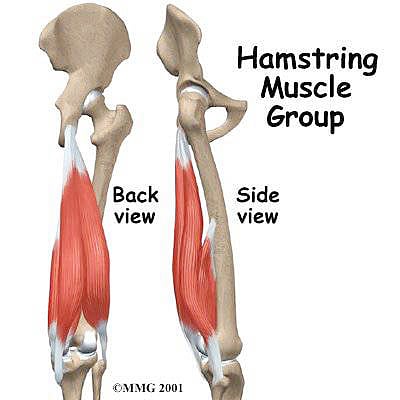
Lower back pain is one of the most commonly faced problems today, with one of the major causes being related to a group of muscles called the Hamstrings, says Dr Anjana Laungani.
Hamstring: The Hamstrings are a group of 3 muscles located at the back of the thigh or femur bone. The muscles connect the buttock area of the pelvis to the backside of the lower leg.
Role of the hamstring: This group of muscles helps in bending the knee and extending the hip (bringing the thigh behind you).
Causes of hamstring tightness:
- True hamstring tightness
- Hamstring tendinosis or acute hamstring strain
- Old hamstring injury
- Neural Tension (Sciatic nerve supplying the muscle can be tense)
- Protective tightness to guard the pain.
How can hamstring tightness change the alignment of the spine?
Normally the spine is set in such a way that there is a small curve in the lower back. This is because the backside of the pelvis is slightly higher than the front.
When the hamstrings are too tight they can pull the backside of the pelvis downward. This downward pull of the pelvis can cause a flattening of the lower back which puts the spine at a disadvantage when it comes to the ability to hold your body upright against gravity.
The constant pulling of the shortened muscles not only increases pressure on the bones of the spine but also adds strain on the muscles in that area, as now they have to work harder to hold the body up against gravity.
Tight Hamstring = Weak lower back:
When this happens over a prolonged period of time the muscles in the lower back become weak and start to fatigue. These muscular imbalances can cause pain in the lower back.
Take this picture for example. It depicts an individual who sits at a desk for a long time with his knees bent, lacking proper postural habits and sufficient back support. This is the main reason why most office goers complain of sore/tired lower backs.
How to prevent hamstring tightness, and in turn lower back pain:
Stretch! Stretch! Stretch! A simple stretching routine can help limit the amount of tightness especially if you are sitting all day. Remember though it’s not just the hamstring tightness alone that causes pain always, and it is advisable to get evaluated by a physiotherapist and treat it accordingly.
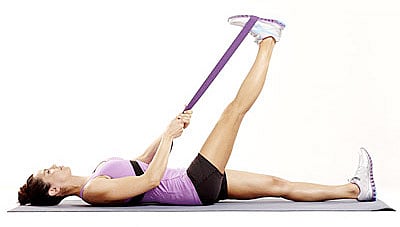
Few of the self-stretches are as follows:
90-90 stretch:
l Lie on your back with both legs straight. Bend one knee to 90 degree.
l Hold your bent leg behind the knee, at the thigh.
l Slowly straighten the bent knee keeping the thigh stable.
l Hold for 20-30 seconds till you feel a mild discomfort/stretch in the hamstring region or when the opposite leg starts lifting from the ground or if the knee starts bending.
How does Physiotherapy help?
Because the pelvis is the part of the body that connects the legs to the torso, any changes in the orientation of the pelvis can create problems at the other joints above and below such as knees, ankles and even neck for that matter as hamstring
muscles are attached as slings
to the upper back muscles. Correct diagnosis will help the removal of pain and prevent situations such as this.
Physiotherapy tools like:
l Education regarding correct body mechanics and posture.
l Heat/Cold therapy depending on the acute/chronic stage of the condition
l Ultrasound therapy
l Myofascial release
l Dry needling
l Deep tissue massage
l Trigger point release
l Manual stretching techniques
l Neural tissue mobilization
l Joint mobilization
l Kinesiology taping
l Sport specific training
l Ballistic stretches
Hands on application of these tools by a licensed physical therapist can help increase the range of motion, improve muscular and joint function and decrease pain in individuals who have backache due to such a cause.
Dr Anjana Laungani is Consultant Physiotherapist & Rehab Specialist, )


