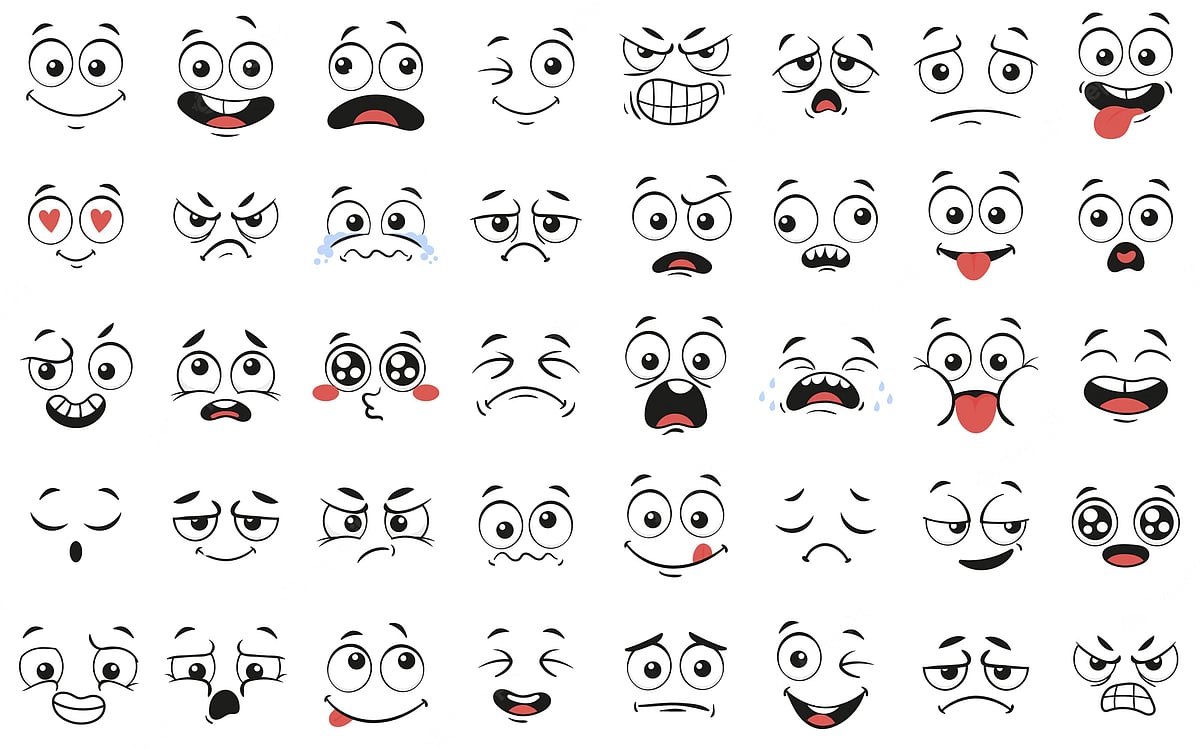
London: Researchers utilised an algorithm to allow users to modify their ideas about what a certain emotion's facial expression should look like. The findings revealed significant individual variability, implying that the same facial expression might mean various things to different people.
Previously, research into the interpretation of emotional expressions has been limited because experimental tools representing facial expressions have been too simplistic.
Where the research was punlished and what tools were used for the research:

In a paper published in the Journal Proceedings of the National Academy of Sciences, the researchers improved the available tools by using 3D avatars. They applied genetic algorithms to the avatars so that users could progressively refine the avatars' facial expressions until they thought the expression reflected what they thought a particular emotion should look like.
Research findings:
A total of 336 people then used the avatars to generate facial expressions that represent happiness, fear, sadness, and anger. The researchers found that the expressions people generated varied substantially, suggesting that people associate different facial expressions with the same emotional state.

The researchers then used a standard emotion recognition test on the people who had generated the expressions on the avatars. The researchers found that differences in people's performances were explained by how closely the standard test expressions matched the expressions they'd created with the avatar.
Co-author's opinion:
Study co-author, Isabelle Mareschal, Professor in Visual Cognition at Queen Mary University of London, said: "Our study proves that we can't assume that there is a common understanding of what emotions different facial expressions reflect. It appears that people's individual responses to different facial expressions have more to do with their unique understanding of the facial expression than how they process and respond to emotions internally. This could have important consequences for our clinical understanding of certain conditions where people appear to have 'atypical' responses to facial expressions."
The researchers recommend that future research on emotion processing should move away from using methods and stimuli that correspond to stereotypes and favour approaches that account for more diversity and richness of expression.

