The audience remembers the scene. The actor gets the applause. The director gets the credit for bringing it all together. But between what was captured on camera and what eventually makes it to the screen lies another kind of craft, the one that rarely gets its own moment in the spotlight: Editing.
It is where performances find their rhythm, stories find their shape and hours of footage becomes a ‘film’. The work might happen behind closed doors, but its impact is everywhere on screen.
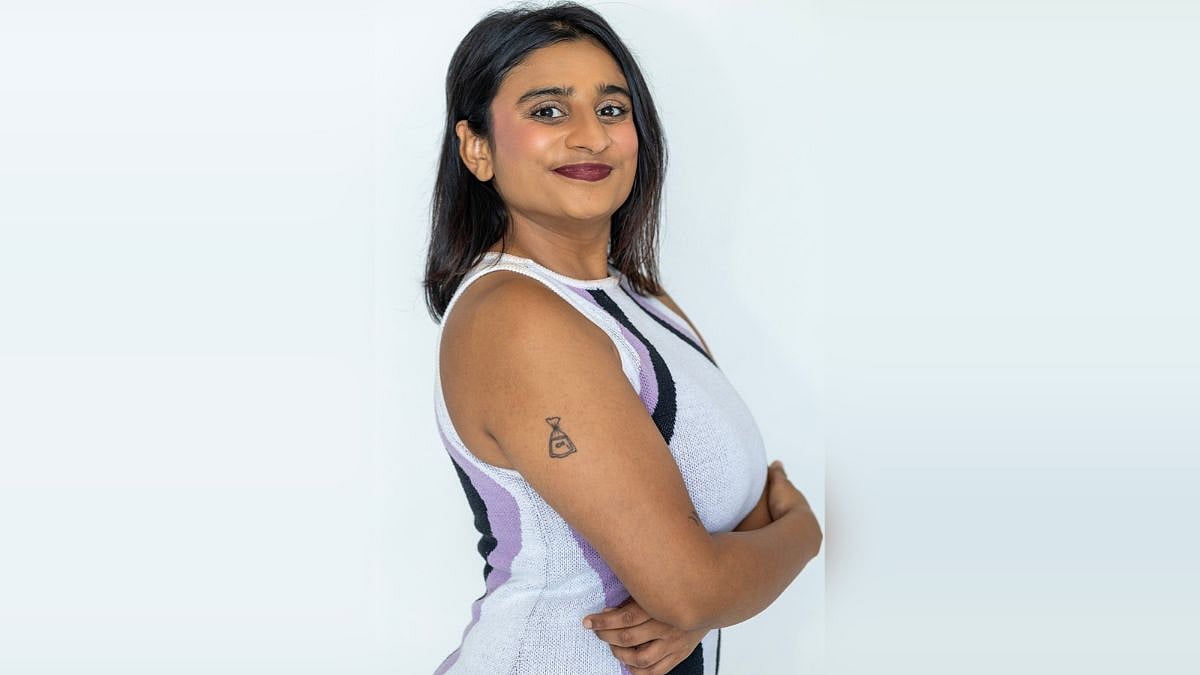
For Vedika Parekh, that work has taken her across true-crime documentaries, independent cinema, television, digital productions and podcasts, each with its own demands and its own way of telling a story.
On The Gotti Files, an eight-hour true-crime documentary series for A&E scheduled to premiere in 2027, Parekh worked with an extensive archive of home movies, court documents, wiretap material, prison recordings, interviews and transcripts. Across episodes 2 episodes, she built assemblies from raw footage and transcripts for editor Rich Hyatt.
Among the vast amount of material, she identified a statement from a grieving mother that became central to the emotional structure of one episode. It was a small moment within a much larger story, but it helped shape how that story would be told.
That is the power of an edit. A moment can be captured on camera, but its place in the story can change everything. Editing gives the footage its context. It decides what the audience notices, what they feel and what stays with them after the screen goes dark.
And this influence extends far beyond documentaries.
Across Creatures, Abeline and Castro’s Daughter, three independent projects with editor Brian Schofield, Parekh worked across different stages of post-production, from organising dailies and building stringouts to sound design and direct editorial work. For Castro’s Daughter, a biographical drama about Alina Fernández, daughter of Fidel Castro, she cut the prologue and epilogue.
A prologue is the audience’s first step into a world they have yet to know. It sets the mood, offers a glimpse of what lies ahead and gives them a reason to step further in. It takes years of craft to know how much to hold back and just how much context an audience needs to find its way into the story. That balance between restraint and revelation is what makes a first impression last.
The same applies to documentary, where the meaning of a moment often extends beyond what is said. On Muscle Village, a film centred on Kushti, the traditional South Asian form of mud wrestling, Parekh’s fluency in Hindi helped her work with dialogue, tone and cultural context. Understanding the language meant she could pick up on nuances that might be missed in translation. These are choices the audience may never consciously register, but they shape how a story is understood.
We also forget that a finished film depends on an entire chain of decisions, many of which will never be visible to its audience.
Parekh’s work at Tripod Media on Come See Me in the Good Light, a documentary about poet Andrea Gibson, involved transcription and footage logging. The film carries the weight of a deeply personal story, where every exchange and pause can hold meaning. Before the edit can take shape, there’s the careful work of going through the material, knowing what to keep track of and making sure the moments that matter don’t get lost along the way. The documentary went on to receive a Peabody Award, a Sundance Festival Favorite Award and a 2026 Academy Award nomination.
Across India and the US, Parekh has built experience in several parts of this process. She worked as an assistant editor on BBC India’s Shekhar Home, an adaptation of the Sherlock Holmes stories set in Bengal. At Supari Studios, she progressed from associate editor to senior associate editor on Flipkart-related content, and later worked as a video producer at DeadAnt. Her experience with Jio Studios included motion graphics and Comics for Change, a campaign connected to the UN Sustainable Development Goals. Her own editing credits include The Lovers, Comfort Food and the AFI thesis film Will.
The work behind a film can look very different from one project to the next, but the questions an editor faces are often just as specific. Does a scene need another few seconds? Is this giving me the impact I want to achieve?
Most viewers won’t think about these choices. They’ll remember how a scene made them feel, or why a particular character stayed with them. These reactions don’t happen by accident. They’re shaped by decisions that an editor makes long before the film reaches an audience.
Parekh may work behind the scenes, but the work itself is anything but background. Editing is often treated as the last stage of filmmaking, when the footage is already shot and the story is waiting to be put together. In reality, it’s where the story finds its final form.

