TASHKENT, 30 September 2026: The relationship between tobacco regulation, scientific research and changing smoking patterns was a central theme at Technovation Tashkent 2026, an international forum that brought together policymakers, medical professionals, researchers and business representatives from across Central Asia and other countries.
Held at the JW Marriott Hotel Tashkent, the event marked the forum’s first edition in Central Asia. Convened by Philip Morris International (PMI), it featured discussions on how governments can evaluate emerging nicotine products, address public health concerns and frame tobacco policies around scientific evidence.
Opening the event, Akram Aliyev, Deputy Minister of Investment, Industry and Trade of Uzbekistan, said innovation should be assessed not only through economic outcomes but also through its contribution to public health and national well-being.
Marco Mariotti, President for South and Southeast Asia and CIS at PMI, highlighted the continuing challenge of reducing smoking worldwide. He argued that policies should consider alternatives for adults who continue to smoke rather than rely exclusively on existing tobacco-control measures.
A significant part of the discussion focused on Japan, where cigarette sales have declined considerably over the past decade. Dr. Tomoko Iida, PMI’s Senior Director of Scientific Engagement, referred to research published in the journal *Tobacco Control* that examined cigarette sales between 2011 and 2023. The study reported a decline of more than 50% over the period and considered the growing availability of heated tobacco products among the factors associated with the change.
Heated tobacco products were introduced in Japan and Italy in 2014. According to Iida, their subsequent adoption offers an example of how the availability of alternatives may influence cigarette consumption. She also cited a reduction in Japan’s smoking prevalence, which she put at approximately 20% in 2014 and around 10% a decade later.
However, the broader implications of these trends remain an important consideration for policymakers assessing the relationship between product availability, regulation and smoking behaviour.
Iida explained that burning tobacco generates thousands of chemicals, including numerous harmful substances associated with smoking-related diseases. Although nicotine is addictive and carries risks, she said the combustion process is a major source of the toxic substances inhaled through cigarette smoke. Products that deliver nicotine without burning tobacco may reduce exposure to certain harmful chemicals, although they are not risk-free and are not intended to be treated as equivalent to quitting tobacco and nicotine altogether.
International regulatory frameworks provided another focus for the forum. Sweden, where the use of snus and, more recently, nicotine pouches has formed part of the wider nicotine market, has recorded a decline in daily smoking. Daily smoking stood at 3.7% in 2025, according to the figures presented at the event. Sweden’s experience has drawn attention to the potential effects of changing consumption patterns, alongside the need to consider the wider public health implications of nicotine use.
Italy has maintained a distinct regulatory and taxation category for heated tobacco products since 2016. In the United States, the Food and Drug Administration has issued product-specific authorisations relating to modified-risk claims for certain tobacco products, including snus and heated tobacco, as well as nicotine pouches in 2026. Such authorisations apply to specific products and claims; they do not establish that tobacco or nicotine products are safe. The FDA continues to warn that no tobacco product is safe.
Medical professionals participating in the discussions emphasised that smoking cessation should remain the primary public health objective. Dr. Boris Kasparov, an oncologist at Russia’s N.N. Petrov National Medical Research Centre of Oncology, said the distinction between nicotine dependence and exposure to toxic substances in tobacco smoke was important when communicating health risks to patients.
Dr. Saida Umarzoda, an oncologist at Tajik State Medical University, raised concerns about the unintended consequences of prohibition-based approaches. She argued that tobacco policy should be informed by scientific findings and should also account for the possibility that restrictive measures may contribute to illicit markets.
Uzbekistan’s State Customs Committee reported that the illicit share of the country’s tobacco market had fallen to approximately 7%. It also reported seizures of more than three million illicit cigarette packs during the year, highlighting the continuing enforcement challenge facing authorities.
The forum also considered emerging clinical research. Dr. Meiram Raganin, a dental surgeon from Kazakhstan, presented findings from a six-month study involving smokers who switched to heated tobacco products. He reported improvements in oral hygiene and reduced gum inflammation among those who switched, compared with worsening outcomes among participants who continued smoking. The findings formed part of the discussions on alternative products, although further research and independent assessment are important when evaluating health outcomes.
Dr. Javokhir Khalmukhamedov of Tashkent State Medical University stressed that new technologies and health-related products should be assessed through evidence-based medicine. Kasparov added that industry-funded research should be examined alongside independent studies rather than dismissed solely on the basis of its funding source.
India’s tobacco-use patterns were also raised during the forum. The Global Adult Tobacco Survey-2, conducted in 2016–17, estimated that India had approximately 267 million tobacco users, including 99.5 million smokers. Iida said Indian policymakers could examine international regulatory assessments and seek independent reviews by medical professionals before determining whether evidence from other countries was applicable to local conditions.
Participants noted that regulatory decisions must account for differences in public health priorities, consumer behaviour, enforcement capacity and access to cessation support. Omar Abdellatif, Managing Director for Kazakhstan and Central Asia at PMI, described the approach as one of “smart regulation”, arguing that policies should be guided by evidence and adapted to future challenges.
The discussions in Tashkent underscored the need for continued scrutiny of tobacco-control strategies, including the evidence surrounding alternative nicotine products. While experiences in individual countries can inform policy debates, their outcomes must be assessed in context, with public health protection and smoking cessation remaining central considerations.
About Technovation
Technovation is an international forum convened by Philip Morris International that brings together businesses, regulators, civil society representatives, scientists, medical professionals and media to discuss the role of technology and innovation in economic and social development. Previous editions have been held in Stockholm and Washington. Technovation Tashkent took place on 30 September 2026 at the JW Marriott Hotel Tashkent, Uzbekistan.
Technovation Tashkent 2026 Puts Tobacco Harm Reduction And Regulation Under The Spotlight
Experts from Central Asia and beyond discuss Japan’s declining cigarette sales, international regulatory approaches and the role of scientific evidence in shaping tobacco policy.
FPJ Web DeskUpdated: Thursday, October 15, 2026, 05:29 PM IST
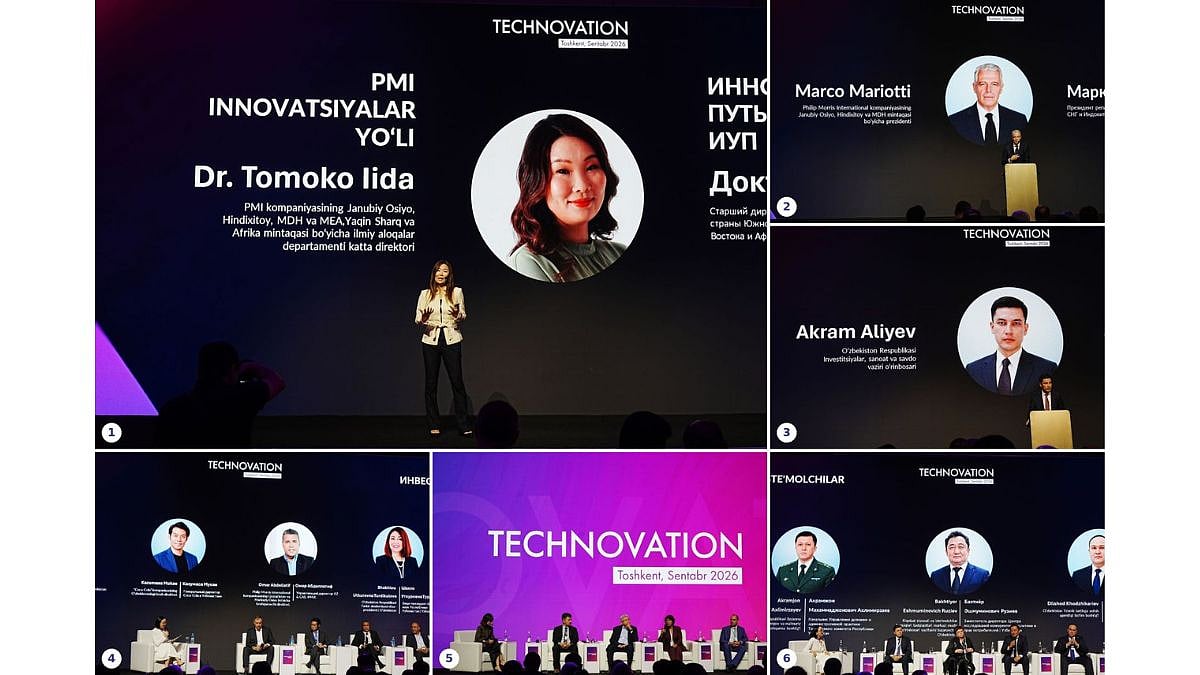
Experts at the Technovation Tashkent 2026 forum discussed international tobacco policies, alternative nicotine products and the importance of evidence-based public health decisions | File Photo

