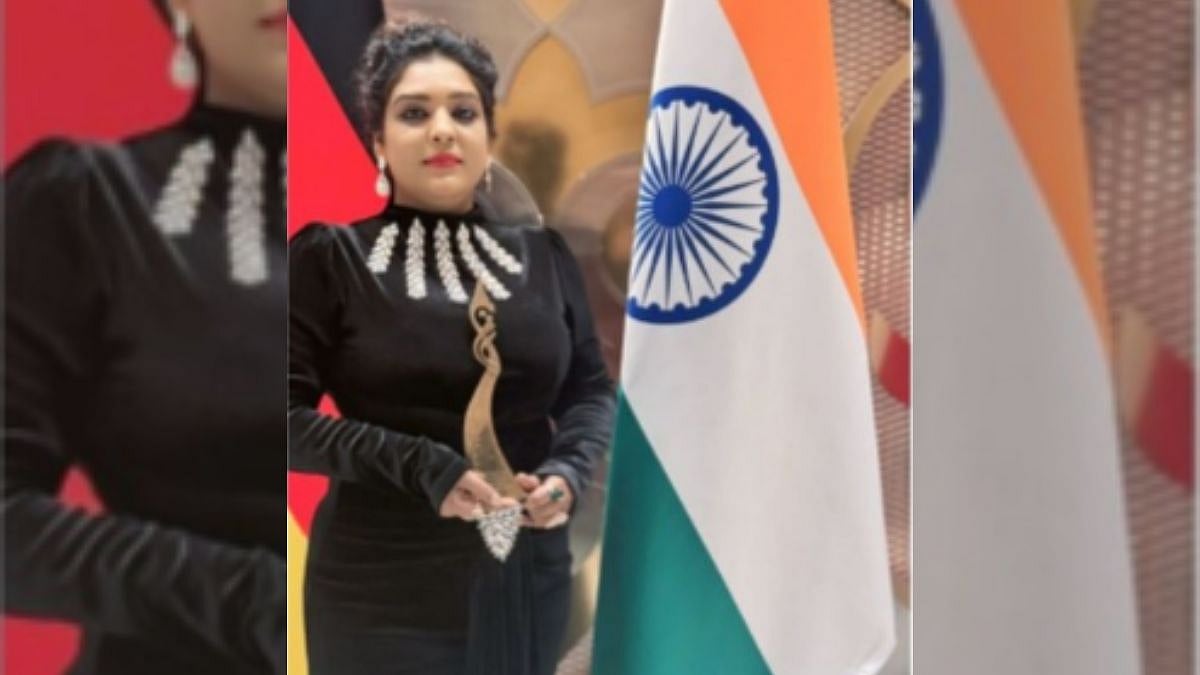
A 12-year old girl’s dream of becoming a doctor travels from a marginalised community in Madhya Pradesh to the international stage—where Indian filmmaker Shobhita Thakur’s The One Who Plays (Khilawadi) finds recognition
Indian filmmaker, writer and FTII Pune alumna Shobhita Thakur’s 27-minute film The One Who Plays (Khilawadi) has won the Best Short Film award at the XXII Kazan International Film Festival “Altyn Minbar” in Russia. The 2026 edition of the festival received 1,030 submissions from 67 countries, with 55 films selected for the competition programme.
For Thakur, however, the award carries a significance that goes beyond a festival trophy.
The international jury was chaired by celebrated Iranian filmmaker Majid Majidi, a filmmaker whose cinema has consistently engaged with children, human vulnerability, dignity and the human condition.
“Winning at Kazan is deeply special to me because Majid Majidi Sir was the President of the Jury. There is no greater honour than to have your work seen and recognised by a filmmaker who has been a cinema guru for me. I first learnt how to tell a universal story through children from his cinema” says Thakur.
For an Indian independent filmmaker, the moment also becomes symbolic: a story rooted in one of India's most marginalised communities has found a cinematic conversation on global stage.
A girl, a dream and a community pushed to the margins
At the centre of The One Who Plays is Sapna, a 12-year-old girl from the denotified Banchhada community of Madhya Pradesh. Sapna dreams of becoming a doctor, inspired by a woman doctor working at a village primary healthcare clinic. But her dream exists against a social reality in which generations of girls have been denied the freedom to determine their own futures.
The film explores the difficult intersection of caste, gender, identity, education and social exclusion without turning its protagonist into a symbol of suffering.
Instead, Thakur places the girl's dream at the centre. That choice is important.
The One Who Plays is not simply a film about what a marginalised girl has been denied. It is about what she dares to imagine and the denial of her very basic right to her body and her education.
The film draws attention to the Banchhada community, a denotified community in Madhya Pradesh whose women have historically faced social and economic injustice rooted in exploitative practices. Thakur's engagement with the subject emerged from research and interactions with women and girls from the community, along with an attempt to understand the structures surrounding their lives rather than viewing them through a sensational lens.
The film's title, Khilawadi—The One Who Plays therefore acquires another meaning. It speaks of a girl who wants to participate in life on her own terms.

Cinema as a conversation between wounded worlds
What made Kazan particularly meaningful for Thakur was not simply the award, but the atmosphere in which it was received.
The Altyn Minbar Kazan International Film Festival describes its mission through the motto, “Through the dialogue of cultures – to a culture of dialogue.” The festival emphasises peace, tolerance, humanism, cultural traditions and the ability of cinema to connect people across national and religious boundaries.
The 2026 festival brought together filmmakers from across the world and placed particular emphasis on cinema dealing with human experience, cultural identity and questions of peace and human dignity. Films from Iran, Iraq, Syria and other countries featured prominently across the festival's programmes. The festival focused on creating a safe space for the exchange of conversations carried by filmmakers who came from far and wide. They brought with them their pain, their suffering and found a space that listened to their stories beyond prejudice or judgement. Kazan over the week long festival became a place of deep compassion and understanding.
The humanitarian dimension was particularly visible in the festival's engagement with cinema emerging from regions affected by conflict and displacement. The Iranian film Land of Angels, directed by Babak Khajepasha centred on children affected by the war in Gaza, received the festival's Grand Prix for Best Feature Film.
For Thakur, this created an unusual kind of cinematic environment—one where films were not merely competing against one another, but speaking to one another.
“Altyn Minbar felt like a place where filmmakers could come from different parts of the world and tell each other about their people, their cultures and their pain,” she says. “It was deeply humanitarian and intellectually stimulating. It felt like a place of learning anddiscourse and compassion.”
That philosophy resonates strongly with The One Who Plays. Though the film is rooted in a particular community in Madhya Pradesh, its central questions—Who gets to dream? Who gets to study? Who gets to decide the future of a girl?—travel far beyond geographical borders.
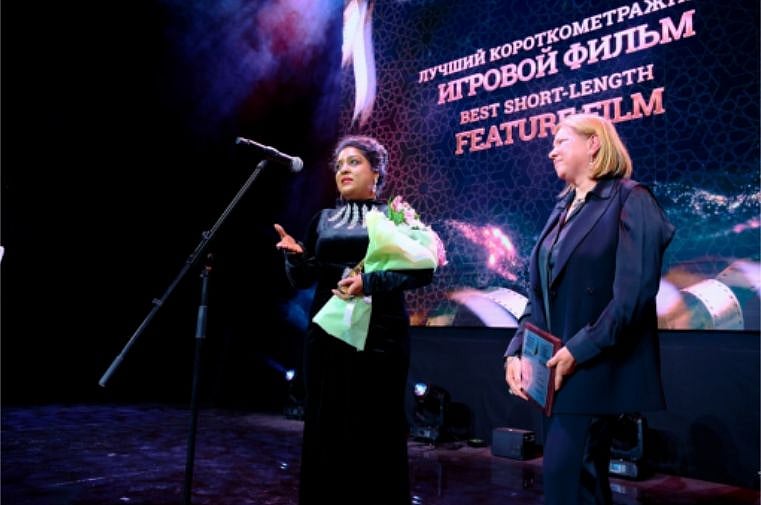
From FTII Pune to the international screen
For Thakur, the recognition is also another chapter in an increasingly international festival journey for The One Who Plays.
An alumna of the prestigious Film and Television Institute of India (FTII), Pune, Thakur has worked across filmmaking, editing and writing and OTT.Her cinematic approach combines a grounded observational sensibility with an interest in stories that engage with society and never shy away from questioning the society.
Before Kazan, The One Who Plays received recognition at the FascinAsian Film Festival in Canada and was selected for the Festival International du Film de Nancy in France. The film has also continued its festival journey across India and internationally.
Its next stops include the Social Justice Film Festival in Chennai, where the film is scheduled as part of the 32nd edition, followed by the BAFTA qualifying 45th Cambridge Film Festival and the Jagran Film Festival in India.
For Thakur, the journey is ultimately not about the distance travelled by the film, but about the distance travelled by its protagonist's voice and the hearts touched across the globe.
You can follow filmmaker I Author Shobhita Thakur @ https://www.instagram.com/lilyshobhita/
https://www.facebook.com/shobhita.thakur

