What happens when the technology designed to keep our digital identities safe is challenged by a new generation of technology? For cybersecurity professionals, preparing for that future has already begun.
Think about how often you use your digital identity. You might log into a government portal, verify your details online or access a service using a digital ID. It takes just a few seconds, and most of us overlook the technology working behind the scenes to keep our information safe.
But what if the security systems we trust today are not strong enough tomorrow?
This is a question that is gaining importance as quantum computing moves closer to practical use. While the technology promises major advances in science, healthcare and computing, it could also challenge some of the encryption methods that protect our digital lives.
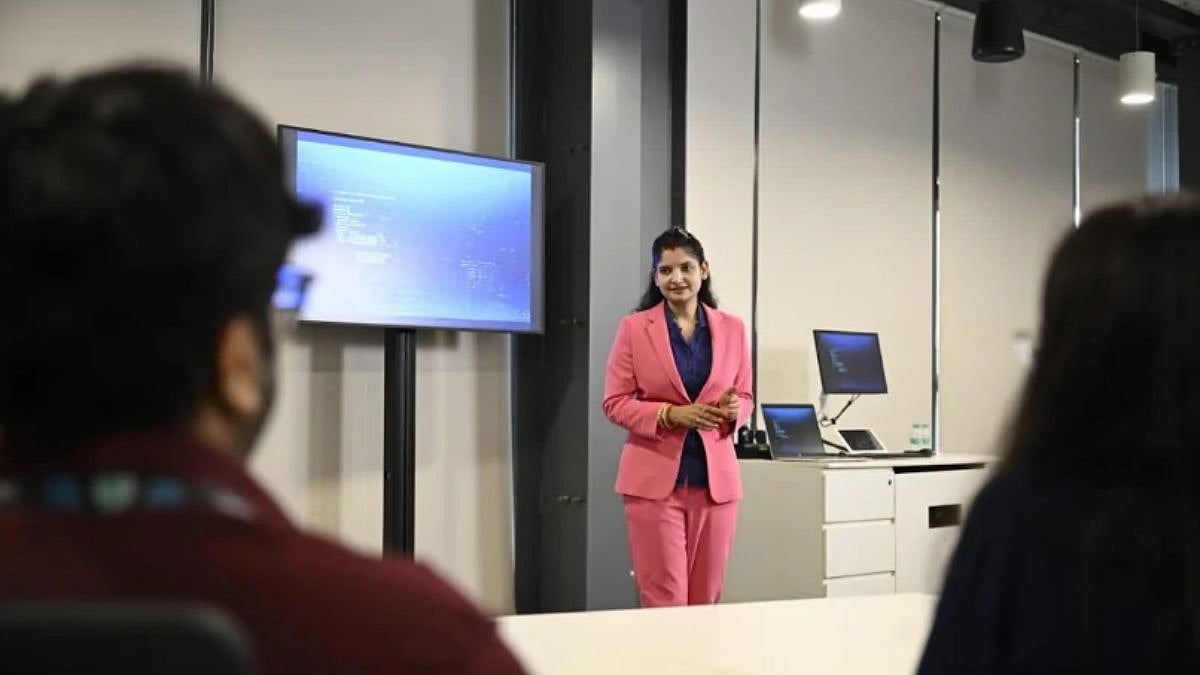
For Dr Swati Kumari, Senior Lecturer at Deakin University GIFT City Campus, these questions are already shaping her research agenda.
Recently awarded funding through the Australia-India Cyber and Critical Technology Partnership (AICCTP) programme, Dr Kumari is leading a research project on Quantum-Safe Digital Public Infrastructure. The project looks at two major digital identity ecosystems, India's Aadhaar and Australia's MyID.
The aim is to understand how advances in quantum computing could affect the security systems that protect them.
Also to identify possible weaknesses, explore newer forms of encryption and develop practical ways to make digital identity systems safe.
"Digital identity systems protect highly sensitive information and provide access to essential services for millions of people," says Dr Kumari. "Many of the cryptographic mechanisms we rely on today were designed long before quantum computing became a realistic possibility. Preparing now is a necessity."
Why should students pay attention?
Quantum computing may sound like something out of a science fiction film, but its implications are real.
Much of the technology that protects our banking transactions, digital signatures, cloud services and online identities relies on encryption methods developed for conventional computers. Powerful quantum computers could eventually create new risks for individuals, businesses and governments.
Another reason why cybersecurity continues to be one of the world's fastest evolving and sought-after professions.
"What excites me most about cybersecurity is that it never stands still," says Dr Kumari.
"The challenges evolve alongside emerging technologies such as AI, cloud computing, quantum technologies and the Internet of Things. You're constantly learning, innovating and solving problems that have real-world impact."
Right skills for the cybersecurity leaders of tomorrow
Technical knowledge remains at the heart of cybersecurity, but the skills required are becoming much broader.
Dr Kumari believes that students need a strong grounding in networking, programming, cryptography, operating systems and secure software development. They should also understand emerging areas such as AI, cloud computing, privacy, governance and digital identity.
But technical skills alone are not enough.
Cybersecurity professionals increasingly work with people from different backgrounds, organisations and countries. They need to communicate clearly, work in teams and adapt cross-culturally.
Her own research project provides an example. By bringing together researchers from India and Australia, it addresses a shared challenge that requires expertise, collaboration and an understanding of different technological environments.
"Cybersecurity challenges are global challenges. The ability to work across teams, industries and borders will be as valuable as technical expertise," she says.
Breadth and depth of learning
For students at Deakin’s GIFT City Campus, research such as this offers a glimpse into the challenges shaping the cybersecurity industry.
The subject is not limited to understanding how cyber threats work. It is also about exploring how systems can be protected, tested and made more resilient.
While learning students engage with areas such as digital identity, threat modelling, cryptography, secure systems design and cyber resilience. These concepts help them understand how security works in practice. This becomes important as these systems serve millions of people and handle sensitive information.
They can also explore some of the emerging areas that are creating new opportunities across the industry, including:
· Artificial Intelligence Security
· Cloud Security
· Post-Quantum Cryptography
· Digital Identity and Trust Technologies
· Privacy and Data Protection
· IoT and Critical Infrastructure Security
· Threat Intelligence and Cyber Resilience
These subjects aren’t limited to academic research. They are increasingly relevant to modern organisations that need to protect their data, infrastructure and customers in a sensitive digital world.
They are active areas of innovation and industry demand today offering significant professional opportunities.
A future built on curiosity
Her advice to aspiring cybersecurity professionals is simple: build strong foundations, stay curious and never stop learning.
"Cybersecurity isn't just about mastering tools," she says. "It's about learning how to think critically, anticipate emerging risks and create solutions that make technology safer and more trustworthy."
As the world prepares for the quantum era, the mindset to receive it is more important.
At Deakin University GIFT City Campus, students are preparing for the future of cybersecurity. Through globally relevant research and industry-connected learning, they are gaining the skills to help shape it.

