Toronto is one of the most dynamic places in North America to work in applied AI, without doing any big fanfare about it.It has been a quiet affair in applied AI in Toronto, one of the most active cities in North America. The city is also home to the nation's largest applied AI community, the Toronto Machine Learning Society, which will hold its conference back in CIBC Square next June, as well as the engineering arms of the country's biggest banks, the booming AI startup culture and the nation's largest AI startup accelerator, the Vector Institute. What started to look alike was the use of AI in financial services, e-commerce, healthcare and proptech -- in fields where you can tell apart which AI systems work well in a research lab and which ones will do that in the production environment, and will not be subject to regulatory challenges.
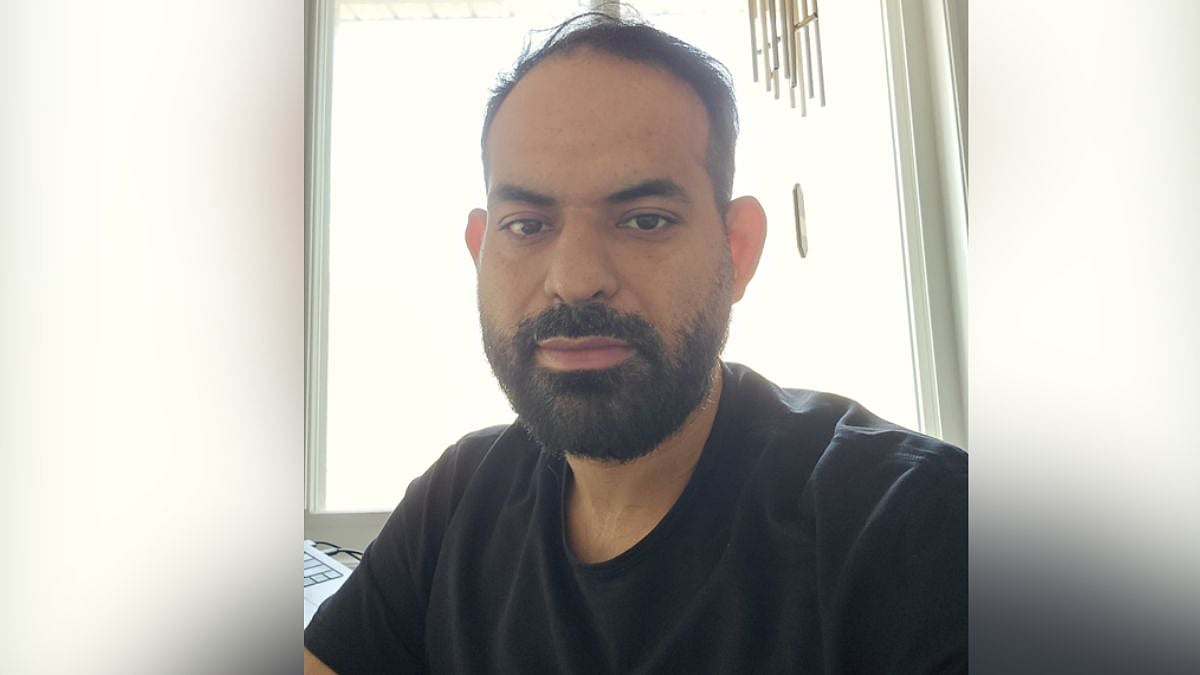
Among the engineers working at that intersection is Piyush Tiwari, an Indian-origin Senior Software Engineering Manager based in Canada whose work spans large-scale data infrastructure at one of North America’s largest e-commerce companies, peer-reviewed academic publication on AI governance, and program leadership at Canada’s flagship applied AI summit.
Tiwari approaches AI deployment in regulated industries from a position shaped by more than a decade of building enterprise data systems under regulatory constraint. “The systems that hold up under the next phase of AI adoption will be the ones designed from day one with auditability, traceability, and regulatory awareness built into how they reason,” he has argued in published work. “Retrofitting governance after deployment doesn’t scale, and regulators are no longer going to give it room to.”
That perspective underpins his published research. His paper on governance-aware AI agents for regulated industries appeared earlier this year in the International Journal of Humanities and Information Technology. Two additional papers — one on multi-agent coordination and market dynamics in e-commerce platforms, and one on the shift from reactive recommendation engines to goal-driven consumer agents — have been accepted for publication at the International Journal of Computer. Together, the three papers extend a single argument from the architectural framework into specific applied domains.
In production environments, Tiwari has led engineering teams across multiple platform domains at Wayfair — spanning data infrastructure, real-time streaming, the machine learning platform, and edge and cloud networking. He pioneered the adoption of Data Mesh architecture at the company and presented the implementation at the Shift Left Data Conference. His work on enterprise data platforms has been recognised with an American Business Expo Solution of the Year Award.
Outside his enterprise role, Tiwari is the founder of ResidenceHive, an AI-powered proptech platform that applies compliance-aware architecture to real estate lead engagement — with WhatsApp-first agents designed to operate within fair housing regulations, generate auditable interaction logs, and embed mandated disclosures into the conversation flow. Through the FitXBuddy ecosystem, Tiwari also co-created Beyond Pickleball 365, a biomechanics-informed strength and conditioning platform built with NSCA- and NASM-certified specialist Moe Larbi; the ecosystem was accepted into the Google for Startups program.
A defining feature of Tiwari’s contribution is the breadth of his community and standards involvement. He serves on the Steering Committee of the Toronto Machine Learning Society for the second consecutive year, with 2026 assignments across four review groups: Data Systems & Retrieval; Agents, Orchestration & Workflows; AI Strategy, ROI & Executive Decision-Making; and Adoption, Change & Operating Models. He is a member of the Harvard Business Review Advisory Council, which HBR describes as an opt-in research community of business professionals contributing to the publication’s editorial and research agenda. He is also a Fellow of Hackathon Raptors and an IEEE Senior Member, and has conducted more than 100 technical interviews for engineering roles at Wayfair.
His view from inside both production environments and review committees is consistent. “The next decade of applied AI in North America will depend less on who can train the largest models and more on who can build the talent and operating models that turn AI deployments into reliable systems,” Tiwari has noted. “The pipeline for that kind of engineering is thinner than the headlines suggest.”
As Toronto’s AI ecosystem expands and applied deployments accelerate across regulated industries on both sides of the U.S.–Canada border, the engineers shaping how that work gets done — through committee leadership, peer-reviewed research, and production infrastructure — will increasingly determine which deployments hold up under scrutiny. Tiwari’s work, anchored in the Canadian community but oriented toward U.S. markets where most of his career has been built, sits at that intersection.
Through sustained engineering practice, published research, and leadership in the communities shaping how applied AI gets built in Canada and the broader region, Piyush Tiwari is among the practitioners helping ensure that the next phase of AI adoption is matched by the engineering disciplines required to deploy it responsibly.

