
Small and medium enterprises can raise money from the public through SME IPOs. These issues are listed on dedicated platforms such as NSE Emerge and BSE SME and follow a process that is somewhat different from a Mainboard IPO.
One of the first things investors notice is the larger lot size. The amount required to apply can be considerably higher than what you may have seen in a regular IPO.
If you are planning to apply for an SME IPO, it is worth understanding the process before the issue opens. You can also check an Upcoming SME IPO calendar to track issues that are expected to enter the market.
How to Apply for an SME IPO: Key Details at a Glance
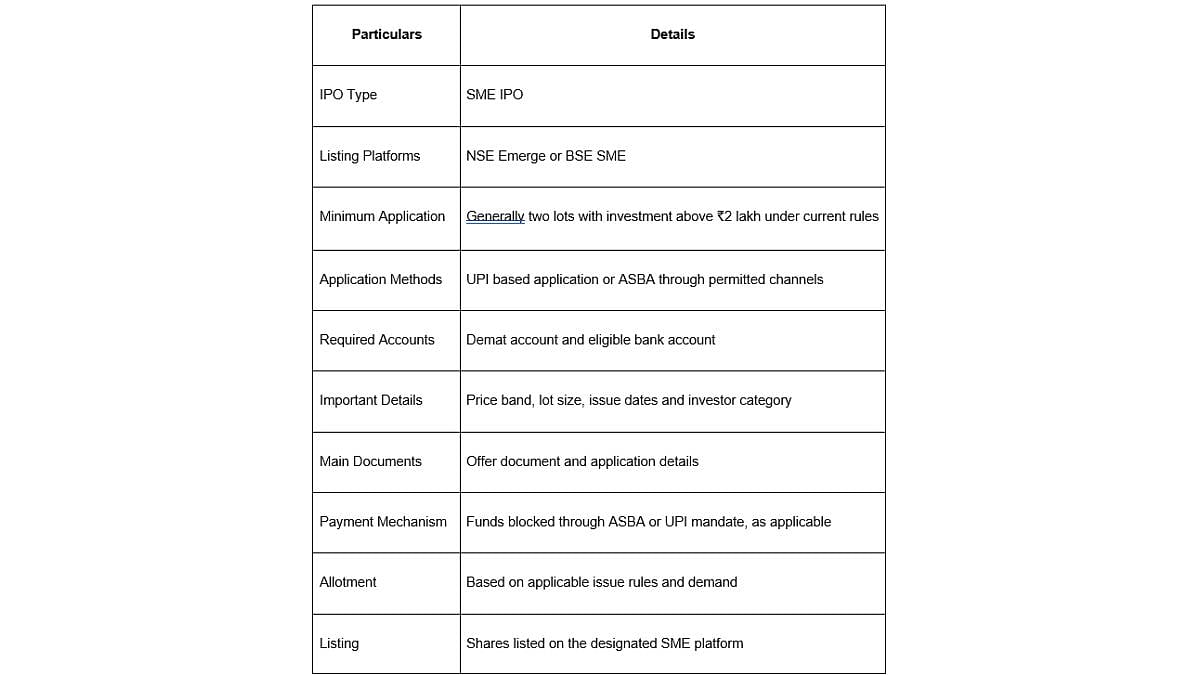
Check the SME IPO Details Before Applying
Check the company name, IPO opening and closing dates, price band, lot size, issue size, and the exchange on which the shares will be listed.
The lot size is particularly important. SME IPOs generally have larger lots than Mainboard IPOs, so the minimum amount required can be much higher.
Individual investors generally apply for a minimum of two lots, with the application amount typically exceeding ₹2 lakh. If an individual applies for more than two lots, the application falls under the NII Individual category.
Do not calculate the investment simply by looking at the price per share. Check the lot size first, then multiply the number of shares in one lot by the applicable bid price. Then work out the amount required for the number of lots you plan to apply for.
Keep Your Demat and Bank Account Ready
You need an active demat account to receive the shares if you are allotted them. Your PAN, demat details and other information provided in the application should also match the records linked to your accounts.
Before applying, double-check your PAN, demat account number, bank account details, and UPI ID. An incorrect detail can lead to problems while processing the application.
Make sure that the bank account you use is eligible for the chosen application method and has enough funds available for the IPO.
Choose Your Application Method
SME IPO applications can be made through permitted ASBA channels. You may apply using UPI through an eligible bank account or through the ASBA facility offered by a Self Certified Syndicate Bank (SCSB).
If you are applying through a broker, the application process will generally take place through the broker's IPO section.
Select the SME IPO and Place Your Bid
Once the IPO opens, select the issue through your broker or another permitted application channel.
Enter the required details, including the number of lots you want to apply for and your bid price. In a book built issue, the bid price must be within the specified price band.
Before submitting the application, check the quantity once again. The application should meet the applicable lot requirement and you should have enough funds available in the linked bank account.
Approve the UPI Mandate
For investors applying through UPI, submitting the IPO application is only one part of the process. You also need to approve the UPI mandate request sent to your linked UPI application.
The mandate allows the required amount to be blocked in your bank account. Under the current SME IPO process, bidding closes at 4:00 PM on the final day, while UPI mandate confirmation is available until 5:00 PM. It is advisable to approve the mandate well before the deadline rather than waiting until the last few minutes.
Check Your Application Status
Once you have submitted the application, check whether the application has been successfully recorded.
Keep your application details handy. If there is an issue with the bid, mandate or payment process, identifying it early gives you more time to address it before the IPO closes.
Wait for the Allotment
After the issue closes, the registrar processes the applications and completes the allotment according to the applicable rules and demand.
If you receive an allotment, the required amount is debited and the shares are credited to your demat account. If you do not receive an allotment, the blocked amount is released as per the applicable process.
Check the Listing and Trading Details
After allotment, check the scheduled listing date and the platform where the shares will trade.
SME shares can have trading requirements that are different from Mainboard securities. Trading takes place in prescribed market lots, so investors should check the applicable lot size before placing a buy or sell order.
What Should You Read Before Applying?
The offer document is one of the most important documents to review before applying. You should understand what the company does, how it generates revenue, and how it intends to use the funds raised through the IPO.
Common Mistakes to Avoid
Ignoring the lot size: The minimum investment in an SME IPO can be significantly higher than in a Mainboard IPO.
Missing the UPI mandate: Submitting the application is not enough if you are applying through UPI. The mandate must also be approved within the applicable time.
Entering incorrect details: Check your PAN, demat account, bank account and UPI information before submitting the application.
Not maintaining sufficient funds: Keep enough money in the linked bank account to cover the required application amount.
Waiting until the deadline: Technical or banking issues can take time to resolve. Applying earlier gives you a better chance of fixing a problem before the issue closes.
Skipping the offer document: Do not rely only on headlines or brief summaries. Read the company's disclosures, financial information and risk factors before making your own decision.
How to Track Upcoming SME IPOs
An Upcoming SME IPO calendar can help you keep track of issues that are expected to open for subscription. You can review the expected opening dates, issue details, and other relevant information before deciding whether to evaluate the issue further.
The broader SME IPO section can also help you follow current and recently closed SME offerings.
Final Steps Before Applying for an SME IPO
The SME IPO application process is fairly straightforward once you understand the requirements. Start by checking the issue dates, price band, lot size, investor category and listing platform. Calculate the amount required rather than relying only on the share price.
Make sure your demat and bank details are correct and choose an eligible application method.
After applying, keep track of the application, allotment and listing dates.
Most importantly, read the offer document and understand the company's financial position, business and risks before deciding whether to participate in the IPO.

