
A dental emergency during an international trip can be painful and stressful, especially when you are away from your regular dentist. A sudden toothache, swelling, bleeding or an accidental tooth injury may need quick attention abroad.
In such cases, many travellers want to know whether emergency dental treatment is covered during travel insurance. The answer depends on the policy terms, the reason for treatment and whether the care is considered medically necessary at that time.
What Emergency Dental Cover Means
Emergency dental cover means support for urgent dental treatment needed during an overseas trip. It may apply when sudden tooth pain, swelling, infection, bleeding or accidental tooth injury needs immediate care.
This cover is for necessary treatment that gives quick relief while travelling. Routine check-ups, teeth cleaning, cosmetic work or planned dental procedures are usually not treated as emergency care. The exact cover depends on the policy terms, benefit limit and claim documents.
Is It Covered during Travel
Emergency dental treatment may be covered during travel when the issue is sudden, urgent and medically necessary during the insured trip. The dentist’s diagnosis should clearly show why immediate care was required at that time.
The claim is usually reviewed as per the policy wording, benefit limits, treatment records and supporting documents. So, it is better to understand the dental benefits before departure instead of checking them only after an emergency occurs.
How the Need for Treatment Is Decided
During a dental emergency abroad, the dentist’s report helps show whether the treatment was necessary at that time. It may mention the pain, swelling, injury or infection and explain why immediate care was needed.
In most cases, only urgent relief, such as pain control, infection treatment or temporary care, may be considered. Whether you are travelling to Europe, Asia or reviewing travel insurance USA for a longer trip, always check what your policy treats as emergency dental care.
Situations Travellers Should Understand
The way a dental issue is treated in a claim depends on how sudden, urgent and medically necessary it is during the trip.
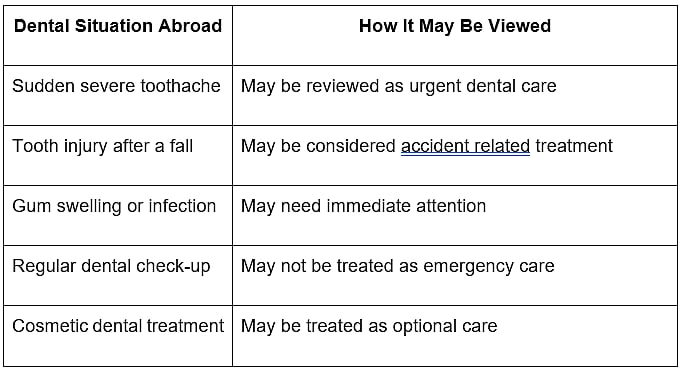
The final decision depends on the policy terms, benefit limits and documents submitted.
What Expenses May Be Linked to Emergency Dental Care
Emergency dental expenses may include a dentist’s consultation, prescribed medicines, an X-ray if advised and a basic procedure needed for urgent relief. The exact cover depends on the policy terms and benefit limits.
Travellers should keep the dentist’s diagnosis, bills, prescriptions and payment receipts safely, as these documents help show what treatment was taken and why it was required during the trip.
What to Do if You Need a Dentist Abroad
If you face a dental emergency, contact the assistance number given in your policy as soon as possible. They may guide you on the next steps or help you understand the claim process. If the pain is severe, visit a licensed dentist and keep the insurer informed.
Ask the clinic for a proper treatment note. It should mention the diagnosis, treatment given, date of visit, medicines prescribed and amount paid. Try to get bills in English, as this can make reimbursement easier.
Documents That Can Support Your Claim
Keeping documents safely is one of the most important steps after treatment. You may need:
● Policy copy
● Passport and travel proof
● Dentist’s diagnosis and treatment report
● Original bills and payment receipts
● Prescription and medicine bills
● Accident note, if the dental issue followed an injury
● Emails or call records with the assistance team, if available
Clear documents help the insurer understand why the treatment was required during the trip.
Final Thoughts
Emergency dental treatment abroad may be covered during travel when it is sudden, necessary and taken within the insured trip period. However, coverage is subject to policy terms, limits and claim approval. The safest approach is to understand your policy before you travel, act quickly during an emergency and keep all treatment records safely.
