A health insurance claim rarely fails in any dramatic way. It fails quietly, in the gap between a provider's system and a payer's database. One missing field. One invalid code. One mismatched eligibility flag, and a legitimate claim gets routed to rejection. Multiply that by the tens of millions of claims that move through U.S. payer pipelines every day, and the cost compounds into something the industry has spent two decades trying to fix.
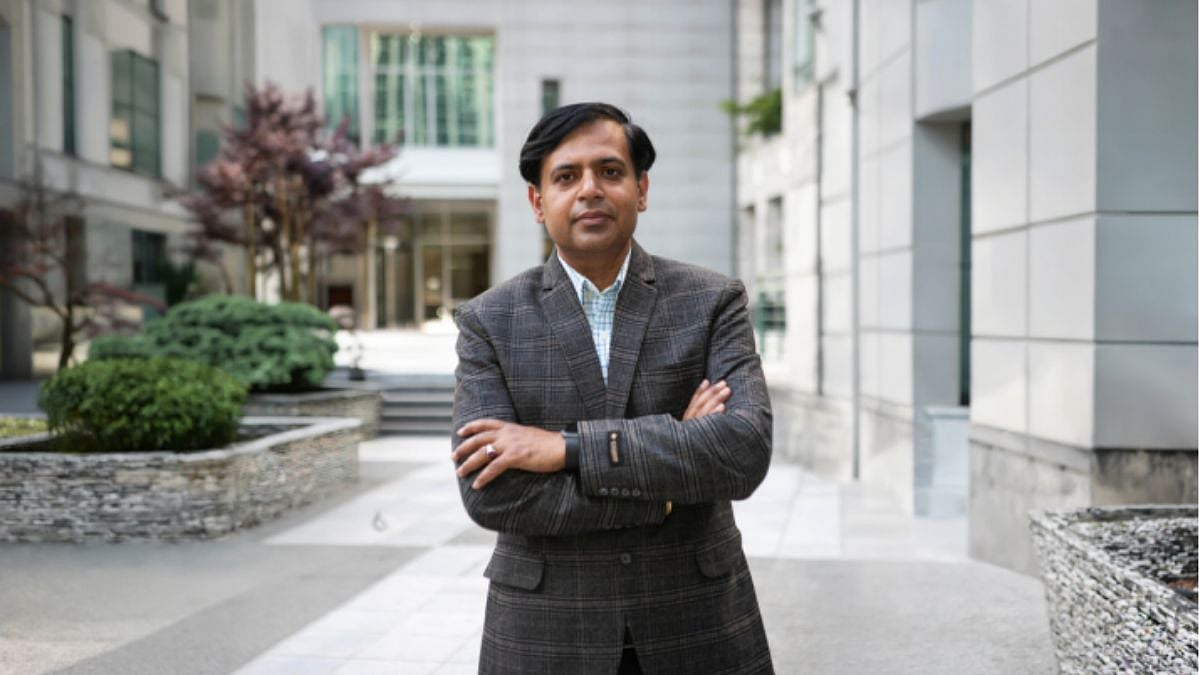
Mukesh Kumar Mishra has spent eighteen of those years inside the problem. As a quality assurance and technical validation specialist who has held senior roles across two Fortune 500 technology services firms, he has built and led the cloud-based validation systems that catch those errors before they reach a payer's inbox. His work sits at an unfashionable intersection of quality engineering, regulatory compliance, and cloud data architecture, but it is the intersection where the most expensive claims-processing failures actually happen.
"Most enterprise transformation conversations focus on the migration itself," Mishra said in a recent interview. "Migration alone never delivers the outcomes leaders expect. What delivers them is the validation layer underneath, and that layer is what we have built."
The system that catches errors before they cost money
The centerpiece of Mishra's contribution is a cloud-based claims validation engine. The engine inspects each claim before submission across four dimensions: completeness, coding accuracy, eligibility rules, and data integrity. Where legacy validation systems run as a post-hoc cleanup pass, his architecture runs at the ingestion layer, the point at which preventing an error costs the least.
Around the engine, Mishra designed an end-to-end data quality framework that covers ingestion validation, transformation checks, referential integrity, and audit logging. The audit logging matters more than it sounds. In healthcare, every accepted or rejected claim is potentially a regulatory event, and the framework gives compliance teams an evidence trail that satisfies HIPAA, payer-specific data standards, and adjacent financial-services controls when the same infrastructure is repurposed for anti-money-laundering pipelines.
A third system, his automated defect detection and root-cause analysis layer, runs Python-based anomaly scripts that surface recurring claim errors and map them back to the originating system defects. In effect, it shortens the loop between "a claim was rejected" and "we know which upstream component to fix." Where most QA functions stop at flagging the bad claim, Mishra's layer routes the diagnosis to the engineering team that owns the fix.
The numbers behind the architecture
Numbers are usually the weakest part of an enterprise transformation story. In Mishra's case they are the strongest, because the measurements ran at scale and surfaced through internal governance reviews, not through a marketing pipeline.
On the high-volume claim datasets his systems govern, error rates have dropped between 35 and 45 percent through the combination of automated cloud validation rules and anomaly detection. Manual QA review time fell by 50 to 60 percent after validation scripts replaced the line-by-line work QA teams used to perform by hand. Data accuracy on the same datasets crossed the 60 percent improvement threshold once the multi-layer validation checkpoints were enforced consistently.
The financial picture follows. Operational costs declined by an estimated 20 to 25 percent through eliminated rework, reduced false positives, and prevented downstream claim rejections. Release cycles accelerated by 30 percent once the cloud-native CI/CD validation pipelines were in place. Defect-detection speed improved by up to 70 percent on the automated anomaly path. Claim-rejection rates, the metric the business side cares about most, dropped by 40 percent on the workloads where his validation logic was applied end-to-end.
These are not marketing numbers. They are the kind of operational metrics that show up in internal cost-of-quality reports and quarterly engineering reviews. They also explain why his frameworks have been adopted across multiple teams inside the firms he has worked with.
The harder problems
The architecture is more interesting than its component list suggests, because of the problems it had to solve to work at all.
Healthcare claims data is among the most heterogeneous in any regulated industry. Providers submit in different formats. Payers expect different schemas. Legacy systems carry decades of accumulated quirks. Mishra's response was a dynamic, rules-driven validation logic that adapts to multiple claim formats rather than forcing them into a single canonical shape. The design choice sounds modest. In practice it is the only reason the system works without an army of integration engineers maintaining bespoke connectors.
Cloud migration introduced a second problem. Legacy claims systems, when lifted to cloud platforms, almost always carry inconsistent and incomplete data behind them. Mishra led the validation and reconciliation effort for one of those migrations, designing the reconciliation scripts and automated checkpoints that surface inconsistencies before they become production incidents.
False positives, claims flagged as errors that are actually valid, used to be the credibility-killer for automated validation. The standard fix is to relax the rules, which trades one problem for another. Mishra's approach instead used machine-assisted pattern detection on the historical claim corpus, refining rule logic against actual outcomes rather than against the auditor's wishlist. The false-positive rate fell, and the recall rate held.
The deepest problem he tackled was governance. Before he embedded standardised validation frameworks across teams, every group ran its own quality checks in its own way. The enterprise had no consistent posture on data quality at all. Framework adoption shifted that from a per-team practice into a system-wide one.
Where the field is heading
Mishra describes himself as a practitioner, not a futurist, but the practitioner perspective on what comes next is unusually pointed.
"Cloud-native validation will stop being optional," he said. "Claim volumes are growing, payer rules keep evolving, and the only way to keep up is to put the validation logic where the data is, at ingestion, in the cloud, running continuously." He expects rule-based validation to give way to AI-driven anomaly detection as the dominant pattern for catching complex claim errors, but with one important caveat: "Explainable validation logic will move from nice-to-have to hard requirement. Auditors and compliance teams need to see why a claim was flagged, not just that it was."
He sees real-time validation at ingestion as the next structural shift, moving the error catch from "after the claim is submitted" to "before it leaves the source system." Done at scale, that change collapses the downstream rejection cycle and accelerates claim adjudication for the patients and providers who feel the delay most. He also expects unified data quality governance to become unavoidable as healthcare systems integrate more tightly with financial and regulatory platforms, citing the AML overlap he has already worked on as a preview.
Inside the QA function itself, he expects the work to shift. "Automation moves QA roles from manual testing to strategic oversight, defect analytics, and validation architecture. The people doing this work are not disappearing. They are moving up the stack."
A quiet kind of impact
Healthcare claims errors do not generate headlines. They generate denial letters, follow-up phone calls, and re-submissions, all absorbed quietly by patients, providers, and the back offices that process them. The cost gets paid in fractions: a few minutes per claim, a few dollars per fix, a few days per cycle.
The unglamorous nature of the problem is precisely what makes Mishra's work consequential. The systems he has built do not change what a healthcare claim is. They change the probability that the claim arrives correctly the first time. At the volumes the U.S. claims pipeline runs, even modest probability shifts compound into meaningful reductions in operational cost, compliance risk, and patient inconvenience.
"Successful enterprise transformation is not achieved through migration alone," Mishra said at the close of the interview. "It requires robust validation, reliable automation, data integrity assurance, and continuous quality monitoring to maintain trust and operational resilience at scale."
The trust part is the part that does not show up in the cost-of-quality reports. The frameworks he has built are the reason it can be assumed in the first place.

