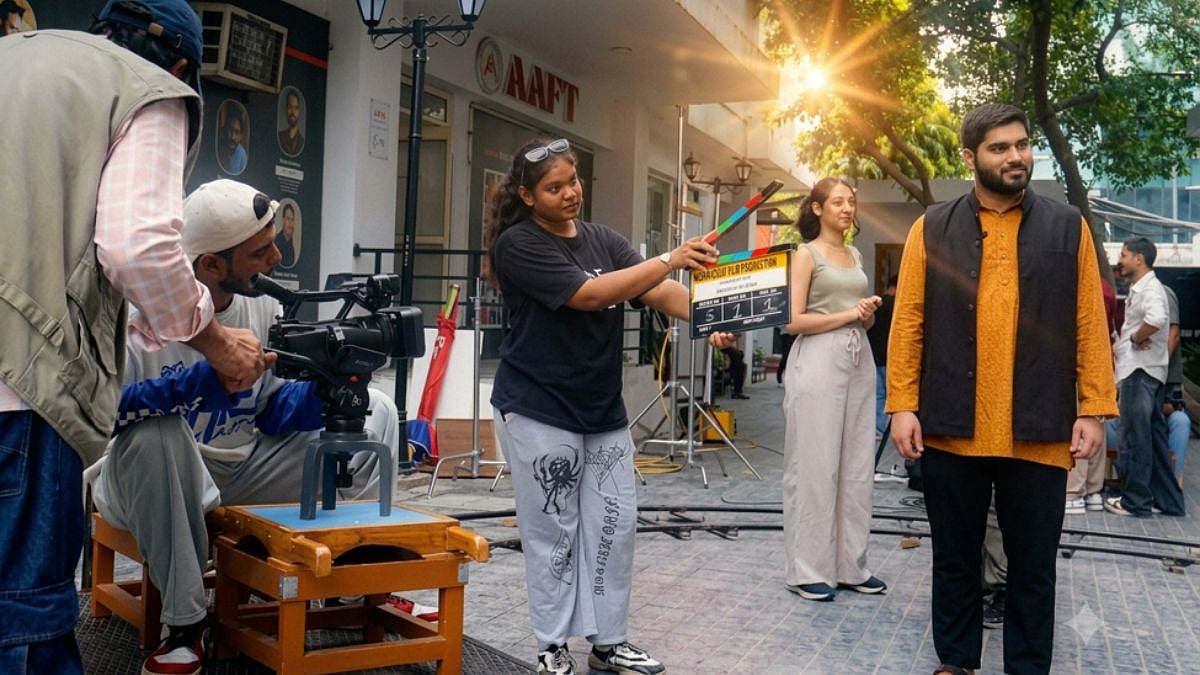
Raipur, India — Can you train as a cinematographer without leaving Chhattisgarh? Cinematography means deciding how a film looks: where the camera sits, how light falls and how each shot moves. The cinematography course in Raipur at AAFT University, part of the B.A. in Cinema, teaches this craft alongside direction, using digital cinema cameras, drones, gimbals, LED lighting and colour-grading software.
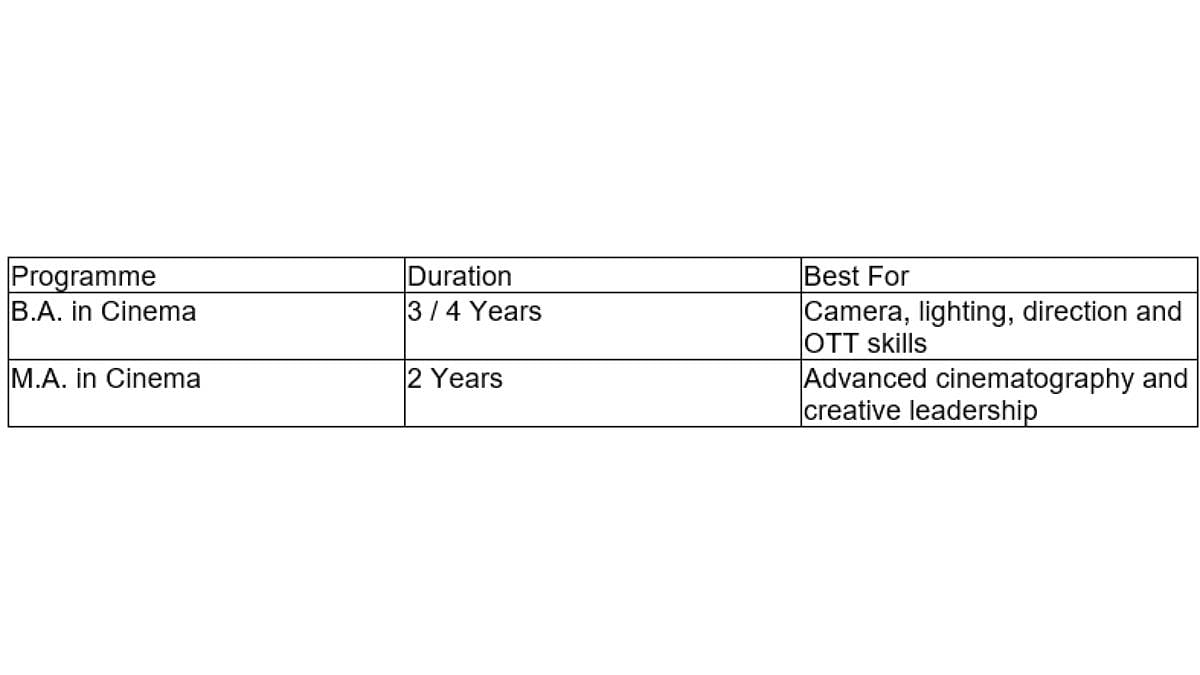
AAFT University of Media and Arts in Raipur, Chhattisgarh, offers the B.A. in Cinema on its Kharora campus near Raipur, with a three-year route and a four-year Honours route, through the AAFT University School of Cinema. The university is accepting applications for the 2027 batch.
Is a Cinematography Course a Good Career Choice After 12th?
Yes. Films, OTT series, advertisements and digital content all require camera crews, and each production needs people who can plan shots, light scenes and operate cameras. That makes cinematography a practical career option after school.
Camera careers move up a clear ladder, from assistant to operator to DP. Pay depends on credits and the showreel, so students who shoot a lot during the course start in a stronger position.
Why Choose Cinematography? Four Reasons, Backed by Data
1. More films are being made. India released more than 1,900 films in 2025, and theatrical revenue rose 16% (FICCI-EY 2026). Every one of them needed a camera team.
2. Streaming has become the largest segment. Digital media crossed ₹1 trillion in 2025 and is now India's largest media segment (FICCI-EY 2026). Streaming series and digital films are shot by camera crews just like cinema releases.
3. Post-production and VFX depend on camera work. India's animation, VFX and post-production segment earned about ₹105 billion in 2025 and is forecast to reach ₹138 billion by 2028 (FICCI-EY 2026). Much of that work starts with well-shot footage.
4. The skill works across formats. Camera skills apply to films, series, ads, music videos, documentaries and corporate content, so a cinematographer is not limited to one kind of employer.
New Tools in Cinematography: What They Are
The craft now uses several tools that did not exist, or were far less common, a generation ago. These are examples of tools widely used in professional film and video production today.
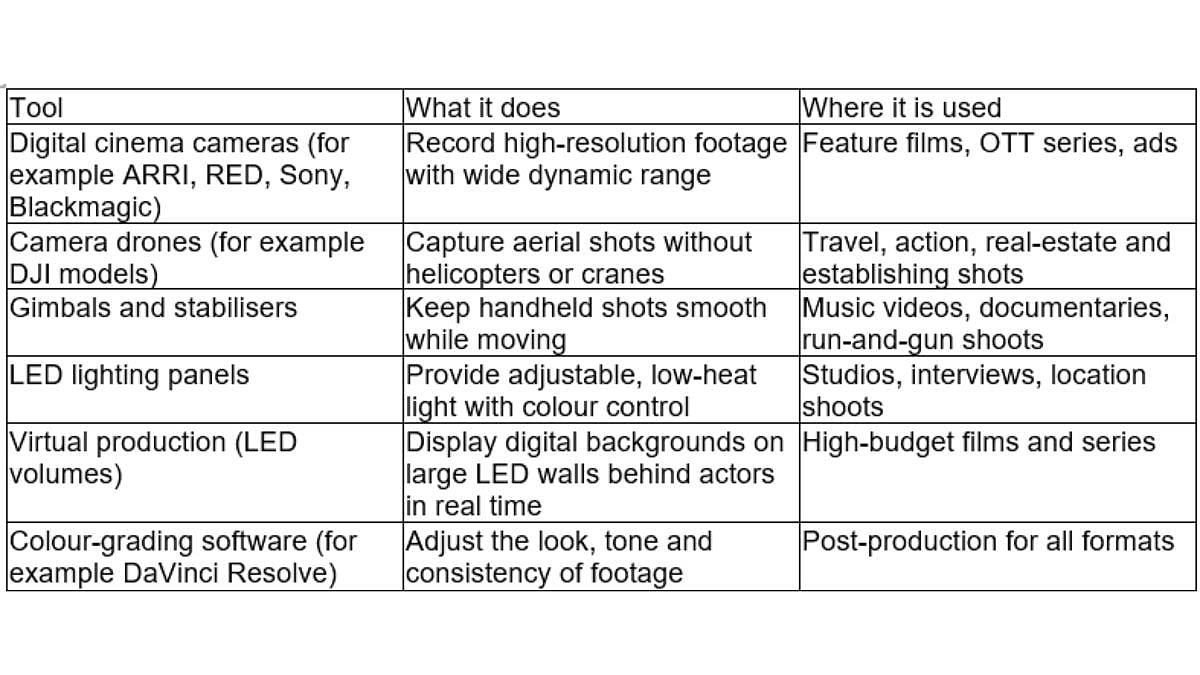
Camera assistants and operators work with digital cameras, data management and monitoring tools on set, so familiarity with digital workflows is part of the job. Drones also have their own rules in India: commercial drone operation is regulated under the Drone Rules, 2021, and pilots need the relevant certification for many uses.
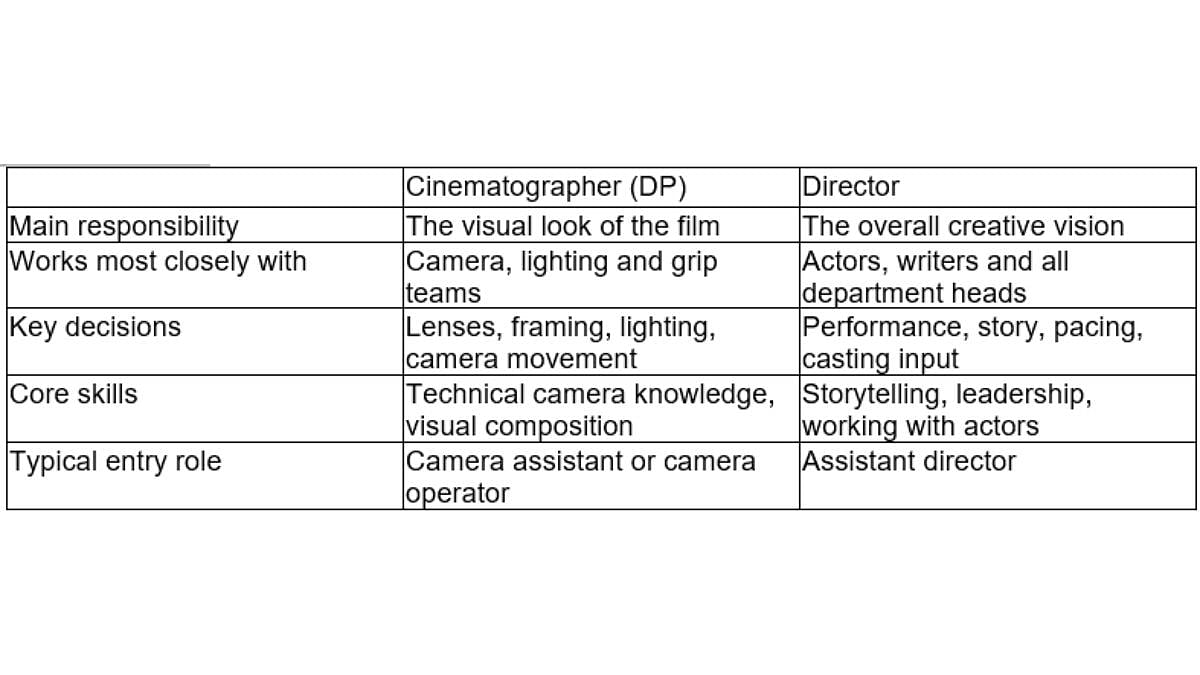
Cinematographer or Director: How the Roles Differ
On a professional set, the director and the DP work as partners, meeting before the shoot to agree how each scene should look and feel. The degree trains both camera and direction. This comparison shows how the two roles differ on a production, which can help students decide where to focus.
The Camera Department Career Ladder
Camera careers usually progress in stages. Salary ranges below are industry estimates and vary by city, project and experience.
1. Camera Assistant: Maintains equipment, manages focus and supports the operator. Typically ₹3–5 LPA.
2. Camera Operator: Operates the camera during takes as planned by the DP. Typically ₹3–6 LPA.
3. Gaffer / Lighting Lead: Leads the lighting team and executes the DP's lighting plan. Typically ₹3–7 LPA.
4. Cinematographer / Director of Photography: Designs the visual approach of a production. Typically ₹4–9 LPA.
5. Senior DP: Leads the camera department on feature films and OTT originals. Typically ₹12 LPA and above.
Movement between these stages depends on skill, credits and the projects a person works on, so there is no fixed timeline. Related roles that draw on the same training include film editor (₹3–7 LPA) and director or assistant director (₹4–10 LPA).
How a Shoot Works for the Camera Team
Knowing the stages of a shoot shows what the camera department does day to day. The exact process varies by production size, but the sequence below applies to most film, series and ad shoots.
· Pre-production. Reads the script, plans shots with the director, scouts locations and selects cameras and lenses.
· Lighting setup. Places and adjusts lights for each scene before actors arrive.
· Rehearsal. Checks framing, focus marks and camera movement with the actors.
· Takes. Records each shot, repeating until the director and DP approve.
· Wrap and data. Backs up footage, logs files and hands material to the edit team.
· Post-production. Works with the colourist to set the final look of the footage.
A Short Glossary of Camera Terms
These terms appear often in cinematography training and on set, and knowing them helps new students follow instructions from the first class.
· DP (Director of Photography): The person responsible for the film's visual look; also called the cinematographer.
· Dynamic range: The range of light to dark that a camera can capture in one image.
· Depth of field: The distance in front of the camera that appears sharp.
· Lighting setup: The pattern of lights used to shape a scene, such as key, fill and back light.
· LUT (look-up table): A preset colour adjustment applied to footage to set a look.
· Colour grading: Adjusting colour and tone in post-production for consistency and mood.
· Aspect ratio: The size and shape of the image, such as 16:9 for TV or wider ratios for cinema.
Semester by Semester: What the Course Covers
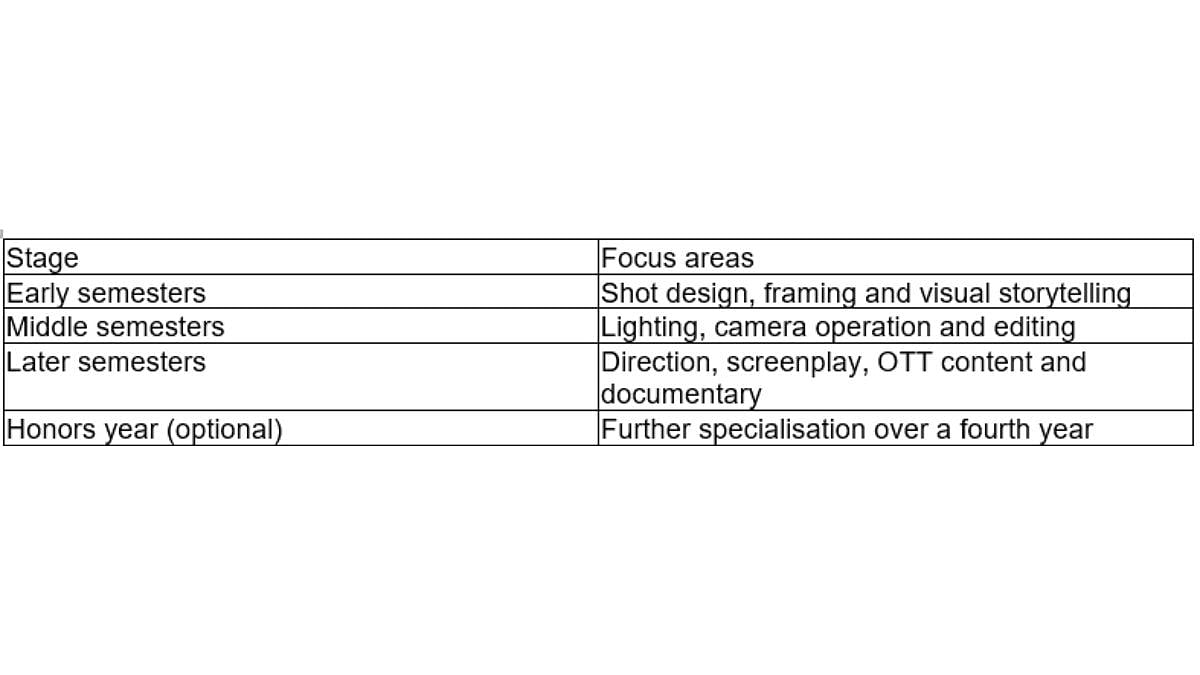
Training uses the campus facilities, which include film and TV studios, editing suites, sound labs, a VFX facility and a 100-seat screening theatre. Students shoot, light and edit their own work during the course, building material for a showreel.
Core Skills for a Camera Career
· Composition and framing. Decides what the audience sees and how they feel. Built in: early semesters, shot-design exercises.
· Lighting. Sets mood, time of day and visual style. Built in: middle semesters, studio lighting work.
· Camera operation. Ensures technically correct, usable footage. Built in: middle semesters, practical shoots.
· Visual storytelling. Connects each shot to the script's meaning. Built in: across the course, alongside direction.
· Colour and post awareness. Helps footage hold up in the edit and grade. Built in: editing and post-production modules.
· Teamwork on set. Camera crews work closely with many departments. Built in: group projects and shoots.
These skills develop through repeated practical work. Students build them by shooting their own projects and reviewing the results, including screenings in the campus theatre.
Meet the Faculty
Camera and direction are taught by the School of Cinema team. Ashok Bairagi heads the school, Santosh Swarnakar, Dean (Academic), shapes the curriculum, and Birju Rajak leads much of the hands-on camera teaching.
Dr. Sandeep Marwah, President, AAFT University, said: “We built this university to train camera and direction talent in Central India. Our students shoot, light and direct their own work during the course, and they leave with a showreel and skills for film and OTT.”
Studying Cinematography in Raipur: Practical Points
For students from Chhattisgarh and neighbouring states, studying in Raipur means training close to home. Living costs in Raipur are generally lower than in large metro cities, which can reduce the total cost of the degree for families. Students also avoid the added expense and adjustment of relocating to another state for their undergraduate years.
Regional cinema and regional-language OTT content are expanding in India. Camera professionals who understand local languages, locations and audiences can work on these productions as well as national ones.
How to Prepare Before Applying
No prior camera training is required for admission, but a few steps help students start well.
· Study films actively. Watch films closely and note how shots, light and camera movement create mood.
· Shoot regularly. Practise framing and composition with any camera, including a phone.
· Learn the vocabulary. Learn basic terms such as shot sizes, angles and aspect ratio.
· Save your work. Keep a simple collection of photos or clips to discuss at the interview.
None of these steps is mandatory. They simply help students arrive with a basic visual vocabulary, which makes the early semesters easier to follow.
Career Support
The university's career cell supports students through the degree. Entry roles in cinematography are usually camera assistant or trainee positions, where a showreel is the main thing employers review. More programmes are listed on the AAFT University School of Cinema page.
Programmes and Admission Steps
1. Pass 10+2 from a recognised board, in any stream.
2. Register for the AAFT Global Entrance Exam (GET) through aaft.edu.in.
3. Appear for the GET and a personal interview.
4. Accept your offer and complete enrollment for the 2027 batch.
M.A. applicants need a completed bachelor's degree. Check the programme page for current entry requirements. The B.A. can be completed in three years, or extended to four years through the Honors route for students who want an additional year of specialised study.
About the Institution
AAFT University in Raipur is part of the AAFT group, which has been in creative education for more than 30 years. It is a private university recognised by the UGC, offering degrees in media, arts and design, including cinema at undergraduate and postgraduate level.
For Admission and Media Inquiries, Contact:
AAFT University
Vill. Manth, Kharora, Raipur, Chhattisgarh 493225, India
Phone: +91-9109112078 / +91-8064057209
Website: www.aaft.edu.in
Sources: FICCI-EY Media and Entertainment Report 2026 (March 2026). Salary ranges are industry estimates, not promised outcomes. Tool brands are examples of equipment used in the industry.

