
“If transparency is important enough to put on a billboard, it should be important enough to put on the bottle label”- Neelam Rathee (Nani), founder BIOMUNI
There is a growing conversation around ingredient transparency. Using catchy buzz words such as “natural” and “organic” or brands claiming their products as “sulphate free” and “parabens free” is increasingly being recognized as a marketing gimmick to influence purchasing decisions. These claims are useful but the debate around transparency has moved far beyond, with consumers now demanding to know what exactly goes in the products they use!
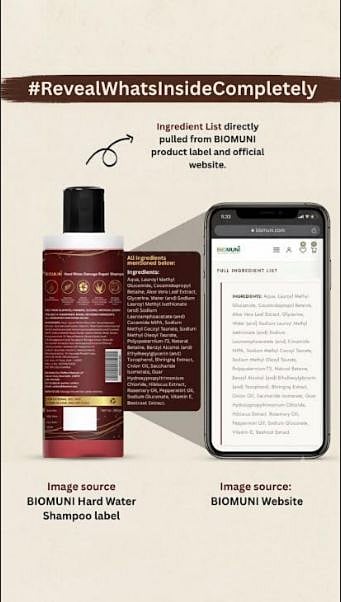
The question becomes particularly relevant when brands publicly challenge the industry to be more transparent. Beco’s recent #WarOnWhatsHidden campaign has brought this issue into spotlight by asking consumers to look more closely at the ingredients used in everyday products. But the standard cannot apply selectively. Transparency should not merely mean telling consumers what a product does not contain. Nor should it mean using reassuring descriptions without giving consumers enough information. The ask is simple- accessible, clear and easy to understand information on underlying ingredients in the product. This may sound like a small distinction. It is not.
69-year-old “Nani” who launched BIOMUNI, a start -up selling ayurveda inspired clean beauty products, has reignited the debate on transparency as a marketing weapon. In her recent post, the founder has clearly raised questions around whether the brand Beco is prepared to hold itself to the same transparency standards.
“The real issue is, that if a brand truly believes consumers deserve to question hidden ingredients in conventional products, that principle should logically apply to its own products too. Terms such as “coconut-based surfactants” or “natural bio-enzymes” used by Beco do not necessarily inform consumers about the specific substances used. Similarly, if information about other formulation components is available elsewhere, say on the website that defeats the purpose as consumers should not need to become ingredient detectives moving between a bottle, website and marketing material to piece together what they are buying. The primary source of information, the product label, should meaningful on its own”, says Nani, founder BIOMUNI. The brand clearly is redefining transparency by claiming to be one of the few brands that reveal 100% ingredients, that too on the product label itself.
References to standards, certifications or organizations such as IFRA or Ecocert can provide useful reassurance. But compliance with a particular standard and disclosure of ingredients are not the same. A certification can tell us whether a criteria have been met but does not necessarily reveal which individual ingredients are covered by that reference. The same applies to fragrance. These distinctions matter because safety, certification and transparency are related, but they are not interchangeable.
The personal care industry have spent years and huge marketing budgets become better at communicating what the products are free from or highlighting certain hero ingredients. That conversation definitely has value as Consumers should be able to avoid ingredients they don't want or cannot use. However, “free from” claims should not become a substitute for full disclosure.
The answer is clarity.
A genuinely transparent label should allow an ordinary consumer to understand the principal ingredients in a product without having to rely entirely on a brand's interpretation of words such as “natural,” “clean” or “plant-based.” And this is where brands such as BIOMUNI are emerging as front runners. The labels of the BIOMUNI products, such as the BIOMUNI Hardwater Damage Repair Shampoo, not only reveal free from harmful toxins, parabens and sulphates and have ayurveda inspired natural ingredients but list 100% ingredients on the bottle label itself for full transparency. The same complete ingredient information is also available on the BIOMUNI website, www.biomuni.com, in one place, so consumers can see the complete ingredients on the website as well as on the product label itself.
As consumers, we should not have to choose between trusting a brand and understanding a product. We should be able to do both. So perhaps the simplest test is also the fairest: Don't just tell consumers what you don't use. Tell them what you do.

