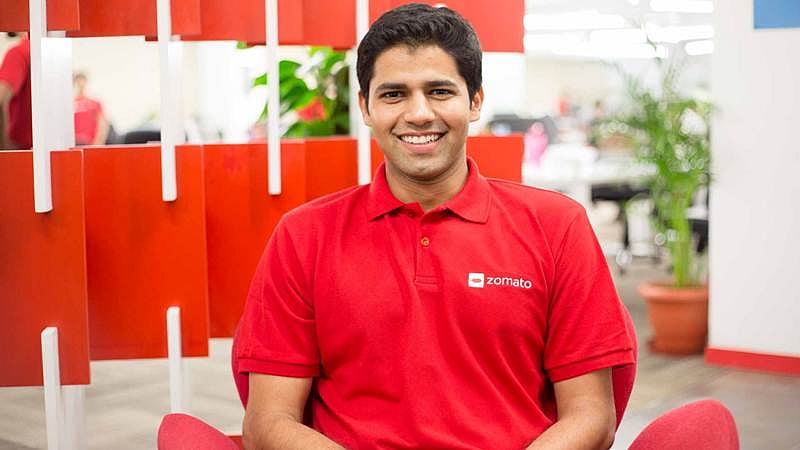
Neel Ghose, Vice-President of Zomato speaks to Vibha Singh about Robin Hood Army, an initiative which distributes food amongst the needy
Robin Hood Army is a volunteer-based organisation which collects excess food from restaurants and distributes it to the less fortunate. A group of six, it has grown to 1,000 volunteers spread across 18 cities, who have served more than 2.5 lakh people.
Neel Ghose, Vice-President of Zomato, hit upon the concept when he was in Portugal where he came across an organisation called Refood. RHA now has operations in Pakistan, where volunteer groups have sprung up in Karachi and Lahore.
Q- How did the journey begin?
I was a finance student in Shri Ram College of Commerce, Delhi. After two years of excel sheets and analysis in a hedge fund, I realised it was something I am not passionate about, and moved into the startup world. Five years back, I was lucky to join a small, inspiring team in Zomato which believed in building a world-class product. We have been building ever since. In my free time, along with a friend, Anand, I set up the Robin Hood Army — a volunteer organisation which collects excess food from restaurants and gives it to the less fortunate. The last two years have been a blur of building and growing the RHA and we have been fortunate to scale this across countries with an extremely passionate team.
Q- What was the reason for forming this organisation?
Honestly, it happened by chance. I was living and working in Lisbon, Portugal, when I happened to chance upon an organisation, Refood – which redistributes excess food to the needy through volunteers. I observed their processes and spent some time with the founder understanding the basic workings of the model, before deciding to try out something similar back home with Anand. The need, of course, was much greater in India.
Q- What kind of setup you had to maintain for the project?
The Robin Hood Army’s ideology revolves around decentralisation. Small teams, mostly young professionals, become responsible for specific areas; they scout for local restaurants, convince them to donate surplus food, identify clusters of people in need — such as the homeless and orphanages — and carry out weekly distributions. We have a WhatsApp group called the ‘Boiler Room’, which has the heads of city chapters across the world. In this we routinely share best practices we follow with our teams, so that we can learn from each other.
We have observed that real scale and magic happens when local chapters have complete ownership of what they do. That’s when the volunteers think of RHA as their baby and not some structured NGO.
Q- What does decentralisation mean in this context?
We have observed that real scale and magic happens when local chapters have complete ownership of what they do. That’s when the volunteers think of the RHA as their baby and not some structured NGO. Our only stringent rule is that no one can collect monetary donations in the name of the RHA. We have a strict no-funds policy.
While the vision of fighting poverty and wastage is the guiding light of most chapters, each team innovates and improvises in their unique way — we run our teams like mini startups. For example, in Shillong, the focus is more towards welfare than charity — they conduct Tae-Kwon-Do classes for streets kids and have also set up homeless people with a tea stall to run as a means of sustenance.
In Pune, our Robins have organised blood donation camps, while some chapters across Delhi have coordinated with BookMyShow as a partner to take homeless children to movies, matches etc. The overall objective is to inspire the community to give back to those who need it most.
Q- How supportive was your family and friends?
They have been very supportive right from day one, everyone wanted to be involved and help in some capacity. There were a few concerns about how we would manage this with our full-time careers, but eventually things worked out with a lot of our colleagues joining us in the initiative. I think there are enough good people who want to make a difference, all they require is a platform — the Robin Hood Army hopes to provide that.
Q-Where do you see the organisation in five years?
We do not over think the long-term future. We look at RHA as a volunteer startup and the aim is to focus on execution and scale our operations disruptively. When we started two years back, six Robins fed 150 people. Since then we have served over 15,00,000 less fortunate people through 8,000 Robins spread over 12 countries. We are focusing on taking the RHA to the student community, taking baby steps in education, and also taking the army into more countries.
