Title: The Uprising
Director: Paul Greengrass
Cast: Andrew Garfield, Jamie Bell, Stephen Dillane, Tom Hollander, Cosmo Jarvis, Thomasin McKenzie, Jonny Lee Miller, Woody Norman, Stanley Townsend, Katherine Waterston, Sky Yang
Where: In Theatres
Rating: 3/5
Review
Revolutions rarely begin with a grand plan. Sometimes they begin with a farmer who has simply had enough. Paul Greengrass turns the 1381 Peasants’ Revolt into an urgent historical drama, following a grieving, nameless farmer through a society strained by taxation, inequality and official indifference. Andrew Garfield’s Ploughman is not a conventional hero so much as a wounded man whose private anger slowly finds a public purpose.
The film is strongest when it refuses to keep rebellion tidy. What begins as resistance gathers competing ambitions, personal resentments and ideological fractures, suggesting that overthrowing an unjust order may be easier than agreeing on what should replace it. Greengrass also gives popular fury an uglier turn when violence spills towards immigrants, complicating any temptation to romanticise the uprising.
Its weakness is that the ruling establishment is occasionally drawn in broad, almost caricatural strokes, while the rebels receive greater psychological attention. The director’s trademark kinetic style, meanwhile, brings visceral force to battle scenes but can become wearying when the visual temperature remains permanently high.
The film confuses intensity with momentum and simplifies power, yet its exploration of rebellion, divided loyalties and righteous anger adds substance. That tension sharpens it. Its key question is less why people revolt than what happens when a righteous cause acquires a life of its own.
Actors’ Performance
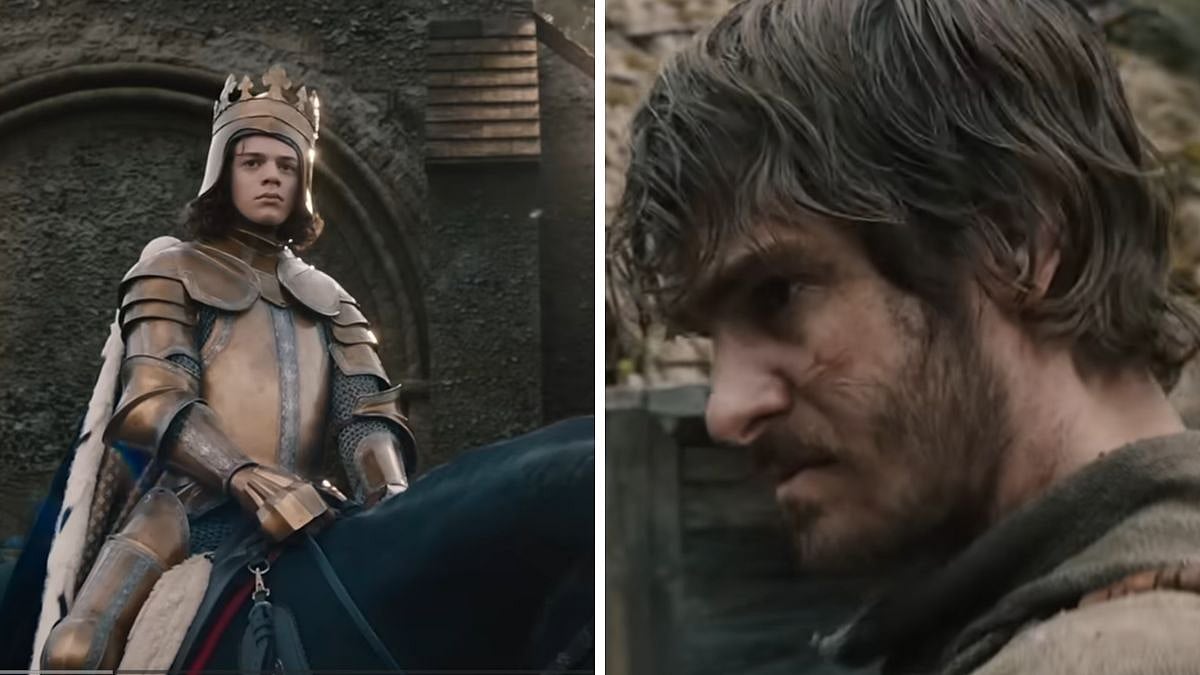
Garfield carries the film with a performance that moves convincingly between grief, fury and reluctant leadership. Jamie Bell and Cosmo Jarvis bring contrasting energies to John Ball and Wat Tyler, while Thomasin McKenzie gives the fictional Alyce considerable warmth and purpose. Woody Norman, however, quietly steals attention as Richard II, a young king whose vulnerability coexists with an unexpectedly calculating streak. Katherine Waterston makes Joan of Kent memorable despite limited dialogue, while Sky Yang adds significance as the Scribe.
Music and Aesthetics
Volker Bertelmann’s score gives the medieval setting a distinctly modern unease, combining distorted cello textures with bagpipe-like tonalities and the period's spare musical vocabulary. It can be forceful, occasionally to the point of insistence, yet the rebels’ songs provide a welcome sense of collective identity. Visually, the muddy landscapes, muted palette and lived-in period detail complement Greengrass’s restless camera, even when the aesthetic becomes almost as relentless as the revolt itself. The aerial shots provide scale, although Greengrass occasionally seems unwilling to let the camera breathe.
FPJ Verdict
Overall, the film is an unsettling reminder that righteous anger can acquire a life of its own.
And when it does, even a just cause can lose its way.

