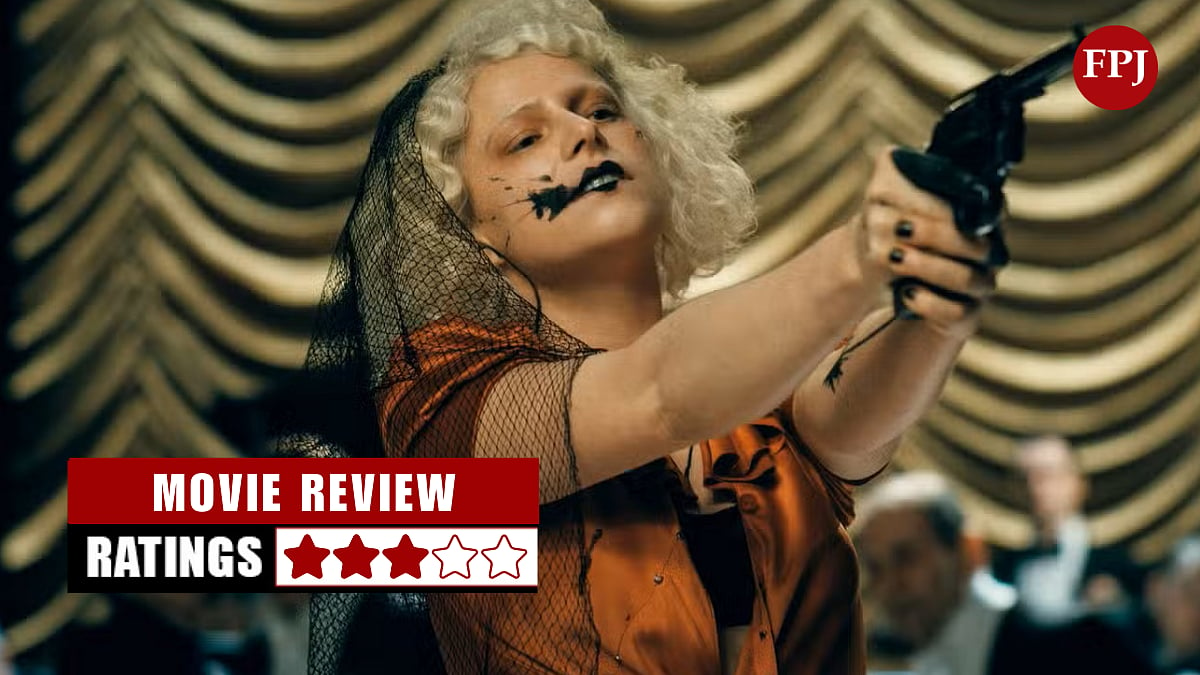
Title: The Bride
Director: Maggie Gyllenhaal
Cast: Jessie Buckley, Christian Bale, Peter Sarsgaard, Annette Bening, Jake Gyllenhaal
Where: In theatres.
Rating: ***
Some films tiptoe around their ideas, and then there are films that arrive like a thunderbolt stitched together in a laboratory. The Bride belongs firmly to the latter category. Maggie Gyllenhaal’s audacious reworking of the Frankenstein mythology is less a careful retelling and more a cinematic experiment that crackles with imagination, mischief, and occasional excess.
Instead of treating the bride as a decorative afterthought, the film places her squarely at the centre of its narrative storm. The story unfolds in a stylised 1930s America where a lonely creature seeks companionship and a dead woman is jolted back into existence to fulfil that wish. Yet the film quickly refuses the simplicity of this premise. What emerges is a restless and playful exploration of identity, agency, and companionship in a world that is as theatrical as it is absurd.
The film thrives on contradiction. It is gothic yet flamboyant, philosophical yet gleefully irreverent. Gyllenhaal mixes genres with abandon, allowing noir shadows, musical spectacle, literary allusions, and dark comedy to coexist in a strange but compelling mosaic. The result often feels like watching several cinematic traditions collide in one room.
At its best, this film has the dizzying thrill of a filmmaker thinking aloud. The narrative moves with the unpredictability of a fever dream, veering from romance to satire to musical whimsy. At times, the film teeters on the brink of collapsing under the weight of its ambitions. Yet its very willingness to risk excess becomes part of its charm. Even when the story falters, the film remains alive with ideas.
Actors’ Performance
Jessie Buckley shoulders the film with fearless conviction. Playing both the resurrected woman and the spirit that shadows her existence, she brings a volatile energy to the role. Her Bride is rebellious, sharp-tongued, and gloriously unpredictable. Buckley captures both vulnerability and defiance, making the character feel less like a monster and more like a bewildered soul refusing to accept a destiny chosen by others.
Christian Bale’s interpretation of the creature, known simply as Frank, is surprisingly tender. Rather than leaning into horror, Bale presents the monster as an earnest outsider longing for companionship. His performance adds emotional depth to the film’s eccentric world and provides a curious warmth to the central relationship.
The supporting cast contributes significantly to the film’s offbeat rhythm. Annette Bening’s morally ambiguous scientist injects sly humour, while the ensemble characters who populate this heightened universe add texture and unpredictability.
Music and Aesthetics
Visually, The Bride revels in theatrical excess. The production design recreates a stylised Depression-era America filled with smoky nightclubs, eccentric laboratories, and dreamlike cityscapes. The cinematography blends glamour with grit, creating images that feel both classic and strangely modern.
The music plays a whimsical yet crucial role in sustaining the film’s surreal tone. Musical sequences appear unexpectedly, transforming the narrative into something closer to a dark fairy tale. It reinforces the film’s fascination with spectacle and performance.
Costume design deserves special mention. The bride’s striking appearance becomes a visual emblem of the film itself. She is at once glamorous, unsettling, and impossible to ignore.
FPJ Verdict
Overall, for viewers willing to embrace its eccentric spirit, The Bride offers an experience that is provocative, entertaining, and refreshingly unpredictable. It may wobble, but it never loses its pulse.

