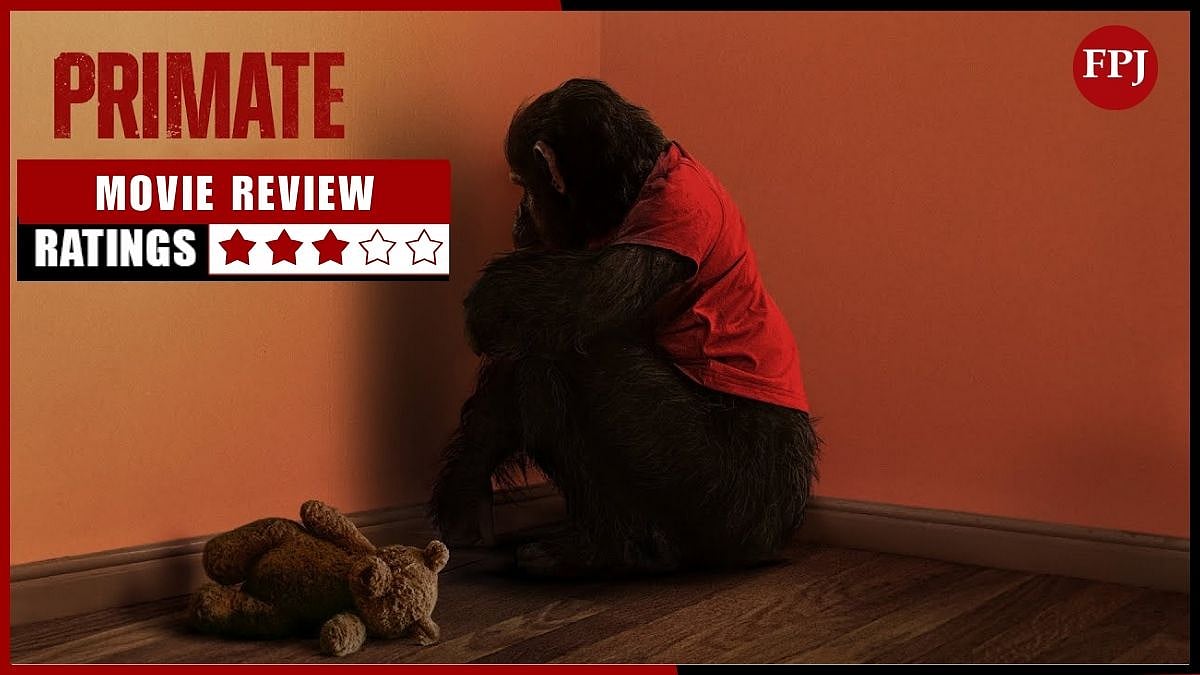
Title: Primate
Director: Johannes Roberts
Cast: Johnny Sequoyah, Troy Kotsur, Jessica Alexander, Victoria Wyant
Where: In theatres near you
Rating: 3 Stars
Johannes Roberts’ Primate arrives with the subtlety of a coconut falling on your head, which is to say it is loud, outrageous, and strangely satisfying. The premise is as old as firelight storytelling. A beloved family pet contracts a deadly infection and promptly forgets its manners. What follows is a brisk survival thriller that trades philosophical depth for adrenaline, often quite proudly. Set in a seemingly idyllic Hawaiian home that quickly reveals itself to be an architectural death trap, the film traps its characters in a sun-soaked nightmare where the pool becomes both sanctuary and prison.
The story is uncomplicated. It does not pretend to build metaphors about grief, interdependence or the fragility of domestic bliss. One could attempt to read all that into it, but the film would politely decline. Its loyalty lies with the mechanics of tension. Roberts knows how to stretch a moment, how long to hold on a shadow, and when to reward the audience’s dread with an eruption of simian fury. The result is a pulpy, occasionally cheeky creature feature that never masquerades as anything loftier, which is oddly refreshing in an era where everything feels obliged to make a grand statement.

Actors’ Performance
Johnny Sequoyah shoulders the Final Girl responsibilities with commendable poise. Her Lucy is neither shrill nor superhuman. She simply behaves like someone determined not to die in her own home. Gia Hunter as the younger sister brings a believable vulnerability, and their dynamic carries the emotional thread the film allows itself.
Troy Kotsur, in limited screen time, brings gravitas with enviable economy. His presence suggests a deeper film lurking beneath the chaos, though the script has no intention of letting that version escape its cage. The supporting friends perform their designated functions with spirit: they scream, they strategize, and they act just sensibly enough for the audience to root for them. Credit must also be given to Miguel Torres Umba, whose physical performance as the chimp, Ben, is startlingly expressive and occasionally unnerving.
Music and Aesthetics
The film’s aesthetic leans into a hybrid of dreamy tropical calm and nightmarish claustrophobia. The house, with its glowing corridors and treacherous poolside perch, becomes a shifting labyrinth that Roberts exploits skillfully. The underwater compositions are especially striking, giving Ben an otherworldly silhouette that lingers long after the scene cuts away.
Adrian Johnston’s score is a playful throwback to the synth-heavy thrillers of the 80s. It does not dominate, but it nudges each moment with a wink, reminding the viewer that the film is fully aware of its heritage. The blend of practical creature effects and restrained digital enhancements gives Ben a tactile menace that modern CG-heavy productions often lack.

FPJ Verdict
Primate is not here to teach moral lessons or rehabilitate humanity’s relationship with nature. It is here to entertain, to shock, and occasionally to delight with its audacity. Some viewers may wish for subtler writing or richer character arcs, but the film’s single-minded focus is part of its charm. It is lean, kinetic, and unapologetically wild. For audiences willing to embrace its untamed spirit, the film offers a gripping and gleefully savage ride.

