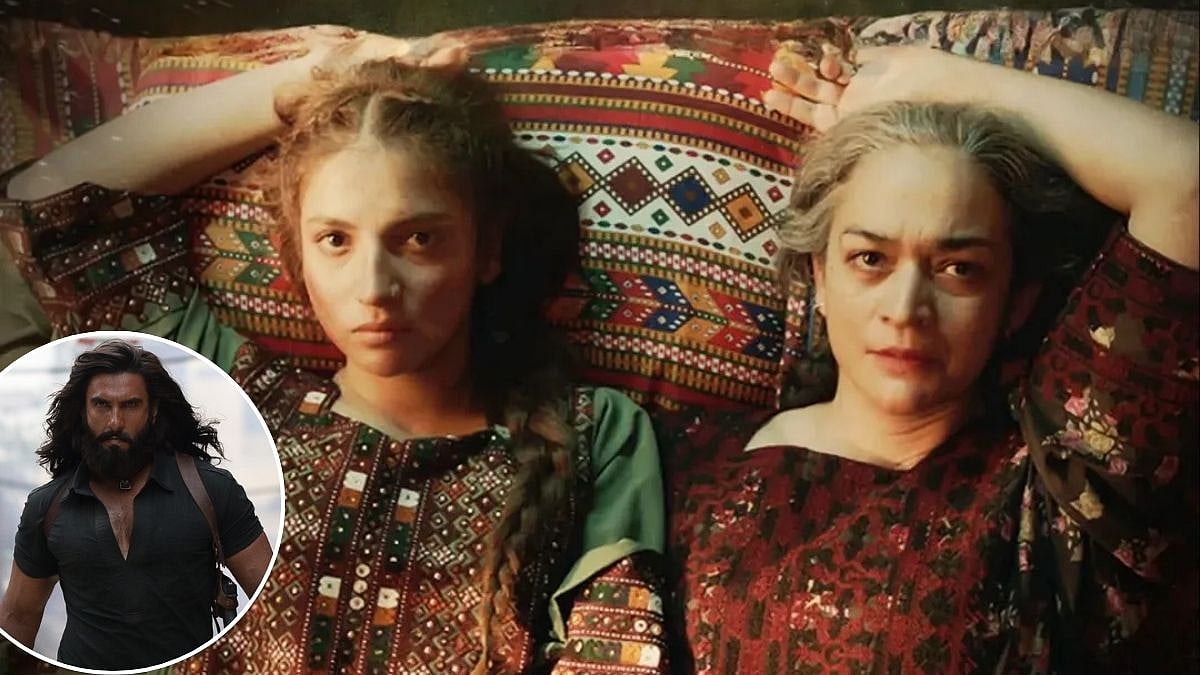
Pakistani film 'Mera Lyari' is believed to be a response to Aditya Dhar's Dhurandhar. People were eagerly waiting for the release of Mera Lyari to see whether the movie will be able to give competition to Ranveer Singh's film. But, it seems that Dananeer Mobeen and Ayesha Omar's film fell terribly at the box office. The movie lodged extremely poor ticket sale and occupancy and even was removed from theaters just a few days after it's release, as per the reports.
Mera Lyari was released in Pakistani theaters on May 8, 2026. As per Economic Times, Mera Lyari hasa extremely weak start at the box office. The movie reportedly sold only around 22 tickets at several locations. The reports suggest that the response from the viewers were so bad that the screening of Mera Lyari stopped "within a day" after its theatrical release.
In contrast to Mera Lyari, Dhurandhar made records at not only India box office but worldwide too. Aditya Dhar’s Dhurandhar emerged as a historic blockbuster at the box office, grossing around Rs. 1,307 crore worldwide, including nearly Rs. 840 crore India net collections, as per Sacnilk. The Ranveer Singh-starrer became one of the highest-grossing Hindi films ever and delivered one of Bollywood’s biggest post-pandemic successes. Its sequel, Dhurandhar 2, surpassed the first part’s collections within days and reportedly crossed Rs. 1,796 crore worldwide, while earning over Rs. 1,144 crore net in India. The film also created history by becoming one of the fastest Hindi films to enter the Rs. 1,000 crore club globally.
Mera Lyari is a Pakistani sports-drama film directed and written by Abu Aleeha, set in the gritty backdrop of Lyari, Karachi, and centered around two young women chasing their football dreams against social and family pressures. The film is produced by Ayesha Omar under Hawksbay Productions and features a strong ensemble cast including Dananeer Mobeen, Ayesha Omar, Samiya Mumtaz, Nayyar Ejaz, Adnan Shah Tipu, Trinette Lucas, and others. Music is composed by Ali Allahditta, with cinematography by Asrad Khan. The film has been noted for its female-led narrative and its focus on resilience and ambition within Lyari's community, with a runtime of around 100 minutes.

