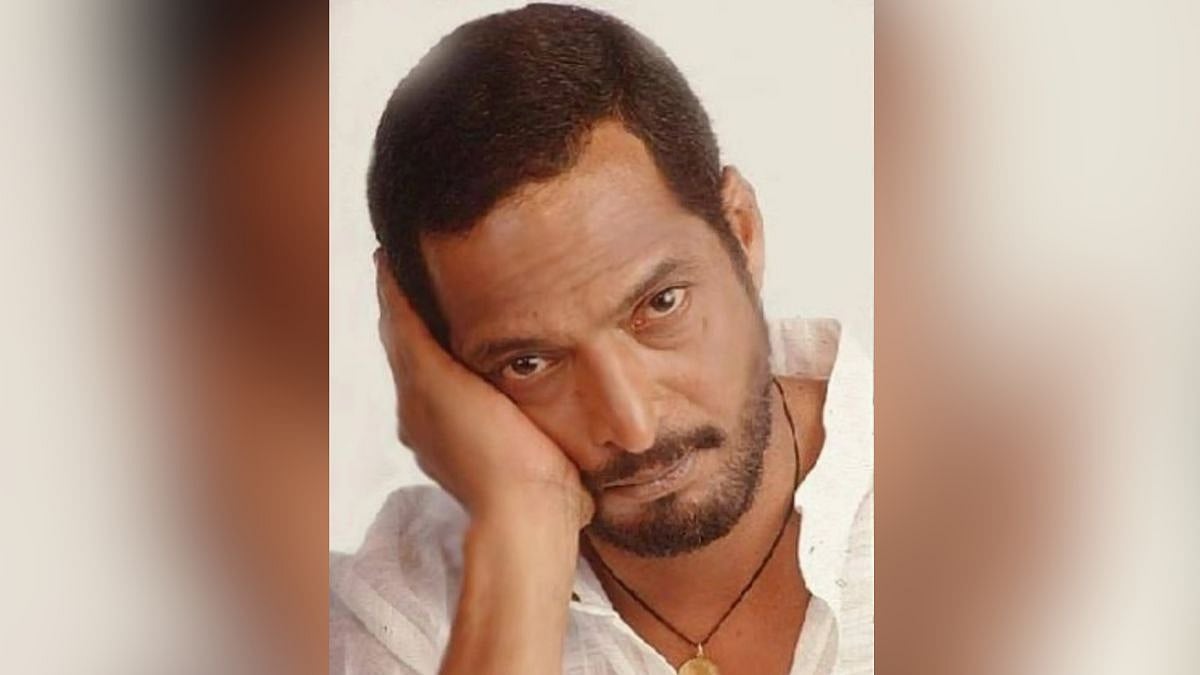
If Nana Patekar could choose a way to die, he would probably have chosen the same untimely cardiac arrest that came for him in the wee hours of October 8. Sudden, brutal, intense and then a blow-out. That was the kind of man he was in life—a basic, no-nonsense guy who detested fuss.
I had known Nana for four decades. I travelled with him to film shoots in Goa, Chennai, Manali, Khandala, etc. And I would say, he wouldn’t want any drama even at the final hour.
As news of his passing hit me, it brought a sea of tears. Again, he would disapprove and look away, perhaps. But the loss is not mine alone. He left behind a void in Hindi and Marathi cinema. And the loss is immense. Nana brought to the screen intensity and a dramatic dialogue narrative style. His voice was unmistakable, with a sharp, stony structure. Even before the podcast era, if you closed your eyes and listened, you could tell his voice because it stood apart from a zillion others.
Iconic oeuvre
It’s hard to choose from his repertoire of around 90 films. For me, his best work included N Chandra’s Ankush (1986), Vidhu Vinod Chopra’s Parinda (1989), Mehul Kumar’s Krantiveer (1994), Partho Ghosh’s Agni Sakshi (1996), Sanjay Leela Bhansali’s Khamoshi: The Musical (1996), Anil Mattoo’s Yeshwant (1997)—which has the iconic line — ek machchar aadmi ko hijda bana deta hai, Shimit Amin’s Ab Tak Chhappan (2004), Prakash Jha’s Apaharan (2005) and Anees Bazmee’s Welcome (2007).
Cake, car and Sahyadris
While all our meetings were always eventful because Nana believed in making memories (some terrific, some terrible) with the people he associated with, I can distinctly recall my birthday celebration with him at the Centaur Hotel coffee shop in 1995. He teased me about how cake cutting was an angrezi thing. And how he never subscribed to it. He refused to eat a piece of the cake we had cut. And then, when we bundled ourselves into a car to travel to Fariyas Hotel, Lonavala, for the shooting of Agni Sakshi, he became chirpy. To impress an actor friend and me, who were in the car with him, he threatened a truck driver on the old Mumbai-Pune highway for not letting our vehicle overtake him. And at the hotel reception, he asked for a particular room because it had the best view of the Sahyadris.
Patekar’s paradox
Like most of us, Nana was a contradiction. One minute, he sought the luxuries of a star’s life; the next minute, he chose simplicity. A fan of Baba Amte’s work, Nana was a regular at Anandwan (Amte’s Ashram near Pune) for over three decades. And when Baba passed, he said he felt he had lost a father figure.
At his Lokhandwala home in Andheri, Mumbai, Nana often invited us to eat his mother’s ghadichi chappati, amti and valachi usal. We would sit on patlas and eat in steel plates, while his aai sat around, supervising our meals.
Always numero uno
Conservative about his actor-girlfriends, I have often seen Nana as the jealous, overbearing boyfriend. He would make a fuss if he wasn’t given attention. Being a No. 1 person (his birthday fell on January 1), his ego never allowed him to be second to anyone or anything. And when his guard slipped, he could intimidate.
I bumped into him at the foyer of a suburban theatre in February this year when he was there to attend Vishal Bharadwaj’s O Romeo trailer launch. And even took a selfie with him, the first in decades.
How does one sum up a 40-year association with Nana Patekar? By borrowing a dialogue of his from Partho Ghosh’s Agni Sakshi. “Come on, party is over, go to sleep now! Thank you, good night!”
Rest in peace, Nana. You will be missed.

