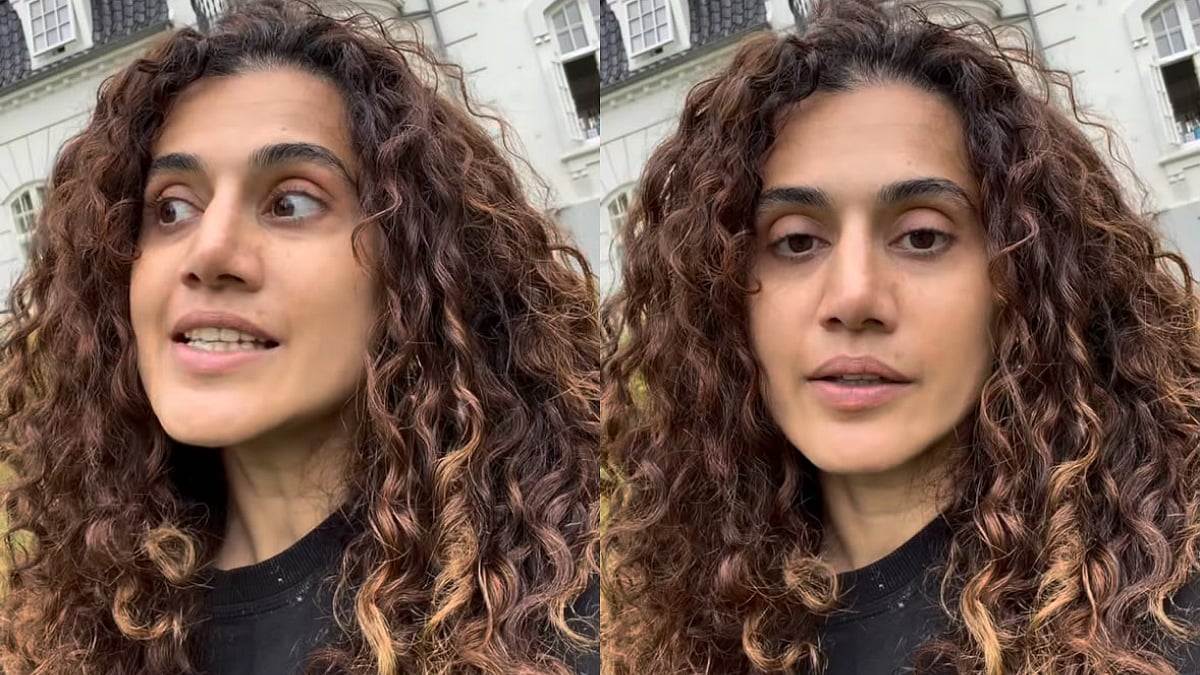
Actress Taapsee Pannu recently opened up about her past struggles with body image, revealing that she once became obsessed with achieving a flat midriff and ended up 'torturing' herself in the process. She reflected on a period in her life when she felt immense pressure to look a certain way, particularly while working in the entertainment industry.
Taapsee Pannu Recalls Obsession With Flat Midriff
On Sunday, Taapsee took to Instagram Stories and said, "I remember I had this obsession because while growing up, I was extremely fit, but I never understood why the lower belly fat always stayed. I worked out intensely almost to an extent that I overpushed myself, and rightly said, when you overpush yourself, it rings an alarm in your brain that your body needs protection."
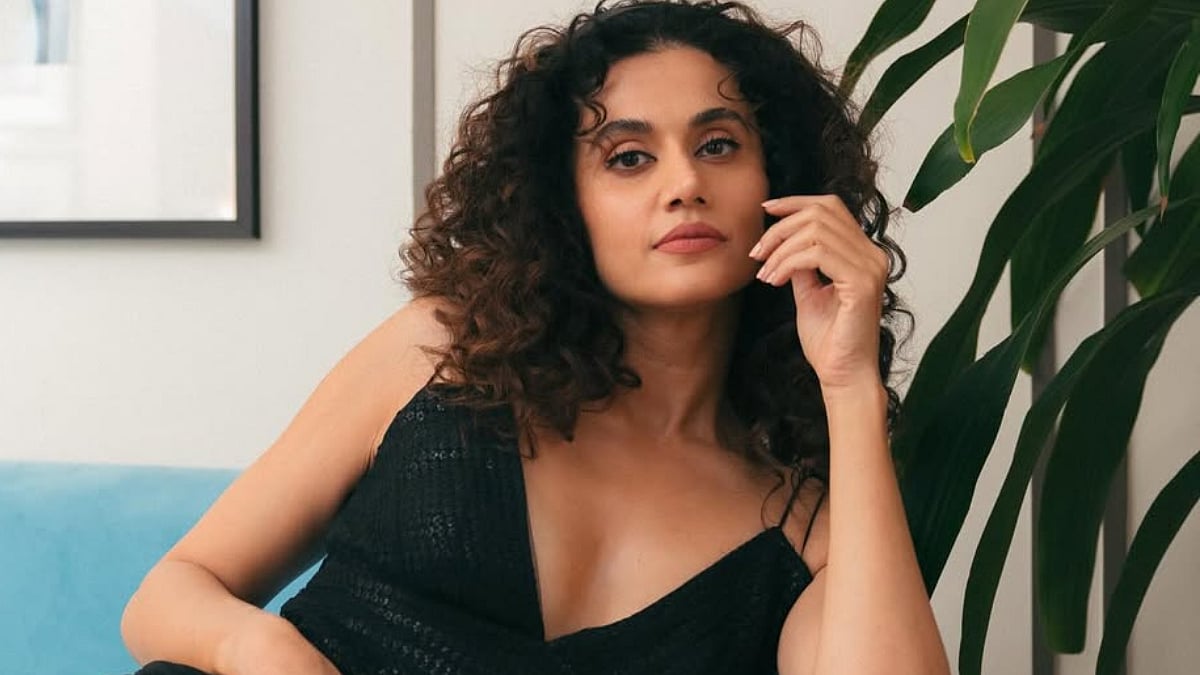
Further, Taapsee stated that instead of losing water retention, the body starts retaining it, and then that lower belly fat, which might actually not just be fat; it’s also water retention, it stays, and it increases by overworking out, which she really believes that people should not do.
'I accepted it very late after really torturing myself'
Taapsee continued to explain how every woman has a different body and one should accept this, stating that she accepted it very late after really torturing myself, and then she realised that there are some days it happens and there are some days it doesn’t happen.
My nutritionist Munmun Ganeriwal explained it to me how it’s actually important to have that little bit of fat, a little bit of water retention under the belly because that’s where your reproductive organs are, and they need protection, and by virtue of being a woman, you need that protection."
'Just To Get Those Picture-Perfect Instagram Photos...'
She concluded, "It's healthy for you. So just to get those picture-perfect Instagram pictures, please don't torture yourself. It's supposed to be healthy to have that little bit of bulge and have that fat there. Please don't torture yourself."
Work Front
The actress was last seen in Assi, which was directed by Anubhav Sinha.

