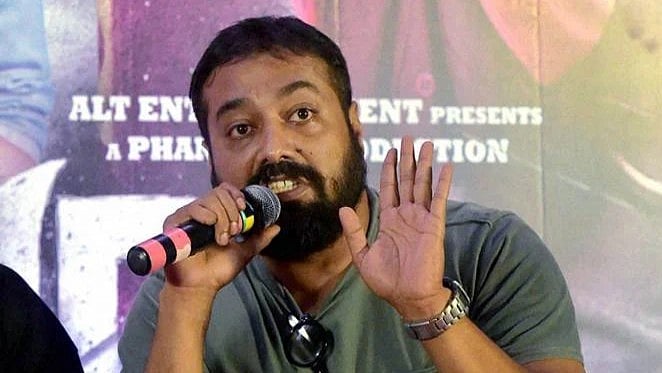
Filmmaker Anurag Kashyap voiced his frustration over the way smaller Indian films are being treated in theatres today. The director believes that many deserving films fail to get enough shows to build an audience, only to be appreciated years later when they arrive on streaming platforms.
The conversation comes amid discussions around the limited theatrical presence of films like Imtiaz Ali's Main Vaapas Aaunga and Kashyap's own Bandar. At the same time, Hollywood releases such as Obsession continue to enjoy a stronger presence in cinemas.
Interestingly, many movie lovers on social media have pointed out that films by directors like Kashyap and Imtiaz Ali are often overlooked during their initial release, only to earn appreciation and cult status years later.
When asked how it feels to receive praise from audiences long after his films have left theatres, Kashyap admitted that the reaction is far from satisfying. "I get angry, upset because people keep coming to me and talking about how they love this film and that film. I often ask them, 'Where did you see it?' and nobody has actually seen it in theatres. I'm quite used to it," he told HT City.
The filmmaker then opened up on a time when the industry was more supportive of smaller releases. Recalling the release of his 2014 film Ugly alongside Rajkumar Hirani and Aamir Khan's blockbuster PK, Kashyap explained how fellow filmmakers and distributors ensured his film got a fair chance despite the competition.
“Ugly had a release in France before India. It came out on Blu-ray and subsequently got on pirate sites, so we had to rush the release back home. At that time PK was running so many shows in cinemas. I made a call to Siddharth Roy Kapur, Ronnie Screwvala and Raju Hirani, and we released Ugly in finally at least three shows, they made sure that our film got it. That time is gone now. I can understand the theatrical business is business. They want to make money right now, and Obsession is working. But my thing is, Obsession can still survive on less shows. It will still work with five shows, people will still see it. If not today, they will see it tomorrow.”
Kashyap believes the biggest problem is that theatres are not giving quality films enough time to find their audience.
According to the filmmaker, if theatres continue prioritising only large-scale event films, the industry risks losing space for mid-budget and content-driven cinema that depends heavily on audience recommendations to succeed.

