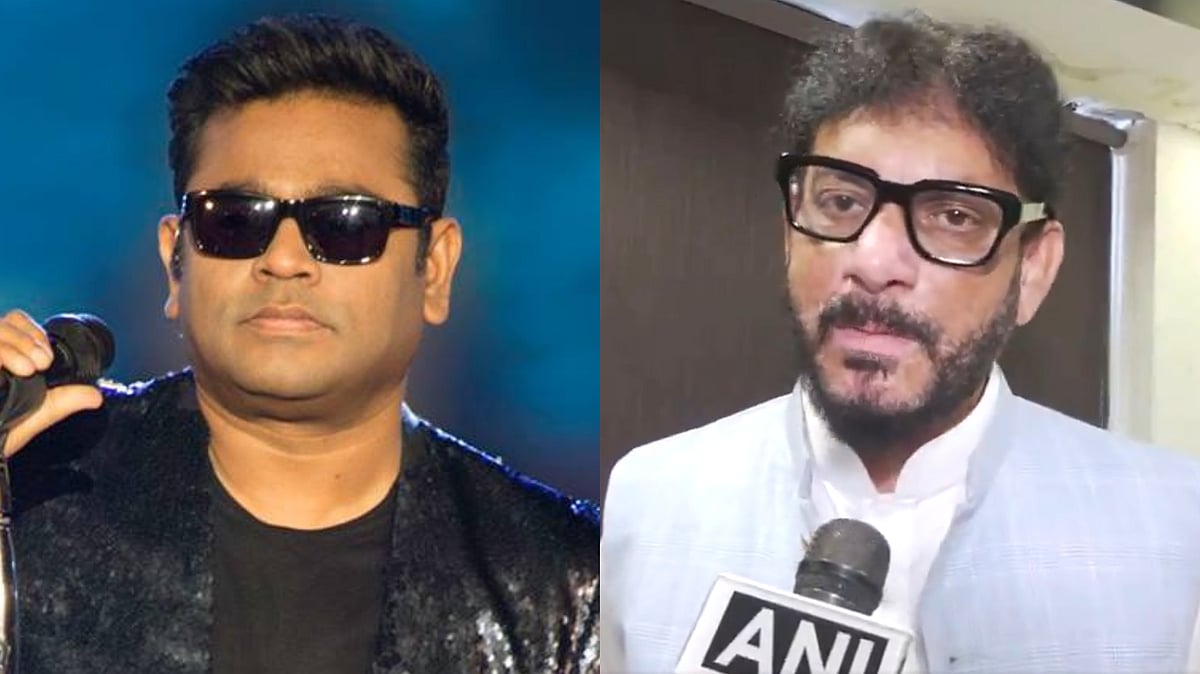
AIMIM national spokesperson Waris Pathan reacted to comments made by Oscar-winning music composer AR Rahman about a slowdown in work from the Hindi film industry over the past eight years. For those unversed, Rahman recently said that opportunities from Bollywood had reduced for him in recent years, a shift he linked to changing power dynamics in the industry and, possibly, what he described as “a communal thing,” though not something he has faced directly.
On Friday (January 16), responding to media reports quoting Rahman’s remarks, Waris Pathan said the composer’s observations deserved serious consideration. “AR Rahman is an internationally acclaimed, renowned music composer. If he said this, then it should be thought about. I have not heard or read his statement,” Pathan said.
“We too are saying the same thing. Ever since the BJP came to power, only one thing has been seen: they are spreading hatred,” he alleged.
Pathan further claimed that rising polarisation had led to incidents such as mob lynching and targeting of minorities. “The hatred has spread so much due to polarisation that madrasas are targeted, mob lynching is done in the name of Jai Sri Ram, mob lynching is done under the false pretext of beef being carried. Their hateful people speak nonsense against Muslims,” he said.
According to him, this environment may explain why a globally respected composer like Rahman would speak about such experiences.
What did AR Rahman say?
During an interview with BBC Asian Network, Rahman explained that he often hears about projects falling through indirectly. “It comes to me as Chinese whispers,” he said.
Rahman also clarified that he does not actively pursue work. “I’m not in search of work. I want work to come to me; the sincerity of my work to earn things. I feel it’s a jinx when I go in search of things,” he said.
Reflecting on his early years in Hindi cinema during the 1990s, Rahman said he never felt any form of prejudice at the time. “Maybe I didn’t get to know all this stuff. Maybe God concealed all this stuff,” he said, adding that things may have changed in the last eight years due to a “power shift.”
Elaborating further, Rahman remarked that decision-making had moved into the hands of people he described as “not creative.” He added that while he does not face discrimination directly, he sometimes hears that projects were planned with him but later reassigned. “They booked you, but the music company went ahead and hired their five composers,” he recalled, adding that he has chosen to take such developments in stride.

