Conversations about education and employment have changed in subtle but important ways. Students and families who used to ask which degree had the strongest reputation and which program offered the longest academic tradition now want to understand the practical skills they will gain and whether these skills will still be relevant in the evolving industries.
This shift reflects the realities of a global economy shaped by rapid technological change. Automation, artificial intelligence, and digital platforms are transforming how organisations operate. Employers are looking for individuals who can analyze problems, interpret information, and contribute to complex work environments. People need to hit the ground running.
This means certain areas of study are attracting sustained interest from both students and employers. While the specific technologies involved always evolve over time, the underlying capabilities associated with these fields are likely to remain important.
Artificial Intelligence and Machine Learning
One of the most visible areas is artificial intelligence and machine learning. AI is now embedded in everyday business operations. Hospitals use predictive models to anticipate patient needs, financial institutions rely on algorithms to assess risk, and logistics companies optimize supply chains through automated systems.
More than ever, organisations need professionals who understand how intelligent systems function and how they should be deployed responsibly. They need students to know algorithmic reasoning, data modeling, and the practical challenges of implementing AI solutions in real-world environments. Contemporary training encourages learners to question outputs, examine assumptions, and exercise judgment when working alongside automated tools.
Data Analytics and the Rise of Evidence-Based Decisions
Closely related to AI is the broader field of data analytics, the art and science of creating real value from raw data.. Insight emerges only when data is interpreted thoughtfully and translated into decisions.
Training in data analytics typically introduces students to statistical thinking, data visualization, and analytical frameworks that help uncover patterns within complex datasets. These capabilities are useful across nearly every sector. A healthcare provider may analyse patient outcomes, a retail company may examine purchasing behaviour, and a city government may evaluate transportation patterns. Professionals who can turn data into meaningful conclusions are increasingly central to how institutions operate.
Cybersecurity in a Digitally Dependent World
The expansion of digital systems has brought another issue into sharper focus: security. As companies rely more heavily on connected technologies, the risks associated with cyber threats grow as well.
Cybersecurity has therefore become a strategic priority rather than a purely technical concern. Organizations now require professionals who understand network vulnerabilities, threat detection methods, and the broader principles that guide digital risk management. Education in cybersecurity often blends technical training with an understanding of governance and policy, recognizing that protecting digital infrastructure requires both expertise and strategic awareness.
Designing Technology Around Human Behavior
Technology does not succeed solely because it is sophisticated. Systems are effective only when people can use them easily and confidently. This insight explains the rising importance of user experience and user interface design.
UX and UI professionals study how individuals interact with digital products and where obstacles appear in that interaction. Their work involves examining user behavior, identifying points of confusion, and designing interfaces that feel intuitive rather than complicated. In many industries, the difference between a successful product and a neglected one can be traced to how well its design accommodates real human behavior.
Business Analytics and Strategic Decision-Making
Alongside these technology-oriented domains, business analytics has also gained prominence. Organisations today operate in environments where decisions must be made quickly and often with incomplete information.
Leaders rely on professionals who can interpret operational data, evaluate performance trends, and connect analytical findings with strategic action. Courses in business analytics therefore focus on understanding how data informs planning, resource allocation, and long-term growth. Graduates who possess both analytical and managerial insight often find themselves well positioned to guide decision-making within complex organisations.
Preparing for a Workforce That Continues to Evolve
Taken together, these areas illustrate a broader transformation in how education aligns with employment. The emphasis is gradually moving away from narrow specialisation toward adaptable skill sets that can travel across industries.
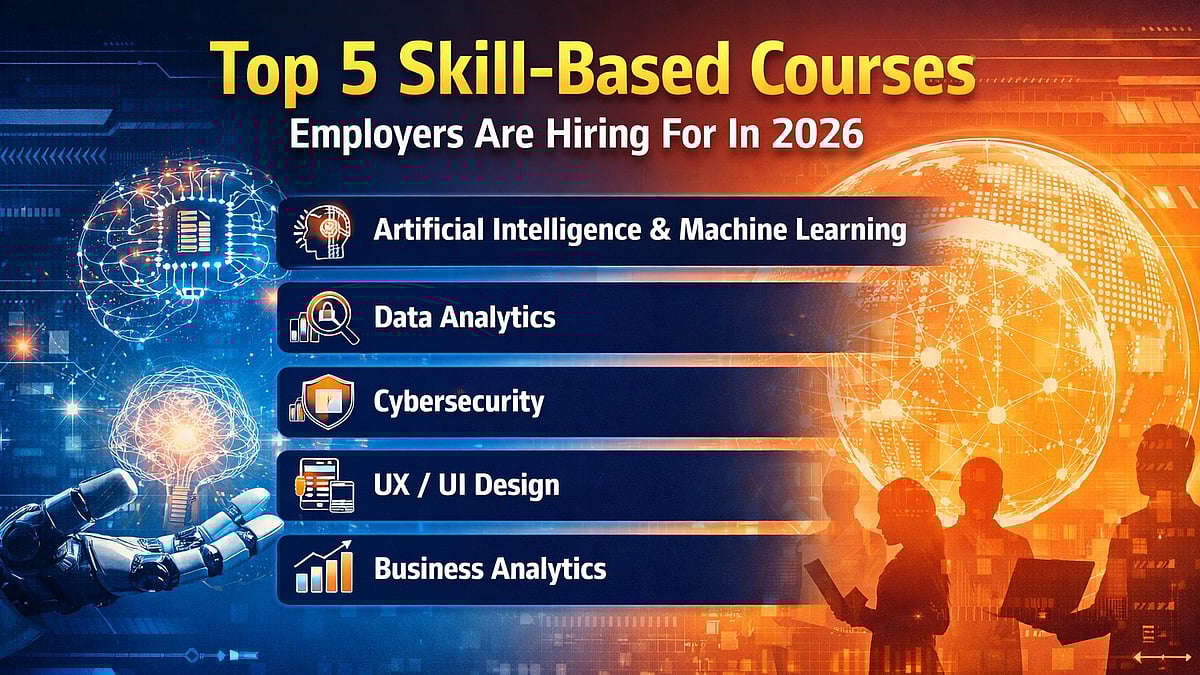
Artificial intelligence, data analytics, cybersecurity, user experience design, and business analytics each represent different aspects of the same underlying shift: the need for professionals who combine technical understanding with critical thinking.
For students planning their future careers, this perspective offers a useful reminder. Technologies will continue to change, and new tools will inevitably replace older ones. What remains valuable are the habits of mind developed through rigorous learning: the ability to analyse evidence, interpret systems, collaborate across disciplines, and adapt as professional demands evolve.
Education is most effective when it prepares individuals not only for their first job, but for the many transitions that will follow. Programs that cultivate practical skills alongside intellectual curiosity help ensure that graduates remain capable of navigating those changes. As industries continue to transform, this combination of adaptability and analytical ability may prove to be the most durable preparation of all.
The author is Dean of UC Santa Cruz Silicon Valley Professional Education.
